
Republicans could hardly pick their jaws off the floor when word leaked Wednesday that the White House would deny a controversial oil pipeline. House Speaker John Boehner sat shocked while his aides distributed outraged statements. “President Obama is about to destroy tens of thousands of American jobs and sell American energy security to the Chinese,” said Boehner spokesman Brendan Buck, referring to the oil Obama refused that may now be sold to China. “The president won’t stand up to his political base even to create American jobs. This is not the end of this fight,” Buck harrumphed.
News of the Keystone pipeline denial was surprising for one main reason. The last-minute congressional compromise over the payroll tax in December included a provision that compelled Obama to make a decision on Keystone XL within 60 days. That would prevent him, Republicans believed, from running out the clock until December, when the issue would no longer affect the election. But when given two months, Obama only took one. A White House aide suggests that there was no point in waiting the full stretch for a decision that was fairly obvious.
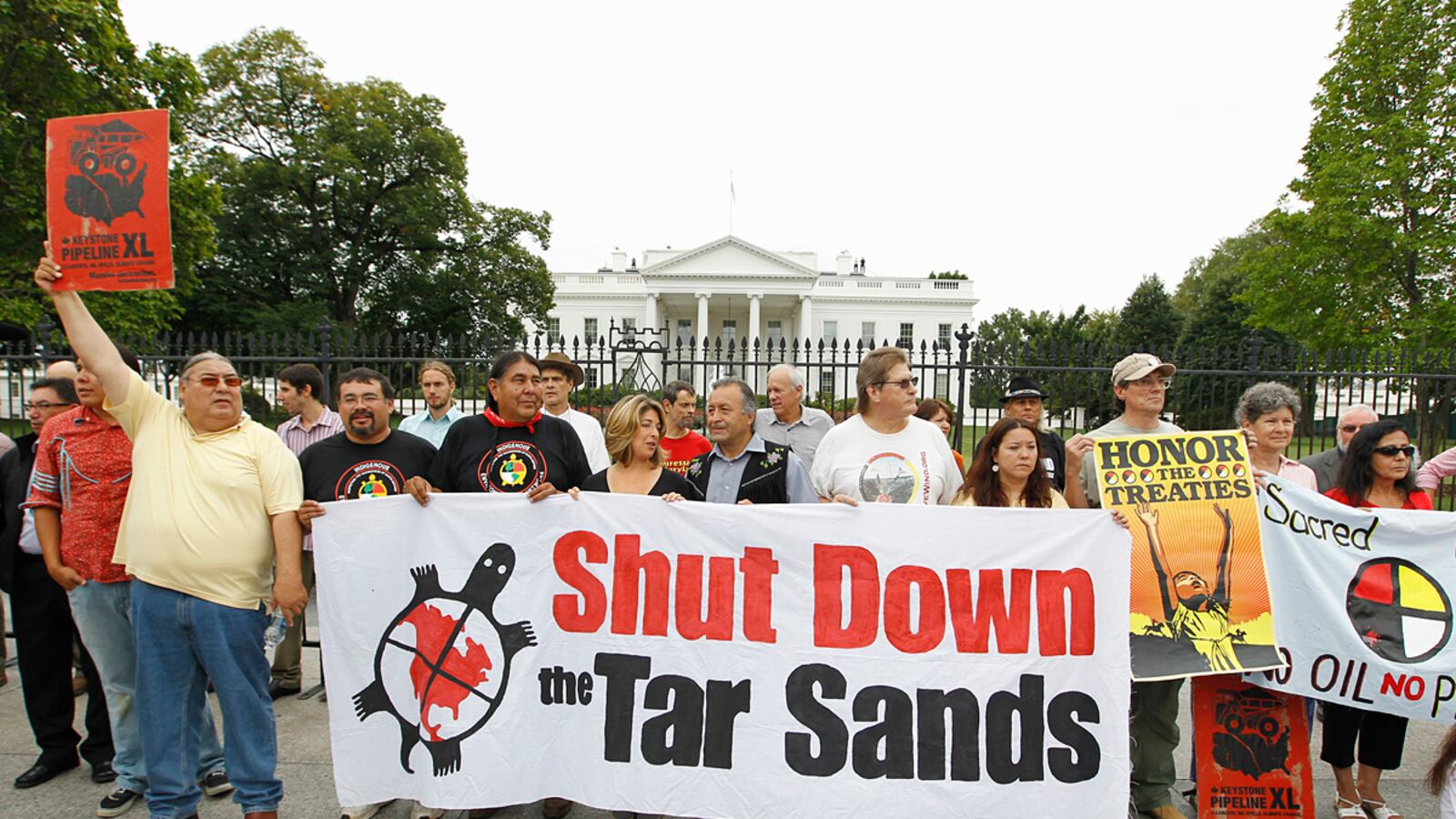
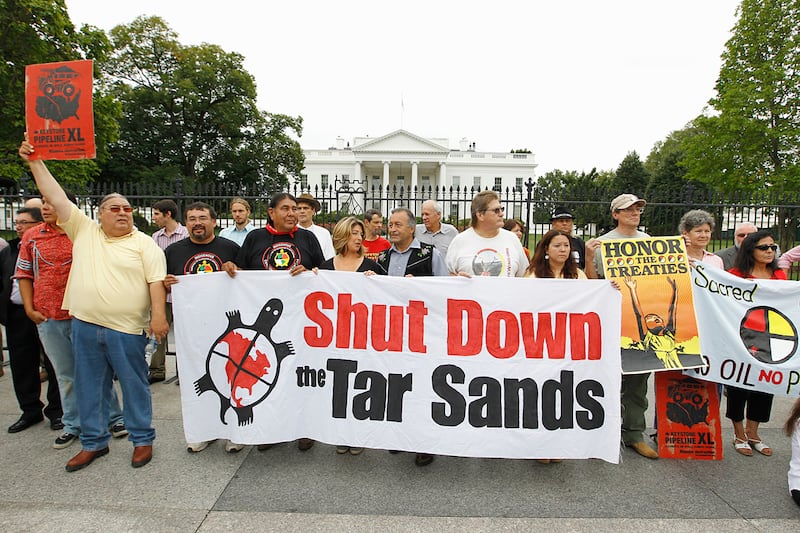
That’s not because Obama opposed the pipeline outright. As the candidate, Obama ran on a broad environmental agenda, including addressing climate change and shifting the nation toward a renewable energy economy. When the State Department offered provisional approval for the project and Obama hinted at lukewarm support last year, environmentalists freaked. Green groups organized repeated protests–the largest one garnered 5,000 people who encircled the White House–holding Obama to his campaign rhetoric against dirty energy.
No, the primary reason for Obama’s rejection was because of the bed Republicans had made him, demanding a decision before the State Department could facilitate a full review of the pipeline’s environmental impacts. Nebraska became ground zero over the fight after environmental officials in the state highlighted concerns about ecological risks.
The political fight had also become so intense that approving the pipeline would have been branded a win for Republicans. Both sides had argued specifically over the job projections. GOP leaders, and even some top Democrats, argued that the pipeline project would create at least 20,000 jobs, but the White House pointed out the long-term number would be much lower, especially after the early phases of the project ended. Rep. Ed Markey, the top Democrat on the Natural Resources Committee, also noted Wednesday that the project was never designed for American security in the first place; the oil shipped through it would be sold to the highest global bidder.
In political parlance, the decision wasn’t too tough. “It would be hard [for Obama] to climb down now and save political face as just a practical political matter,” says Paul Bledsoe, a former energy aide in the Clinton White House. So, Obama’s out is the environmental factors. Without a full review, and with some states concerned that the pipeline could pose risks to local wetlands, State Department officials say that if the project can’t be done responsibly in the time allotted, then it can’t be done at all. Dampening the blow to big oil, Obama officials say they’re willing to reconsider Keystone XL if TransCanada, the company behind the project, reapplies for approval.
Whether or not they deserve it, environmentalists have taken instant credit for Obama’s decision. "The pipeline was rejected for all the right reasons,” says Frances Beinecke, president of the Natural Resources Defense Council. But the decision isn’t a clear base play for Obama trying to shore up support of environmentalists, a large and vocal constituency, before November. There are political perils too, including alienating Democratic voters concerned about the job security and energy security, both of which would have been alleviated by the pipeline.
Still, there’s one compelling reason for the timing of Obama’s decision. The president is expected to devote a large portion of his State of Union speech next Tuesday to energy security, specifically touting his accomplishments, like beefy fuel-efficiency standards and spikes in domestic oil and gas exploration, before addressing America’s energy future. “He probably wanted to get this out of the way to present a broader case for energy in the State of the Union,” says Bledsoe. In other words, clearing the air of Keystone tension greatly reduces the chances he’ll be heckled about it in the House chamber.