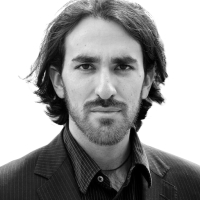

The hit Fox TV series House, starring Hugh Laurie as an eccentric medical genius, ends today after eight years and 176 episodes. The drama was inspired by Yale University School of Medicine faculty member Lisa Sanders’s monthly "Diagnosis" column in The New York Times, who is also the author of Every Patient Tells a Story: Medical Mysteries and the Art of Diagnosis and a technical adviser to the show. We speak to her about how the show got started.
Describe your morning routine.
When I’m writing I like to get up really early, because that’s when I’m the smartest. When I was writing my book and doing this on a regular basis I would get up at around 4 a.m. When I’m just writing my column I get up around 5 a.m. It’s only an hour later, but it’s a really important hour. I make a cup of coffee and come up to my office on the third floor of my house. I give myself a treat by letting myself read the newspaper, or at least a little bit of the newspaper. Then I force myself to close it and try to start writing.
What was the first medical situation that led you to see medical diagnosis as a form of detective story?
One thing you need to know about me is that I’m not a huge mystery fan, but a huge Sherlock Holmes fan. I don’t read mysteries, just Sherlock Holmes, because of the way he does things. He thinks like a doctor. He would’ve been a doctor, if there had been diagnostic tests when he was around, or if it had mattered at all what your diagnosis was at the time, given our lack of therapeutic tools.
There’s this meeting that happens every day in every teaching hospital in the country. It’s either called “resident report” or “morning report” and in it, internists in training and experienced internists go to this one room every day, and one or two patients are presented, and you walk your way through this mystery. When I went to that meeting, in my third year of medical school, I don’t even remember what the case was, but I remember thinking, My god, these are doctors acting like Sherlock Holmes, doctors as detectives. I recognized this and it changed my understanding of medicine profoundly.

Until that point I really thought that diagnosis was: there is a question, there is an answer, you have memorized it, you see the question, you put down the answer. One thing you’re absolutely certain of is that one of those multiple-choice answers is the right answer. It gives you this sense of diagnosis as this very closed, set system, like math. But it’s not like that. For many patients, it’s not this multiple-choice list. It’s collecting clues that make you look at what should be among the multiple choices. It’s unlike anything we study to get into medical school or to graduate from it. So it was fantastic, a revelation to me.
How did your “Diagnosis” column turn into the House series?
Paul Attanasio, who worked with David Shore (the two of them created House), was a big fan of my column, and he was just looking at it one day and thought, Why can’t we make this into a TV show? To use the lingo he used, it would be a medical “procedural.” It’s a term usually used for law or police shows, on the ground procedure followed by viewers, the technical stuff. He said, “Why can’t we do that with medicine?”
I think one of the great ideas that he had is that we don’t have to explain medical technology or terminology, because it doesn’t really matter if everyone knows exactly what we’re talking about. It’s like Star Trek. You just say it and move on and we all sort of know what is means, more or less. Paul had this immediate understanding that it didn’t really matter if people knew what these diagnoses meant exactly. All they need to hear was that it had something to do with the liver, you know. They just need to hear the thinking that went on around it. Thankfully, Paul had this observation and was a fan of my column.
Were you involved at all in writing the series, or its pilot?
No, although several of my diagnoses are in there. Paul called me after the pilot had been sold to Fox and they had agreed to produce them. When Paul called me, I asked, “What’s this show about?” He said, “Well, it’s about this arrogant, irritable, drug-addled doctor who hates patients and loves diagnosis.” That’s a perfect summary of House. My thought—not what I said because I’m not that big a fool—was that it can’t possibly work. Then he sent me the pilot and I saw Hugh [Laurie] and I thought, This guy’s brilliant.
Do the writers begin with the diagnosis and work backwards, the way whodunit authors often do?
No, they write the whole story and they might have the medicine first. It’s like this: do you know War Games? Nuclear war can exist as a plot, as a backdrop, but the story is actually about humans, about these kids. That’s the role of medicine in House. It’s important, it’s part of the plot, but it’s a completely separate background before which the real story, the human story, takes place.

They might choose who the victim is first then decide what the victim could have, what sort of medical problem. Then they’ll ask me and the other two technical advisers, and we sort of compete for this, for symptoms and medicines. We set out to find a great set of disease possibilities. Recently I got a script and the writer said, “Here’s the storyline,” and I just left holes that say “insert medicine here.” The show exists on these two separate levels. The goal is to get the medicine and the human story to reflect each other, to have something in common. The human story is the foreground.
What will most surprise readers of Every Patient Tells a Story?
It’s changed since I wrote it. I started writing it a few years ago and it came out in hardback in 2009. So I think when I started writing it people were not aware that diagnosis was this process. I think House has been enormously effective at instructing patients about the hidden process that exists behind the seemingly smooth transition from being ill to being diagnosed. People now realize that while diagnosis may still be a one-liner, “You have blah,” that there is a process that gets people there. That used to be what I thought would be the biggest surprise. Other than that the importance of the patient’s story is the biggest surprise. Patients still think that what they have to say is unimportant—they fail to understand the importance of it to the doctors in making a diagnosis.
Read more of our “How I Write” series: