
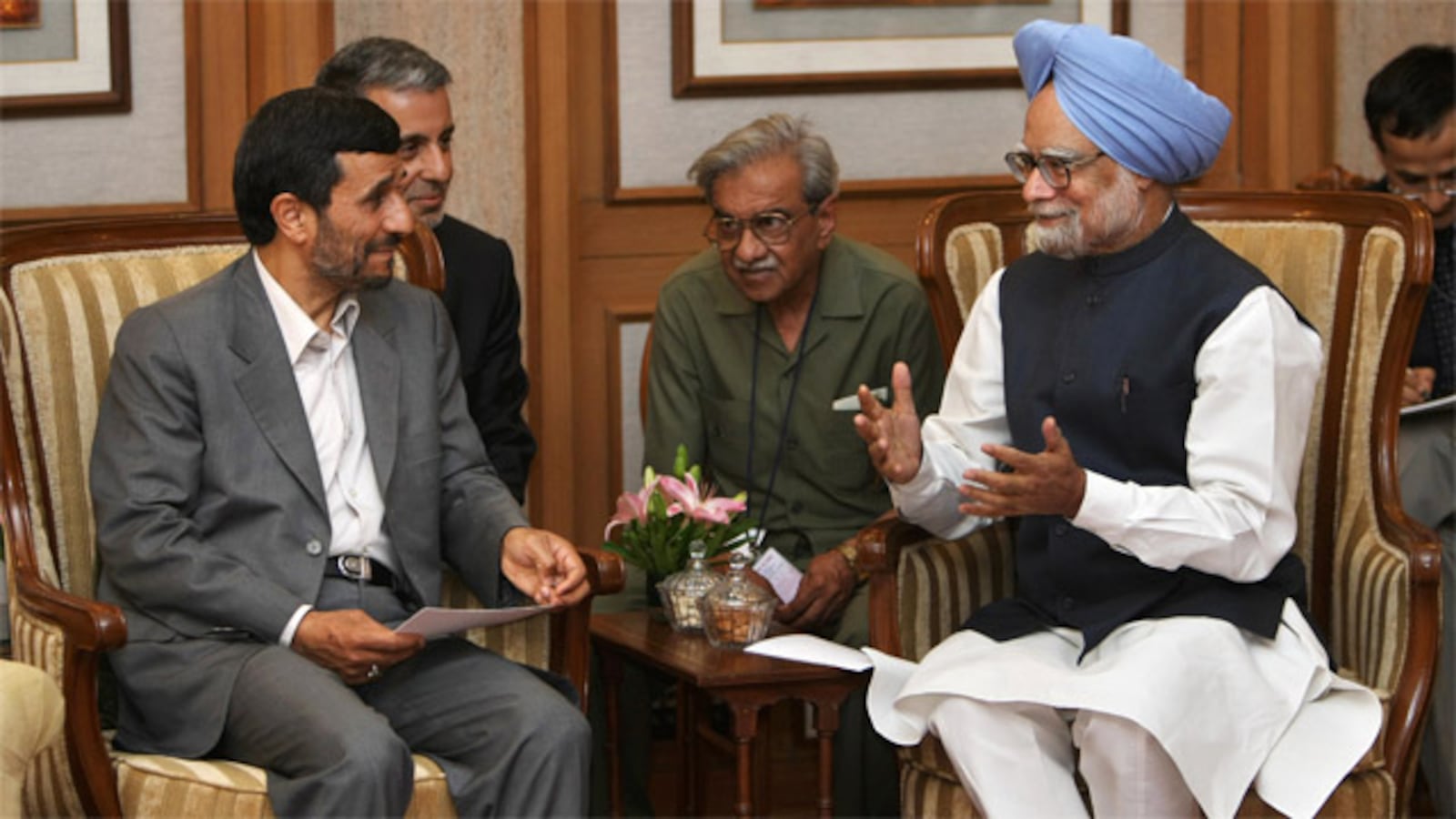
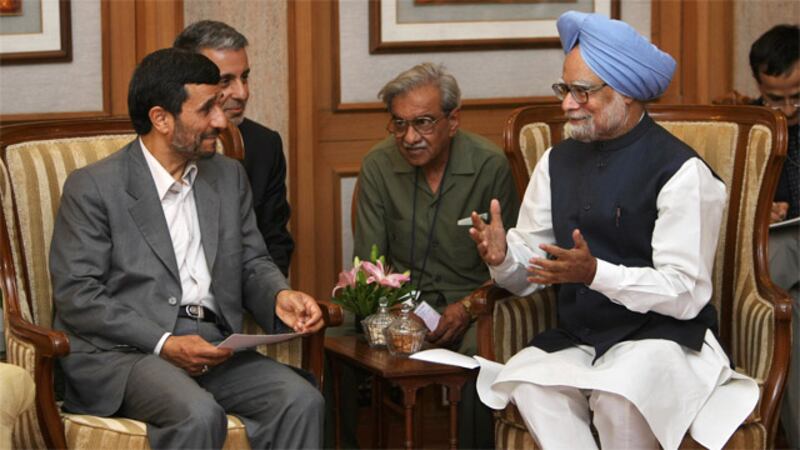
In the Israeli newspaper Haaretz today, Kapil Komireddi argues that mining the historically respectful relationship between India and Iran may be the best way to talk Iran out of a nuclear weapon:
Israel and its supporters in the West are agitated by India’s engagement with Iran, a country they regard as an irredeemable rogue state. Washington's decision to exempt India from financial sanctions on Iranian oil imports, just over a week ago, means that New Delhi continues to have a significant trading relationship with Tehran. But far from being an obstacle to peace, India’s friendship with Tehran can benefit Israel—and avert a war.
In the current staring contest in which U.S.-Iranian talks can't do enough and an invasion is far too costly, India's position as a trusted Israeli/American and Iranian partner could be key in forging a deal:
The spectrum of ideas in dealing with Iran cannot be stuck between sanctions and strikes. The results of Israel relying wholly on its traditional Western allies in its effort to stem Iran’s march are plain to see, and disappointing to say the least. Israel must now start conscripting new friends to take its cause forward. At the very least, India can be a more effective peace broker than the EU. Israelis display an almost inexplicable reluctance to push India to do anything. But it’s time they realised that, as India’s reliable friends, they have earned the right to demand assistance.
Click here to read the full story.