Blogs and Stories

Sally Satel

Take My Kidney, Please

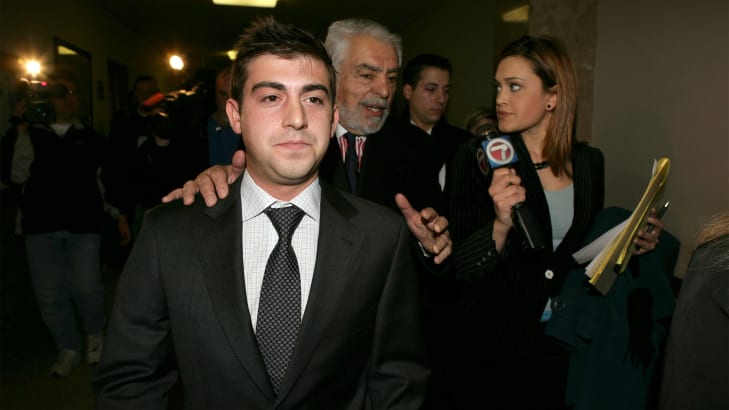
Article - Satel Batista Howard Schnapp / Newsday / MCT / Landov Divorce settlements have always cost an arm and a leg, but as the shocking Batista case demonstrates, vital organs are now fair game. Can altruism ever be regulated?

She stole his heart so he gave her his kidney. And now he wants it back.

So goes the story of 49-year-old Long Island physician Richard Batista and his estranged wife. In 2001, Batista gave one of his kidneys to Dawnell, 44, who had suffered from renal disease for many years. According to the NY Daily News, he said that Dawnell initiated an affair with her physical therapist two years later. She then filed for divorce in 2005 to end their 15-year marriage. "I saved her life," Batista told the Daily News. "But the pain is unbearable." At a news conference in Garden City on January 7, Dr. Batista's lawyer said his client was demanding return of the kidney or $1.5 million (its estimated worth).

It is not difficult to sympathize with Dr. Batista. He is having an extreme form of donor remorse. While the vast majority of donors report a lasting feeling of self-worth and experience a deep sense of gratification from the act—according to surveys, about 95 percent of donors say they would do it again—some regret having donated. It may be that a hoped-for closeness with the recipient failed to materialize, an anticipated demonstration of gratitude was not forthcoming, or the donor felt he did not get the social recognition he deserved. These dynamics prompted sociologists to coin the phrase "the tyranny of the gift." It represents the dark side of altruism; the sense of entitled reciprocity that can be a burden to both donor and recipient. This is not part of the standard gift-of-life storyline, however, and few people are aware of it.

It is easy to get carried away with the comic potential of the Batista drama. Should pre-nuptial agreements now specify the fate of a kidney given during the marriage?

For Dr. Batista, the betrayal he felt led to outrage and a demand for restitution. But it is easy to get carried away with the comic potential of the Batista drama. Should pre-nuptial agreements now specify the fate of a kidney given during the marriage? Should human organs be counted as marital assets akin to bank accounts and property? The cynical side of organ donation was laid bare two years ago with the Dutch television program The Big Donor Show which had the feel of a sick parody of Survivor. In the show a terminally ill woman, Lisa, was to select which of three needy contestant-patients would receive one of her kidneys after she died. Viewers could express their preference by voting over the Internet. Dutch lawmakers were outraged.

To international relief, the show was a hoax. As Lisa was about to announce her choice, viewers learned that she was really an actress, not a cancer patient looking for a worthy recipient. Lisa and the potential recipients, all of whom were real people in need of kidney transplants and aware of the subterfuge, were part of an enactment to dramatize the shortage of transplantable organs.

The Batista tale touches the same issues highlighted on The Big Donor Show. There are now over 100,000 Americans waiting for a new kidney, liver, heart or lungs. Kidney patients represent more than three-fourths of the national waiting list, according to the United Network for Organ Sharing, which collects and distributes organs from the newly deceased under contract with the Department of Health and Human Services.

Only one in four people on the list will get a kidney transplant this year. The rest will languish on dialysis while their names crawl to the top of the list, an ordeal that can take five to eight years in big cities. Every day, 12 people die waiting for a kidney that never arrives.

Back to Top
January 8, 2009 | 3:40pm
Comments ()
spinozareader

Let me see if I get this right...
You seem to find it distasteful for one individual to offer recompense to another for an organ, BUT according to you, the government can do so--in some weird, once-removed sort of way in the form of a tax rebate or lifelong health insurance?? And these are ethically disparate states to you? I think not. Both are forms of purchase.
Your second-to-the-last paragraph seems to me an exercise in semantics. To your way of thinking "organ brokering and remuneration" are clearly anathema. Yet "government use of incentives" is to be encouraged. And those incentives are in the form of absolute monetary gain..be it the tax break (i.e. we'll "forgive" you X amount of tax cost) or "lifetime health insurance" (which is nothing more than offering the money it would take to cover the cost of health insurance--with taxpayers footing the bill). Can either of those two government rewards be construed as "non-cash" incentives?? In whose universe??
Organ donation is a profoundly decent and generous act. I've taken care of both donors and their grief-stricken families. What you submit as a viable approach towards increasing donor participation is vile and tawdry because it ultimately places organ donation within the realm of commerce;it no longer classifies the organ as a gift or donation (so we'd better come up with a term alternative to Organ Donor. How about Organ Broker?) This kind of cheap quantification of gift giving is precisely the sort of thinking that gives the odious Dr. Batista "license" to ask for his "donated" (i.e. given until it suits me to call it loaned) kidney back from his estranged wife.
Organ donation has to be just that--DONATION. Elsewhere lies madness. Yes, without cash incentive, it'll always be an uphill battle procuring necessary organs but Ms. Satel--plain and simple--you're still pitching the selling of organs in your piece. Or please help me understand what I've missed here.

|
|
Reply
6:13 pm, Jan 8, 2009
brakingnews

"It is not difficult to sympathize with Dr. Batista"

Um, it's not? I'm having a hard time with it. The guy is trying to get money from saving his wife's life. You sympathize with him?

There can be no "indian giving" when it comes to vital organs and blood.

|
|
Reply
6:56 pm, Jan 8, 2009
finderj

No, spinozareader, you got it right. Ms. Satel is advocating selling organs. I've signed my card, and I have a friend who is a living-donor kidney transplant, so I have given this some thought. The current system does indeed make it difficult for black market organ donation and transplantation, which is very, very good indeed. There are places in the world where people have been murdered in order for a wealthy patient to receive an organ transplant. But can't there be some tangible reward for organ donation, and can't it be meaningful? Organ donation is intense, and for living donors, usually dangerous. Nothing will ever minimize that. But isn't there some way to at least provide a tangible show of, not perhaps gratitude, but of respect for the effort? I share your distaste for the idea of paying for an organ, and agree fully that Batista is odious, but I do wonder if there is some way, some process to honor these folks.

|
|
Reply
7:03 pm, Jan 8, 2009
Talyssa

A friend of mine was literally going through the process of getting tested to donate a kidney to her husband (I mean they'd already moved to the city where hte hospital was and she was getting tests done) when she found out that he had been maintaining relationships with at least FOUR other women for at least a year (and in one case since before they were even married).

Maybe it sounds terrible but none of us feel too bad that she changed her mind about donating her kidney. I too am sympathetic for the man in this story. I mean he's certainly not entitled to have it back or be paid for it (and the law agrees with me here) but he's absolutely entitled to feel extra betrayed and pissed off. I mean he's already got to be feeling htat way, that's how anyone would feel when they get left for another person. But when it was only 2 years later? I'd feel used too.

|
|
Reply
8:03 pm, Jan 8, 2009
Margot62

If we spent all day reporting on the crazies, we'd have an abudnance of stories like this. Better spend your time away from the Jerry Springer set and get on to some real news.

|
|
Reply
1:25 am, Jan 9, 2009
ColorBox

Apparently the wife went through 2 previous transplants that did not take and then the husband got tested to see if he were a match.
I have a hard time dealing with the fact that it took this guy two failed surgeries to decide to get tested to see if he were a match.
I would think that if you're married to someone who needs any kind of a transplant, the first person in line to get tested would be the spouse.
Maybe there were major problems in that marriage long before this happened. She was probably unhappy in the marriage, she got a new lease on life and decided that she'd choose happiness.
I think that when you're faced with death, your whole outlook on life changes. This guy's behavior now kind of proves that she made the right choice to leave.

|
|
Reply
10:12 am, Jan 9, 2009
kevinv

Dr. Batista's sad dissolution of his marriage has nothing to do with the debate about compensation. The fact is that once donated, the organ has no value to the donor. You can't get it back and you knew that. I say this a living kidney donor.

Attempting to use this as a support for a market based, government administered program to buy organs is a stretch.

It is true that most living donors are happy that we did this and satisfied with the result. But those who are not may fall into a different category and are usually those who have experienced complications, which are real although rare. This concept, "the Tyranny of the Gift", seems to reflect more on the nature of the recipient than the giver and protecting people from generosity is a poor social goal.

The real question here is why does altruism work so well as a response to social issues in some areas but not in this.

38% of Americans, rural, suburban and urban, are protected by volunteer fire departments. Most blood and blood products are collected without compensation. Americans join school boards, social organizations, church social services by the millions without expecting compensation, and these work very well.

The difference with living donors is that the social and legislative that make uncompensated service possible in other arenas don't exist for living donors.

I am against profit for organ donation for many reasons. But I firmly believe that living donation should be made cost neutral to the donor meaning that nonmedical expenses incurred by the living donor should be reimbursed or handled under tax credits. Living donors with complications should be unquestioningly supported by insurance. FMLA should include living donation.

The system works when the community aspect of donation is supported by government and civic organizations and fails when it is shunted aside to purely market solutions. Altruism is enough. We've seen this time and again that when atruistic efforts are supported, success follows.

|
|
Reply
12:10 pm, Jan 12, 2009
JJW127

Everyone here seems to assume that it is immoral to compensate organ donors. I would like someone to explain that assumption. If - for instance - Mr. Smith is willing to pay $1million for a kidney, and Mr. Kim is willing to take the money, what right does the Government or anyone else have to stop that transaction?

|
|
Reply
7:02 am, Jan 13, 2009
LivingDonor101

In short JJW127, compensating organ donors will result in two things: 1. only the wealthy will be able to procure organs, and 2. compensation will unduly influence people to donate. (a possible #3 is if this compensation originates from the government. Should tax money be used for such a purpose?)

The other issue here is that while the medical community has been harvesting organs from living people for over 50 years, it wasn't until 2006 that living donors were deemed important enough to develop oversight and procedures. As a result, there is no data on the long-term health of living donors, and many complications that do occur are not attributed to living donation. This is not information the transplant centers are especially eager for prospective living donors to know.

Transplant centers receive funding based on recipient outcome and not how they treat their living donors. While they know some LDs experience psychosocial complications, including depression, anxiety and PTSD-like symptoms, not to mention an inability to procure health insurance post-donation due to a 'pre-existing condition' (hence why complications are not attributed to the donation), they have no aftercare support systems to help living donors with these issues.

I agree with KevinV, the living donation should be cost neutral. According to the National Organ Transplant Act of 1984, the term "valuable consideration" does not include the reasonable payments associated with the expenses of travel, housing, and lost wages incurred by the donor of a human organ in connection with the donation of the organ. This is why much of Sen. Spector's bil lis redundant. Many states have their own laws regarding tax deductions/credits and leave as well.

As for Dr. Batista, he knows fully well the law forbids monetary compensation for an organ. His lawyer is aware of this too. There is simply nothing for him to gain from this - well, except for traumatizing and permanently damaging his relationship with his kids. On that, I'm certain he's been successful.


|
|
Reply
3:25 pm, Jan 13, 2009
Snertly

All this proves is that a broken heart can drive people crazy. But that's not news, is it?

|
|
Reply
2:31 pm, Jan 14, 2009
JJW127

Living Donor 101. Thank you for your response but you'll still have to count me as unconvinced. I believe that the government should have a very good reason before it interferes with free-market transactions. I don't see that reason in your answer.

Your first point was that if we allowed payment for organ donation, only the wealthy would receive organs. Three objections sprang to mind. First, our current system allows Mr. Smith to spend his million dollars on jewelry, exotic cars and huge houses, but will not allow him to spend it on an organ that would save his life. In fact, it is one of the very few things that we will not allow him to spend his money on. The only apparent reason for this exception is that it would be unfair. I think that something more than a general feeling of unfairness should be required before we tell a man that he can't spend his own money to save his life. Second, I would also note that the current system is inconsistent. Mr. Smith is allowed to spend his money on the doctors, nurses and hospitals that will perform the transplant. The only one person he is not allowed to pay is the actual organ donor. What reason is there for not paying the person making the biggest sacrifice and taking the biggest risks? Third, under our current organ donor system, love and charity are the only permissible motives for donating an organ. It is not clear to me that adding cash to those motives would crowd everybody else out of the market to the benefit of the wealthy. If you are going to make the argument that it would, I think that you should show an example where it has. Has any country in the world actually tried to run an organ donor system for profit, and if so what were the results? It might be the case that adding cash to a donor's motives would actually increase the number of available organs without reducing those available to the non-wealthy.

Your second point was that donors would be unduly influenced. I'm not sure what that means. If Mr. Kim, for instance, is made aware of the risks involved in organ donation, it seems to me he should be allowed to decide whether his kidney was worth $1 million. Given that information in what sense can he be said to be unduly influenced? Furthermore the rest of your post really surprised me. Because today's organ donors are motivated by love or charity, nobody has bothered figuring out how risky organ donation actually is. I think it reasonably clear that donors in a for-profit system would insist on knowing with great precision what those risks were. So a for-profit system would almost certainly be better for donors than the current system. They would a) know what the actual risks were, and b) get paid. The first point would be true even if they were acting for love or charity. So all in all I think your point B. if anything points to the opposite of your conclusion that for-profit organization should remain forbidden.

|
|
Reply
11:05 am, Jan 16, 2009
JD92840

Since organ donation is just that donated, a gift, how could anyone regardless of the situation expect to be compensated monetarily for it?

That person chose to step up and give the gift of life! He didn't have to do it.

And from what I've read already this was her third transplant and the husband didn't bother to donate in either of the first two, nor was he tested! Makes one wonder, why did he bother on the 3rd time?

Also seems to me he would have known something was wrong long before he donated. Did he think this would stop that affair or her decision? If he did boy was he misguided!

As for putting organ donations into a pre-marital agreement, give me a break!

As a doctor he knew the risks involved, made a conscious choice in the matter, now just live with it!

Or, if he didn't like how a non-profit spent their money and donated a million dollars to them, would he now want his money back?

If he's so distressed over having donated a kidney to his now ex-wife, then seek counseling! By a shrink, NOT an attorney!

Even if you get your 1 million dollar settlement, 33 1/3% will immediately go to legal fees!

Get a girlfriend or boyfriend and move on buddy!

|
|
Reply
5:46 pm, Jan 16, 2009
joemurphy

Divorce is ugly on every level. Whether a person gives their kidney, their love, their children, or the best years of their life, no amount of money can create justice. The Dr. made a mistake with this woman, his ex wife. He needs to find someone else to give his heart to, and hopefully she can heal his pain and make him whole.

|
|
Reply
12:26 pm, Jan 26, 2009
Leave a Comment
Leave a comment

Thank you.
As a first time user, your comment has been submitted for review. It can take anywhere from a few hours to a day or two for your comment to be reviewed, depending on the time of week and the volume of comments we receive.

View Comments
Leave a comment

Please log in to leave comments.

Take My Kidney, Please

by Sally Satel

Info
RSS
Sally Satel
Emails
|
print
Single Page
|
text
-
+
Facebook
 | 
Twitter
 | 
Digg
 |