Blogs and Stories
The Times Bungles Watergate
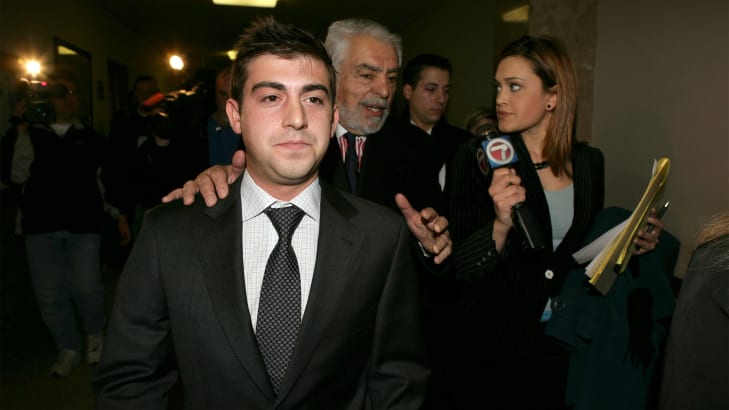
Charles Tasnadi / AP Photo
On February 1, the New York Times reopened controversy about the Watergate scandal by publishing a page one story about an article submitted to but not printed by the American Historical Review that claimed Stanley Kutler, a distinguished historian of the affair, had deliberately doctored transcripts of Nixon White House tapes in order to protect the true role of John W. Dean, Nixon's White House counsel who was the principal witness of the crimes. As the Times stated, the view of the critic, Peter Klingman, is that Kutler is shielding Dean, "a primary architect of the cover-up who saved himself by deflecting guilt." John W. Dean exclusively replies to the accusations presented in the Times article in The Daily Beast.
On the front page of Sunday’s New York Times on February 1, I was greeted with the headline: “John Dean’s Watergate Role at Issue in Nixon Tapes Feud.” When the Times reporter writing this story, Patricia Cohen, contacted me a few days earlier, I told her I could not believe the Times was reporting on this non-story. It is a claim of a self-professed “independent historian,” Peter Klingman, who has no credentials whatsoever to talk about Watergate, yet he is attacking one of America’s most eminent historians, Stanley Kutler of the University of Wisconsin, regarding his work on Watergate. When I found the story on the front page of the nation’s paper of record, I was sure I could hear a desperation death rattle of dead-tree journalism.
“It appears the Times has been hoodwinked by historical hucksters and Nixon apologists…. This front-page Times story could not have made the comics pages of The Washington Post…”
The Times story is about a “submission” to the American Historical Review of the American Historical Association, not a peer-reviewed article published in the journal of the prestigious organization of professional historians. Most journalists would consider an unpublished submission even less credible than a complaint filed in a lawsuit (since lawyers can be disbarred for false and frivolous complaints), and scrupulous journalists only report on legal complaints after they have been litigated and tested. To say the Klingman’s submission is untested is an understatement, and the Times fails to mention—a fact I quickly learned—that this submission has been rejected by other professional journals. This is not surprising.
It appears the Times has been hoodwinked by historical hucksters and Nixon apologists whose goal is to find a beachhead within the mainstream media to gain legitimacy for their crackpot revisionism. They desperately want to be taken seriously by organizations like the AHA. The Times has given them their biggest victory in more than two decades of seeking legitimacy. There is nothing inherently wrong with revisionism when it is called for and based on solid new information. But these Watergate revisionists elevated by the Times seek to create a false history.
This front-page Times story could not have made the comics pages of the Washington Post, for the reporters who led them to their Watergate Pulitzer, Bob Woodward and Carl Bernstein, are well aware of the work of these Watergate revisionists. Like me, Woodward has for years been under false and vicious attack from these revisionists. Maybe this explains why this was news for the New York Times, which is still, after all these decades, smarting from its remarkable failure to cover Watergate as it occurred, finding itself scooped by the Washington Post on the biggest story of the last half of the 20th century. Or maybe the Times editors hope these revisionists are on to the real Watergate story, and they still want to embarrass the Post. If that is the thinking at the Times, they should brace for their own coming and further historical humiliation, for there is simply too much hard information establishing the fact that the Times has published a bogus story.
Times reporter Patricia Cohen did not ask me for my comments about the substance of her story, only for my reaction to Klingman’s submission charging that Stanley Kutler had been shilling for me for years, distorting his historical writings and his transcripts of the Nixon White House tapes to somehow protect me. When I asked her why the New York Times would cover this ridiculous charge from a Watergate revisionist, her response was vague. Because there was something of a chuckle in her voice, I had the impression she did not take the charges very seriously. I was not even sure she was going to publish anything, and she certainly never said a word suggesting I was the centerpiece of her story and Klingman’s charges. The last reporter to do that to me was from the National Enquirer.
I know almost nothing about Klingman, aside from the fact that he has embraced the evolving and often-changing screwball claims of bogus Watergate revisionists. The first time I saw his name was after my wife and I sued St. Martin’s Press, following their publication of an earlier revisionism effort, which claimed she too was involved in Watergate. It was a vicious, hurtful story, and after St. Martin’s spent nine years and $15 million fighting our lawsuit, they realized we were not going away, and the case was settled out of court. The key source of that revisionist account was typical of their standards, a man who had been in and out of mental institutions his entire adult life. Regrettably, I am precluded from discussing the settlement—other than to say that we were satisfied. (Editor's Note: Silent Coup: The Removal of a President, by Leonard Colodny and Robert Gettlin, published in 1991, claimed that Nixon was an innocent victim in Watergate of a US military cabal involving John Dean and Alexander Haig with Bob Woodward as its agent.)
As the lawsuit was coming to an end, one of the defendants, Leonard Colodny, a retired liquor salesman turned Watergate buff, dumped all his Watergate materials at the University of South Florida in Tampa. According to the Tampa Tribune, Peter Klingman emerged as “curator of USF’s Mildred and Doyle Carlton Jr. Resource Center for Florida History and Politics,” which housed these papers. According to a member of the USF faculty: “Colodny conned a former director” of the library “into signing an agreement that treated the collection as a historical treasure and Colodny as a celebrity. Colodny, my colleagues in Tampa tell me, is a rather shadowy and paranoid figure… The present director … has come to question the wisdom of the agreement and the value of the collection, but to date has not shown Colodny the door.” As for Klingman, this member of the USF faculty described him as a “former junior-college administrator and adjunct history professor,” with the Colodny collection becoming his “source of employment.” By August 2001, USF had removed the papers from its campus, and Colodny placed his material at Mountain State University in Beckley, West Virginia, where Klingman emerged as one of several directors of the self-styled “Nixon Era Center”—a new home for bogus Watergate revisionism—a member of Mountain State’s extended-learning faculty.
The Times’ inquiry piqued my curiosity about Klingman, so I Googled him and found an undated essay (which the Google cache indicates was posted December 8, 2008) setting forth his analysis of my role in Watergate and his charges against Kutler. Not surprisingly it surfaced on the Nixon Era Center site. Reading Klingman’s work is something of a jaw-dropping experience given the fact the man has a PhD. It was not merely sloppy scholarship, but little more than pure speculation based on fumes of falsehood. (See Harry G. Frankfurt, On Bullshit, Princeton University Press, 2005.) If this essay is the basis of Klingman’s submission—and based on the Times piece, that appears to be the case—it is little wonder the American Historical Association has not published it. While defaming Kutler and me, it seeks to turn history upside down based on a distorted reading of one week in March 1973. The Times gives Klingman respect that would bring a smile to Jason Blair.
As is the norm with Watergate revisionism, misinformation is piled on top of misinformation, mixed with fantasy offered as fact, in paragraph after paragraph, so it takes considerable space to pull it apart to show the games played and the sheer gall of intellectual dishonesty. I found errors in almost every paragraph that Klingman had written in the material attacking Kutler and yours truly. Rather burden anyone with his endless and bogus minutia, allow me to simply drive a stake in the heart of his contention. Klingman claims Kutler—“one of American’s premier historians”—failed to recognize the “inner conspiracy between Nixon and Dean” that purportedly occurred during the week of March 13 to March 21, 1973. The inner conspiracy, if I understand Klingman’s work, involved White House Chief of Staff Bob Haldeman’s aide, Gordon Strachan, and the failure to talk to others about him.
To explain Klingman’s charges (which the Times suggested was credible), it is necessary to dip into a bit of the details, for this is where Watergate revisionism lives and operates. This, in fact, probably explains why no one has paid much attention to it. In fact, at one point, Ms. Cohen writes, “To anyone besides Watergate buffs, the dispute may seem trivial.” She certainly got that right, notwithstanding her effort to draw on another Watergate revisionist, Joan Hoff, to claim this is really, really important information.
The gist of Klingman’s charge is that when writing his book Abuse of Power: New Nixon Tapes (Free Press, 1997) “Kutler deliberately chose to withhold republishing the March 13 tape[d]” conversation between Nixon and yours truly, and that he “deliberately cut and pasted two tapes of March 16.” Kutler allegedly undertook this scholarly misfeasance to protect me because we had become friends, and to remain consistent with his earlier account in The Wars of Watergate: The Last Crisis of Richard Nixon (Knopf, 1990). This is as absurd as it is dishonest.
Apparently Klingman did not notice Kutler’s subtitle: “New Nixon Tapes.” There were literally hundreds of conversations he did not republish in his book. I know from conversations with Kutler’s Free Press editor, Bruce Nichols, who later edited my book The Rehnquist Choice, which was based on Nixon White House tapes, that Kutler had to push his editor to find space for three prior published taped conversations to give continuity to his account. Abuse of Power is not a complete narrative of events, but rather the transcripts of the taped conversations that were surfaced as a result of Kutler’s hard-fought lawsuit to force Nixon and the National Archives to release them to the public. To assert that Kutler selected taped conversation in some way to protect me, as his friend, fails to recognize that our relationship did not develop until after he published Abuse of Power.
I have no idea if Kutler conflated two transcripts. In any case, this is nitpicking, and, ironically, Klingman does the same thing in his essay. He cites and quotes from a telephone conversation I had with Nixon on the evening of March 16, 1973, yet at the end has Richard Moore, another White House aide, also talking with Nixon and me. It never happened. Moore was not on the phone. To accuse Kutler of deliberately conflating two conversations when Klingman made a similar error shows how over-the-top these revisionists are.
Nonetheless, Klingman insists that Kutler acted deliberately and this is evidence of “a serious professional lapse” by failing to publish all conversations between Nixon and me between March 13 and 21. Kutler, he claims, omitted conversations proving “beyond a shadow of a doubt that before March 21,President Nixon knew very well about Gordon Strachan and so did John Dean.” Wow, that may be the most underwhelming revelation ever about Watergate and it is true. But it is not true for the reasons Klingman cites and it does not have the significance he claims.
Klingman, like other revisionists, believes that Nixon first learned of Strachan’s possible involvement with Watergate when I told Nixon on March 13, 1973. This is not correct. The revisionists have either not bothered to look, or chosen to ignore, the fact that a month before I discussed Strachan with the president, my predecessor as White House counsel, John Ehrlichman, who was Nixon’s domestic-policy adviser, had a conversation with the president about who knew what about the Watergate break-in. In that conversation on the morning of February 23, 1973, Ehrlichman explained that Haldeman had “constructive knowledge” about Watergate “through a fellow named Gordon Strachan.” Ehrlichman said. “Gordon Strachan’s job here was Bob’s liaison with the campaign… [and he] kept the most meticulous attention to the details.” Nixon asked whether Haldeman knew “that information was coming from tapped sources?” Ehrlichman thought not but suspected “Strachan did.”
Klingman claims because of the “inner” Nixon/Dean conspiracy, the president never confronted his Chief of Staff Haldeman about the Strachan connection. This, too, is false. On evening of March 20, 1973, Haldeman spoke with the president about Strachan. Haldeman explained, “You see, the problem with Strachan—they’re worried about Strachan getting, getting [Watergate] into the White House.” Haldeman did not think Strachan had a criminal problem because “he wasn’t directing it, he was simply aware of what was going on.” The chief of staff conceded, however, that Strachan “does have a problem, because I think he knows wh--, what happened over there. That’s where he gets into trouble.” But Haldeman did not feel Strachan was a problem for him. “The danger you got there is that he probably, and I possibly, got reports on some of that stuff.” But not to worry, Haldeman added, because he “never looked at” the material from Strachan.
These overlooked conversations simply eviscerate Klingman’s core claim of an “inner” Nixon and Dean conspiracy, for all the key players in the coverup were aware of the Strachan situation, and dealing with it was all part of the same ongoing effort to protect Nixon. Since it never happened, Kutler could not easily report it. The omitted conversations change nothing, and lead to no other reasonable conclusion, not to mention they were available at the National Archives for anyone interested.
When reading the repetition by the Times of the false attacks on Kutler and me, hyped as new revelations, when, in fact, I found they were published online years ago, it reminds me of the analysis of contemporary journalism by then-Senator Barack Obama, which he set forth in his insightful The Audacity of Hope: Thoughts on Reclaiming the American Dream (Crown, 2006). Obama noted how reporters too often thrive on “that old journalistic standby—personal conflict” because “civility is boring.” He added that “the amplification of conflict, the indiscriminate search for scandal” has its impact, which “is to erode any agreed-upon standards for judging the truth.” Accordingly, “the media is splintered into a thousand fragments, each with its own version of reality, each claiming the loyalty of a splintered nation.” He further pointed out that “the truth will be attacked; [and] the media won’t have the patience to sort out all the facts and so the public may not know the difference between truth and falsehood.” This nicely explains the Times piece: It is a story of personal conflict; it has the smell of scandal; it further erodes standards for judging the truth; it fails to sort out the facts, and confuses history by failing to distinguish truth from falsehood.
Given the fact that a publication like the New York Times could not figure out it was being had by the Watergate revisionists, I realize I must do what I have been encouraged to do and reissue Blind Ambition, my autobiographical account of this history, which has been out of print for over two decades, along with a new afterword addressing Watergate revisionism in some detail. The Times piece suggests I should do this as soon as possible: June 17, 2009 strikes me as an appropriate anniversary date, for this was the day the arrests occurred at the Watergate in 1972. If there is anything about my role in Watergate that is not known, I would be truly shocked. Not everyone, however, is happy with the truth, even now. But I had not expected the New York Times to be so easily snookered by the bogus Watergate revisionists, after all these years—unless, of course, they wanted to be.
John W. Dean, former Nixon White House counsel, has written ten books, including Broken Government: How Republican Rule Destroyed the Legislative, Executive and Judicial Branches, and is working on his next.


I heard Dean speak at a university in Canada in the early 80's when he was on the road promoting a book.
I and another student confronted him on his real role in the Watergate affair and just how he manipulated the events as they unfolded.
We likened his testimony in Congress to Captain Renault's shock over the gambling taking place in Rick's Cafe in the movie "Casablanca".It should have been apparant to a bright guy like him that all was not kosher in Nixon's White House yet he only raised concerns when it was clear events were getting out of hand......
His response was muddled and baffled. He quickly opted for softballs someone else was asking....
He exposed himself as the self-serving opportunist he clearly is.....this article is just more the same from this slimeball...
it should be apparant that facts are not as powerful as belief to those who place ideology before truth.
John Dean has misrepresented his actions in Watergate so many times that he can't keep them all straight. He does it again here.
He fails to address the facts at the core of the Times story. The transcripts don't match the tapes. The way Stanley Kutler has handled the tapes and written the various narratives for the March 13-21, 1973, time period adheres to the history he and Dean have presented earlier. But they don't match reality. Anyone who cares to listen to the tapes that were posted with the Times story or that are kept at nixontapes.org, a fine site compiled by Dr. Luke Nichter at Tarleton State University, can see and hear for themselves what happened.
Dean mentions his lawsuit against Len Colodny and St. Martins Press. That suit was settled at the insistence of Dean and his attorneys. They were going to lose, and the court said Dean couldn't talk about the settlement. Dean also fails to mention is that he fought testifying in the case for years, and when he finally testified under oath he was forced to disavow his own Watergate memoir, Blind Ambition, because it didn't match the sworn testimony he gave in other forums. Instead, John Dean accused his ghost writer, the eminent historian Taylor Branch, of making things up. That's despite Dean's own foreword that said he had scrupulously gone through the record as he writing Blind Ambition and that everything in it was accurate.
Dean has thrived on his undeserved reputation as a Watergate truth teller for more than 35 years. But now that reputation is under legitimate attack, as more people can see the available evidence. James Rosen exposed more of the truth last year in his excellent book, The Strong Man. He examined the testimony in the Dean lawsuit and found numerous examples of Dean's inconsistencies. If others had paid more attention to that case when it was happening, much of this information would be common knowledge and Dean's record would have been exposed even earlier.
For too long, the establishment tied to the official Watergate history have tried to silence those with other interpretations, often labeling them as revisionists or wackos. Dean tries it again with Peter Klingman. However, it simply appears that Klingman did what so many others who have researched Watergate did not. Klingman examined the tapes and compared them to Kutler's transcripts. Patricia Cohen did that as well, and she talked to experts who had listened to the tapes for years. Is Dean saying Fred Graboske, the longtime Nixon archivist, is a crackpot?
The tapes and the transcripts speak for themselves. Kutler must have done this deliberately. Kutler knew about problems with them as far back as 1998, when he denied to The Tampa Tribune that it could have happened. He never did anything to address the issue, and his comments to the Times show he would rather attack his questioners than deal with the problems at hand.
John Dean is no different. In the end, all Dean has going for him is name calling. He has long lost contact with the truth, and his latest smear attempt fails miserably.
Peter Klingman's central charge -- that Stanley Kutler deliberately altered the historical record -- is unjustified. Kutler made honest mistakes in transcription, but so has everyone who's ever published a book of White House tape transcripts.�
Ever since John Dean turned state's evidence in 1973, Nixon's partisans, from the president on down, have attempted to portray the stool pigeon as Watergate's chief culprit. But the Nixon tapes prove that the chief culprit was the president himself, at least from the time he authorized the wiretapping of political rivals in May 1971.
I mention the May 1971 tape because it is one that Kutler left out of his book, Abuse of Power,�although it establishes that, regardless of whether Nixon specifically authorized the wiretapping attempt by his campaign operatives at the Democrats' Watergate headquarters, he had authorized political wiretapping in general and thus bears responsibility for the crime that precipitated his downfall.
Far from stacking the evidence against Nixon, Kutler did not even manage to squeeze all the taped evidence of the president's guilt into his book. There is as little reason to think that Kutler left tapes out of his book to exonerate Dean as there is to believe that he left out tapes to exonerate Nixon.�
Klingman claims that if Kutler had published transcripts of the tapes from March 13 to March 20, 1973, readers might conclude Dean was more active in the cover-up that Kutler had indicated. Well, if anyone ever publishes transcripts of all of the tapes from February 16, 1971, to July 12, 1973, readers will have to conclude that Nixon bore a far greater role in his administration's wrongdoing (and his campaign's)�before and after Watergate than any historian, Kutler included, has ever fully established.
No one disputes that Dean played an important role in the cover-up -- not even Dean. But his was a subordinate role -- subordinate to Nixon's two top aides, Haldeman and Ehrlichman, and�to Nixon himself.�
I wish only to make the following comments for now concerning John Dean's response to the New York Times article:
1) The evidence upon which the article is based is available for anyone who wishes to evaluate it and make up his or her own mind. I exposed Stanley Kutler's conflating of two taped conversations. That was, and is, the issue in my article that is of prime importance.
2) I will not discuss details until the America Historical Review has rendered a decision concerning my submission.
3) I will state categorically that Mr. Dean is mistaken about prior submissions. Although this article has been solicited for publication, I chose to submit to the American Historical Review, and they have chosen to consider it.
4) Of course Mr. Dean's role is controversial. Were it a simple matter of agreement, there would be no controversy. Mr. Dean referred to my 2002 article. In it I began by stating that until all the tapes are released, no one's interpretation can be guaranteed to remain intact. That clearly includes me. Were that not true, historians would be remanded to the role of stenographers only, not of the teachers, the explainers, and/or the interpreters of past events we all strive to be.
5) I will point out to your readers that this is not the first time, nor am I the first person, who has been attacked ad hominem by John Dean over issues regarding his role in Watergate and the way in which the story has been covered in the intervening years. My personal opinion is that I am in good company.
Thank you for posting my reply.
Respectfully
John Dean... the real revisionist...
The Strong Man: John Mitchell and the Secrets of Watergate by James Rosen, a superb book on Nixon's Attorney General who became the fall guy for Watergate. Rosen worked for many years to uncover the true story of Watergate. He revealed throughout the book that a reexamination of the tapes showed that John Dean was at the heart of Watergate and worked to place the blame on Mitchell and others around Nixon.
I sued St. Martin's Press, following their publication of an earlier revisionism effort, which claimed she too was involved in Watergate. It was a vicious, hurtful story, and after St. Martin's spent nine years and $15 million fighting our lawsuit, they realized we were not going away, and the case was settled out of court. - John Dean
Suing the press into submission is not winning this confessed Watergate co-conspirator any favor in my book. I just wonder whether the whole constructed downfall of Pres. Nixon, deservedly or else, was not an inside intelligence job that continues to this day by misinforming the public.
Dean, Richard Clark, Scott Ritter, etc etc. dicredit the whistle blower. Big surprise. Where have all the real journalists gone. NYT's is writing stories about watergate when they could have blown a dozen watergates wide open the last 8 years.
From the NYT article: "In one conversation...Mr. Dean tells Nixon that Gordon Strachan, a White House aide, knew about the break-in before it happened. During hearings of the Senate committee investigating Watergate in the months to come, Mr. Dean would testify that there had been no prior White House knowledge of the break-in."
Now in Dean's The Daily Beast column, if I read him correctly, Mr. Dean admits, and calls "most underwhelming," the assertion that he and Nixon both knew about Strachan before Dean's Congressional testimony in which he denied prior Whitehouse knowledge. Am I reading this right? How to explain?
I believe that John Dean has been so effective at educating the public about abuse of power (see his appearances on KO and Rachel), that the right wing is desperate to discredit him. Using Karl Rove tactics, they are trying to transform Mr. Dean's strength (speaking truth to power) into a weakness. Problem for them, we're on to their pathetic ways.
As I read John Dean's explanation, I thought about how difficult it will be to explain each and every mindless attack on the economic recovery package. They will never stop trying to baffle us with BS!
NIXON WAS LOOKING FOR A FALL GUY. HE PANICED WAS PARONIOD,HATED THE PRESS AND DEAN WAS THE MOST EXPENDABLE. IT WAS INCONCIEVABLE THAT DEAN WAS GOING TO SIGN ANYTHING IMPLICATING HIM LET ALONE TAKE THE BLAME. NIXON DID SO MANY GOOD THINGS AND TO BE IN A STATE OF MIND THAT THIS CRAZYNESS WOULD HELP HIM WAS BEYOND BELIEF. HE HAD A DOUBLE DIGIT LEAD GOING INTO THE ELECTION AND THE OUTCOME WAS THE BIGGEST VICTORY OF ANY PRESIDENT WINNING EVERY STATE EXCEPT MA.WHAT A SHAME. A PRESIDENT SURROUNDED BY THUGS BECOMES ONE HIMSELF. I BELIEVE NOW THEY ASSOCIATE THAT WITH THE RICO ACT.JOSEPH CAPRIO
Thank you.
As a first time user, your comment has been submitted for review. It can take anywhere from a few hours to a day or two for your comment to be reviewed, depending on the time of week and the volume of comments we receive.
Please log in to leave comments.