Blogs and Stories

Douglas Rushkoff

Murdoch to Google: Search This

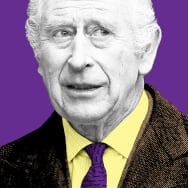
Rupert Murdoch Rajanish Kakade / AP Photo The News Corp. billionaire is threatening to pull his newspapers’ content from Google searches. Douglas Rushkoff on why it may take a real conservative to save journalism from the free Web.

As unlikely as it sounds, Rupert Murdoch may end up being our last best hope for a peaceful solution to the Internet’s war on professional journalism. A man who many blame for commodifying, globalizing, sensationalizing, and cheapening news is considering taking a stand against a force even bigger than himself: the Web link.

In an interview with Sky News Australia over the weekend, Murdoch challenged the Cardinal Rule of the Internet by suggesting that information wants to be expensive: “They shouldn’t have had it free all the time, and I think we’ve been asleep. It costs us a lot of money to put together a newspaper.”

Murdoch is talking about more than simply charging for access to the online versions of his newspapers, which The Wall Street Journal and a few others have been doing successfully for years. Railing against “content kleptomaniacs” like Google, Microsoft, and Ask.com—which effectively syndicate News Corp. content without paying—Murdoch even suggested he might put up walls that prevent the stories in his papers from appearing in Google searches at all.

By suggesting that he is ready to pull the plug on universally searchable news, he is inviting other publishers in the same position to consider taking the same leap.

That’s right: Instead of rigging the system to achieve higher rankings in search returns, Murdoch is contemplating pulling his content from Google searches altogether—a simple tweak that Google says is available to every Web site.

Of course, Google seems flummoxed that anyone would choose to do so. In a statement released in response to Murdoch’s challenge, Google stated what the company thought was obvious: “Publishers put their content on the Web because they want it to be found.”

But as Murdoch’s News Corp. and most news organizations are now learning, sometimes Google can make it too easy for Web users to find their content. In their effort to get on board the Internet and cooperate with the notion that information wants to be free, many newspapers have transformed what had been their most profitable assets into liabilities. What good is a global audience if nobody is paying? Without revenue, the newspapers eventually go belly up.

So, as New York Times reporters await word on who will be among the 100 more cut from the payroll in the next couple of months, the Writers Guild holds panels on how to eke out a living as a professional news writer, and the forums on Mediabistro fill with postings from journalists considering new career paths, it is time for someone to consider the alternatives to melting professional journalism into the always-on, always-free blogosphere.

To be sure, the ascent of the free has been a boon for a lot of people. Millions around the world—well, at least the people with Internet connections—enjoy free access to pretty much any information they need, any time. But just as infinite access to free music ultimately leads to no one making a living at music anymore, free journalism just doesn’t pay for itself—particularly not when a search engine is serving all the ads.

But what Murdoch understands is that a revolt against the free will take more than erecting a subscriber login between a Google link and a story. All the login does is push the user to find an alternative source for the information—some other publication’s free link. No, what Murdoch has realized is that a newspaper is not just valuable for the individual stories or tidbits that can be culled, piecemeal, from a generic list. A newspaper provides context. It tells a story through its selection of articles for a given day, their juxtaposition, and even their flow over time.

By opening themselves up to immediate vivisection-by-search, news organizations invite the disconnection of their articles from their context and their source. And the more they encourage their content to be parsed in this way, the more they encourage readers to look at the work of their journalists as mere datapoints, isolated from a greater perspective. Like what ringtones are to music.

When Rupert Murdoch first bought The Wall Street Journal, one of the few major newspapers charging readers for access, he suggested that he would soon remove the tollbooth in order to promote bigger readership and more ad views. Now, just a couple of years later, he is realizing that The Journal had it right, and ultimately protected the integrity of itself as a publication by keeping itself intact.

And it’s not as if Google is in this merely for the public good. Google makes its money by keeping everyone else’s content open to its searches and the ads that are stacked up alongside them. A world of open content is a world that is open to Google.

Sure, it’s hard to argue against the openness of a Google universe without coming off as dark, begrudging, and conservative as someone like, well, Rupert Murdoch. And as a professional journalist who nonetheless champions a “people’s” Internet, I am happy to compete against the thousands of amateur bloggers out there reporting and commenting on the same stories I do. But the competitive advantage professional journalism enjoys over the free is just that: professional journalists, whose paid positions give them the time and resources they need to commit more fully to the task. If we can’t do better, so be it. But at the current rate, we won’t have the opportunity to find out.

Of course, Murdoch’s remarks are really just a trial balloon. He has initiated a conversation—but one that few of us are in a position to back up with a multibillion-dollar media empire. By suggesting that he is ready to pull the plug on universally searchable news, he is inviting other publishers in the same position to consider taking the same leap.

I, for one, hope they do.

Douglas Rushkoff, a professor of media studies at The New School University and producer and correspondent for the PBS Frontline Digital Nation project, is the author of numerous books, including Cyberia, ScreenAgers, Media Virus, and, most recently, Life Inc. (Random House).

For More of The Daily Beast, become a fan on Facebook and follow us on Twitter.

For inquiries, please contact The Daily Beast at editorial@thedailybeast.com.


View as Multiple Pages
Back to Top
November 9, 2009 | 11:24pm
Comments ()
laDivaG

Most people don't read Internet news outlets for an overall context; Murdoch assumes that people would read his site that way if he could get them to stay, but I think he's wrong. But if he wants to test his theory, he should start by redesigning his free website to encourage people to read for the bigger picture; if he can get them to do that, then maybe he's got a shot at getting them to pay. Still, I have my doubts.

One thing he could do to test the waters is charge for premium content; lots of the European evening papers do that. They give general access to the regular news but their exclusive content requires a subscription.

The site definitely needs work either way. As it is, it's clumsy, difficult to navigate, requires too much scrolling, and has a boring layout. I suppose the Times could require a free subscription to test their numbers but if they try to charge for the online edition as is, they are sure to lose a great many readers.

|
|
Reply
|
3:20 am, Nov 10, 2009
tompaine

They don't care how many readers they lose, if they were not paying. A new business model is clearly needed for the professional media, if it is to survive. Murdoch is feeling his way towards that. He may not be on the right track in terms of the solution, but he has correctly identified the problem.

Political bloggers are irrelevant to this. Those who produce original content, still less break stories, are in an achingly small, irrelevant minority. If we can't link to the professional stories on which we comment, most of us are out of the game. We can pay Murdoch's subscriptions ourselves, but when readers click on the links we will have become his unpaid sales force.

|
|
Reply
|
3:56 am, Nov 10, 2009
laDivaG

Yes, they do care. Newspapers and magazines, online and hardcopy alike, make more money from advertising than subscription fees. Way more. They generate the bulk of their income by showing advertisers how many people they will reach by buying ads in the publication. One way to do that is through subscriptions, but it's not the only way. Subscription fees have generally covered distribution costs, but not much else.

|
5:47 am, Nov 10, 2009
hockeydog

I hear you tompaine, but there is another dynamic at work here. Our newly- minted cyberbrains have learned to search out new sources of information, when the greed factor taints our playground.

Bear with me on this for just a moment.

About ten years ago, I moved out of the S.F. Bay area to another part of the country. During the twenty-five years of living there, I became a huge fan of the S.F. Giants, and was delighted that I was able to continue listening to the games via the internet. KNBR, the Bay Area radio station broadcast (broadcasted) the games on the radio waves and in cyberspace for free.

F R E E !!! Can you imagine, free, free, free, free? It was like whoa baby,
I could still be a fan, although I could not attend the games. Then, a funny thing happened.

Major League Baseball stepped in, and shut it down. They said they own the internet rights to all major league broadcasts, including radio, and poof!
No more free radio broadcasts of my beloved GIANTS.

Now, the first step was that MLB would only charge ten bucks a year for the privilege of listening to the Giants games. Ten bucks, or ten thousand dollars, did not matter to me, once the greed factor set in, hockeydog took off.

Bottom line: I quit being a GIANTS fan, because I could no longer follow all of the personal info, the color background that only a local media can provide about a team, and this has ultimately caused me to stop truly caring about Big League Baseball in general.

So, okay, perhaps it is a little like cutting off one's nose to spite one's face, but the other side of the coin is that I have attained a freedom from having to worry about whether or not the GIANTS could make it without Barry. Yes I lost something, but so did KNBR, and Major League Baseball lost a fan.

So, perhaps old Rupert, with his interestingly lined face will be able to save our printed media. But, it could be that our talented writers will find a way to reinvent themselves. Perhaps Murdoch will take a page from the Atlantic's playbook, and offer deeper content on their webpage for subscribers. Content such as videos related to stories appearing in print.

Interesting times we are living in, for sure!

|
6:19 am, Nov 10, 2009
stopper22

@hockeydog - I hear what you're saying, but the greed factor you mention is really in the wrong direction. tompaine is right about how people view being charged for someone else's work as "greed". I'm sure you don't work for free, I know for certain that I don't. Why are we surprised or upset that journalists don't want to work for free either.

|
9:39 am, Nov 10, 2009
cassandravert

As laDivaG said, newspapers' current revenue model focuses on advertising based on circulation. The internet makes traffic (circulation) easier to measure and opens up circulation and advertising beyond the local geographic area. What's wrong with this model?

Ok, there will definitely be some content evolution along the lines of television. This is far from perfect, but I can see the Internet evolving in that direction. You pay for access to the content stream and can opt in for premium content like WSJ. If WSJ can create enough value to generate subscription income, more power to it, but the vast majority of sites will survive on advertising revenue, merchandising, or straight product/service sales.

No doubt ISPs want to curate our internet content like they see cable companies doing for television. I don't mind allowing them to offer an opt-in package, but the basic default should always be uncurated, uncensored, unrestricted access (free internet).

|
10:44 am, Nov 10, 2009
tompaine

It's funny how what other people charge for their work is "greed," and what we charge for ours is "hard earned."

I don't think Murdoch is on the right track, but if the revenue from advertising was enough, he wouldn't be changing his model. He will have consulted his advertisers for sure. Like him or loathe him he's a great business man.

If you were starting a news media operation today, the last thing you would do is start chopping down trees, pulping them, printing stuff on them in big factories and then delivering them to street vendors. Online is the way forward, no doubt, but now it's mainstream the happy free days of cyberspace have to end. Not because of "greed", but because news gathering costs serious money if done well, and there's only so much consistently high quality content you can get for free.

We can refuse to buy and go back to newspapers if we like. That works for the media companies too, for a while. But when the newspapers are gone, we are going to have to pay - one way or another - for online content. Murdoch is fumbling his way towards the inevitable and calling him names will make no difference.

|
|
Reply
|
7:36 am, Nov 10, 2009
jaydeekay

Paying for this content will only serve to make an even more uninformed populace... as Murdoch wants. If paying for content from one site, you would most likely not pay for it from another. So we'll have only Fox's version of news being followed by one person, while another will only follow BBC, or MSNBC. One will not be able to compare media stories to find the true, unbiased truth.

This will cause more dissension and anger.

|
8:38 am, Nov 10, 2009
RawhideRex

jaydeekay... agree 100%

|
9:19 am, Nov 10, 2009
stopper22

@jaydeekay - That is actually the best point against pay for content I've yet heard. However, those who would only pay for Fox or BBC or MSNBC would still probably only follow those sources anyway. Those looking for an "unbiased" source would likely search one out or compare multiple stories anyway.

|
9:43 am, Nov 10, 2009
camfield

The problem is that so much of the public does not like truthful and objective reporting of the news in the manner of the traditional press. To comfortably reinforce its particular biases, it has turned in large part to slanted Internet blogs and other web postings that twist reality beyond all recognition. Advertisers have followed, to search sites such as Google and Yahoo!, to further pander the dumbing-down of American society.

Television already had developed as a pathetic alternative news source, paving the way for the Internet. And Mr. Murdoch has himself to blame, in part, for the disappearance of newspaper subscribers--by virtue of his very own Fox News, which is about as far from the nation's many great newspapers as one can get.

Political "conservatives" are a good example of the continuing disappearance of virtue in the dissemination of news and information as, generally speaking, they seem to view every uncomfortable printed truth as unfair criticism and turn to the old rant about a "liberal press" in much the same manner they have worked to make the very word "liberal" some sort of dirty word over many decades.

|
|
Reply
10:44 am, Nov 10, 2009
DakLak

Murdoch is a Neanderthal.

The key thing with them is that they all died. You missed your call, Murdoch.

|
|
Reply
6:18 am, Nov 10, 2009
vortograph

The digital age is really messing things up for the old school billionaires. Poor Murdoch is scrambling to retain his empire that is so righteously slipping away. Good luck trying to put the genie back into the bottle, Rupert.

|
|
Reply
6:45 am, Nov 10, 2009
chgodane

I find it ironic that the very argument this author is attempting to make - that proper journalism requires context - is undercut by the wholesale inaccuracy of his description of how news is offered by Google. While it's true that if you do an ordinary Google search, innocuous ads appear to the right of the results, but most people obtain access to news articles through a Google News page which contains no ads anywhere. Furthermore, once a link is clicked, it takes the user to the newspaper's own site where only their own ads are viewable, and the newspaper is credited with the click-through and the readership. It is ridiculous for newspapers to blame Google for their ills. My understanding is that newspapers have been primarily ad-supported for most of the modern era. How else to explain the bloated Sunday ad extravaganzas. Add to that the savings implied in internet rather than expensive paper publication and distribution of content and it becomes difficult to understand why newspapers can't survive with net-based ads to support a less costly distribution system. If they are trying to retain their paper-based systems by subsidizing them with internet revenue, that's seems clearly a losing proposition -- but why not just let go of the antiquated part and go with full internet versions - ads and all! Again, it's hard to imagine that jettisoning the expensive paper systems wouldn't make up for the loss of low-ball subscription and vending machine revenue. Get up to speed or be left behind. The Daily Beast is a perfect example! I rarely go to the online version of my local newspapers because the content is so dull. But I visit The Daily Beast every day. Make the content interesting - put it on the web - get readers - attract advertisers. Is it really that difficult? Just an aside - I hope Murdoch pulls his newspapers from Google because I find most of the content of his newspapers slanted, bigoted and appalling. Good riddance!

|
|
Reply
7:12 am, Nov 10, 2009
SimonSaize

Is this the same person who owned Viacom and a few years back disregarded civil liberty laws and imposed a threat and used that action to invade the privacy of Youtube accounts? And is this the very same individual who owned Myspace and turned that site into a file sharing site and then musicians no longer got paid and independent artists lost their footing? And is the same business man who owned MTV which deciphers by definition as Music Television- which oddly doesn't play video's, has rarely new music and caters to reformist reality T.V. programs and boring game shows?
Nothing spurs growth more than halting new idea's and washing out creativity while capitalizing from it, and invading peoples privacy isn't an issue if your the one taking liberty.
Google should definitely bow down to him.

|
|
Reply
|
7:49 am, Nov 10, 2009
oldpunk

This is what he owns under News Corporation

http://en.wikipedia.org/wiki/List_of_assets_owned_by_News_Corporation.
Like Simon pointed out about what he has done to MTV , is no different to what he did to news on Fox News. Fox only has news at certain times of the day the rest it said was opinions.The opinions of Murdock , but still opinions.
If Murdock thought for one second that he would make more money out of Fox News as a Communist Propaganda network it would change over night.The people who leap to the defense of Fox & Beck are fighting for somebody who would ditch them in a second.

|
|
Reply
9:22 am, Nov 10, 2009
stopper22

actually he's not. you're think sumner redstone.

|
|
Reply
9:45 am, Nov 10, 2009
thefulishbastid

The world is passing you by, Murdoch.

Bye.

|
|
Reply
|
8:35 am, Nov 10, 2009
getkicksonrte66

DITTO

|
|
Reply
9:55 am, Nov 10, 2009
jrjenki

Mr Murdoch apparently fails to understand how the world runs. If he stops his papers from being accessed by Google etc his reporters will move to other papers. The reporters who write for him WANT their articles read by the world. The information in most articles in his newspapers can be accessed elsewhere. Let him block his papers. Soon after that he will not have any newspapers to have blocked. They will be out of business.

|
|
Reply
|
9:03 am, Nov 10, 2009
stopper22

I'm sure reporters want their stories to be read by the world. But I guarantee that none of those reporters wants to work for free.

|
|
Reply
10:02 am, Nov 10, 2009
BainsAR

I have read the WSJ for the past 40 years. In the 'old-days' the content was delivered in print format at our building about 6:00 AM and distributed internally. The cost was high in relative terms.

Along came the on-line edition. I signed up and gratefully paid to NOT have the messy newspaper. Better search, but same interesting and focused business news put in context of the business and cultural landscape. Really good reporting.

Along came Murdoch. The WSJ format has now changed completely. It looks and feels like a business version of USA today. Gone are the insightful reporting to be replaced by dumbed down articles and banal content. Up went the prices - 56% in less than 4 years. So the WSJ has lost me as a paying subscriber.

The point is that Murdoch apparently does not understand the needs of his customers and is chasing some form of revenue and profitability growth like a junior mid level manager without a strategic focus on his customer base and core competency. Most likely he will pass before the results are known and the publication may continue to stumble along for a while.

|
|
Reply
9:05 am, Nov 10, 2009
KateTheGreat

Ohhhh, please remove all Murdochian content from Google -- what a luxury that would be! *sighs dreamily*

|
|
Reply
|
9:15 am, Nov 10, 2009
cbl99201

Kate, you are so right !!

|
|
Reply
6:14 pm, Nov 10, 2009
Loonesta

So people aren't already paying enough for Internet access? We now should pay site-by-site? Will this eliminate the sight of those obnoxious Flash ads, if we have to pay? This is the conundrum with cable television, too - why are there commercials on these channels I am already paying dearly every month to access? There is the possibility here that Murdoch realizes finally that he's got to find some way to make up for the huge losses on his newspapers, like the NY Post.

|
|
Reply
9:48 am, Nov 10, 2009
PinkoLefty

"But what Murdoch understands is that a revolt against the free will take more than erecting a subscriber login between a Google link and a story. All the login does is push the user to find an alternative source for the information-some other publication's free link. No, what Murdoch has realized is that a newspaper is not just valuable for the individual stories or tidbits that can be culled, piecemeal, from a generic list. A newspaper provides context. It tells a story through its selection of articles for a given day, their juxtaposition, and even their flow over time."

Bullcrap! Where exactly does Rushkoff find the evidence for this understanding? I didn't hear Murdoch say one thing about context in his interview. Murdoch simply wants people to pay for access and doesn't give a rat's ass about context. As long as you pay your monthly subscription, I'm sure he'd be just as happy if you didn't visit the site at all. Less traffic per user means capacity for more subscribers with fewer servers.

This story definitely has the smell of a commentator ascribing his own latest pet theory to a situation based on very scant evidence.

Careful you don't fall off that hobbyhorse, Doug.

|
|
Reply
|
10:11 am, Nov 10, 2009
rushkoff

Then why would he not want the articles to be listed on Google?

|
|
Reply
|
11:25 am, Nov 10, 2009
PinkoLefty

His desire to be "delisted" could very well be based in a poor understanding of the internet. He is a savvy businessman in the print and broadcast worlds, but the internet might just be a bridge too far for the old coot.

For all we know he could simply be talking about the cached images of web pages that Google hosts. I've never visited the foxnews.com site because I don't want to register as a page-view. I have, however, clicked on the "Cached" hyperlink for searches that returned a hit at their site, thereby reading entire stories without them being the wiser.

|
4:07 pm, Nov 10, 2009
contrary55

The article says: No, what Murdoch has realized is that a newspaper is not just valuable for the individual stories or tidbits that can be culled, piecemeal, from a generic list. A newspaper provides context. It tells a story through its selection of articles for a given day, their juxtaposition, and even their flow over time.

So it sounds like he wants to put his unmistakable perspective and spin on the content and not just let the reader decide freely what it means.


|
|
Reply
|
10:34 am, Nov 10, 2009
rushkoff

Well, yes. The video exists, as do transcripts. My blog post is my interpretation of what it means, and what I think Murdoch believes about media. I suppose I can say "I think" or "What this means to me" a bit more frequently.

|
|
Reply
8:38 pm, Nov 10, 2009
oldfolks2327

I love his decision. i don't think that he will follow through,but i can dream. less hate to be spread

|
|
Reply
10:48 am, Nov 10, 2009
petrock

"infinite access to free music ultimately leads to no one making a living at music anymore"

Do you frequently lie to yourself or is this just a special occasion?

|
|
Reply
10:51 am, Nov 10, 2009
meglon978

Google has a market share of 84.5% globally. Anyone that would remove what they want people to find and see from that type of base is basically an idiot. Google doesn't need him and his companies, he, however, needs Google much more than he realizes.

|
|
Reply
12:56 pm, Nov 10, 2009
Maverick

A couple inaccuracies with your article:

WSJ and other newspapers haven't been charging for access "successfully for years". They have been charging for access to a limited selection of content that is financially relevant - ie, you can't find this information elsewhere, and it will help you make money of your own. There's a direct incentive to pay for this type of information that there isn't with other types of content. And WSJ has still been losing money in an impressive way.

Second, "infinite access to free music ultimately leads to no one making a living at music anymore" it patently false. Music creators are making as good or better a living than they were before the advent of the internet. The people who aren't making money are the bloated bureaucracy that used to make up the music industry. Just as bands have found a way to deal directly with fans and profit from relatively lower sales but more merchandising and live performance, I think writers can potentially find a way to deal directly with readers and develop a smaller readership that more directly supports them. It won't be easy, but it's certainly possible.

Last, your characterization of a newspaper as an editorial grouping defined by the sum of its articles is nice, but probably not relevant to how people consume information now or in the future. What percentage of Americans even glance through an entire paper, let alone read a decent portion of it? Newspapers are catering to a general-interest population that is shrinking, if it ever really existed. People are interested in specific things, and uninterested in others. No matter how you try to package it, you can't compel people to pay for parts of a publication they don't want. If I'm deeply interested in politics, I might pay for access to Politico or Talking Points Memo, but I wouldn't pay for access to Daily Beast just so I could get a handful of mildly interesting pieces on politics, art, fashion, sports, etc.

I do think it's possible to successfully charge for access, but the motivator is going to be deeply valuable content that can't be found elsewhere and is covered in more depth and precision than any other source. It's a high bar, but there will be winners.

|
|
Reply
|
1:38 pm, Nov 10, 2009
rushkoff

We must hope so, indeed.

|
|
Reply
8:39 pm, Nov 10, 2009
Snertly

What Murdoch needs is more synergy. He could have the WSJ do a series highlighting the most popular folks on MySpace while Glenn Beck plays air guitar in the background.


But I do hope he follows through on his threat. I doubt few things would harm Murdoch's bottom line like chopping off all traffic from Google.

|
|
Reply
1:57 pm, Nov 10, 2009
Resolute

"But just as infinite access to free music ultimately leads to no one making a living at music anymore"

No. They're called live gigs. You should try attending one sometime, they're great.

|
|
Reply
|
2:39 pm, Nov 10, 2009
ChanRobt

Resolute, you are a traitor to the rights of creators. They ought to be able to earn a living from their records, films, and books. And not have to return to the methods of the Middle Ages going town to town trying to earn their livings.

|
|
Reply
|
4:12 pm, Nov 10, 2009
rushkoff

I'm with you, Chan. I can't see a way out other than returning to a minstrel era. As for writers, it's actually worse since there's no real live equivalent. I suppose public lectures.

|
8:40 pm, Nov 10, 2009
thefulishbastid

I'm gonna disagree. I have a hard time feeling sorry for musicians. I know ALOT of musicians and I believe that hanging around banging out chords is not really deserving of a whole lot of pay back. Once you create content(information) you give up the right of ownership, you created something you wanted others to see or hear, when they do,thats your pay. Anything else is fringe benefits.

|
9:55 am, Nov 11, 2009
MTinMO

I seek truth and objectiveness. I do search for numerous sources of information and I can see a slant when there is one, like the current WSJ. So I have a tendency to look for articles from The NY Times, The Washington Post, LA Times, Orange County Register and I also look for local papers like the Spokesman Review, The Missoulian, The Anchorage Daily News, The ST. Louis Dispatch, The Miami Herald. I have always loved having my newspaper and have usually had a subscription to my local paper. I liked reading a paper. But I have become more conscious of the wastefulness of an actual paper that I hold in my hands. I do not have enough uses for the paper delivered to my home every day to make it not be wasteful. I also don't always have time to read it front to back anymore. Online, I can pick the stories that mean most to me and I don't have to hold up a paper to try to read it. That act in itself has become an issue because of injuries and age, making it difficult to hold a paper open to read. I don't want to have to pay for each and every site I might go to to check out something. I may only go there once in a blue moon or I may check it more often. Depends on what is happening in what part of the country. I understand that newspapers need revenue to survive. We need to have a fair way to access information that doesn't keep people who can't afford to pay access or subscription fees from the information available on the web. News and information should never become something only people with means can have access to.

|
|
Reply
2:42 pm, Nov 10, 2009
ChanRobt

If the administrations wants to save newspapers and journalism in general, it's not subsidies that are needed.

What the government ought to do is give newspapers and magazines the same privilge they give major league baseball and lift the anti-trust laws so that news organizations can collude.

They should all get in a room and agree that no newspaper or magazine will give away its work for free. If newspapers pay people to collect and report the news, then the readers should have to pay.

|
|
Reply
4:11 pm, Nov 10, 2009
spacialist

The only time I end up on a syndicated papers links are by accident. I don't have time for so called professional journalists because I need discernible facts not biased, poorly researched mind farts, from some kid who is painfully uninformed about history judging by their glaring inaccuracies and apparent lack of comprehension of the function of actually knowing that which you write about. Even spelling seems to be a major challenge for journalists these days. If you want my money than produce something worth reading. Get a real education where they teach you to think objectively about topics as opposed to correct partisan "think". A course or two on how to conduct research-and analyze- a topic so that people can actually be informed with information that enables them to draw their own conclusions instead of being spoon fed partisan agenda. They have dropped the ball of relevance and now are whining because the way we communicate has changed and seek information has become. I actually prefer to read hard copy but the lack of a relevant print media source necessitates internet searching instead. So go right ahead and block free links and I should never again end up on the site of some mainstream (non)news source.

|
|
Reply
|
5:24 pm, Nov 10, 2009
FatFreddy

I think one of the arguments is that these newspapers don't have the resources to provide the in-depth, investigative reporting that they once did.

|
|
Reply
6:56 am, Nov 11, 2009
Hotfrostins

Rupert seems to be struggling with the future of news media and where its going. In my opinion , if you want to see where journalism is heading and you have the iphone try downloading an app called "newstand" . It really is phenominal access. Thousands of newspapers,periodicals,and blogs you select from a topical menu from around the globe. Then they appear as newspapers on your news stand rack and with a mere flick you can scroll through them all. Tap select and that newspaper is brought up in its entirety. It will satisfy any appetite for information that exists. Really quite an amazing tool. Check it out, I think its where we are headed with regard to print media. Computer app phones are the future, for daily news media that consumers will choose for a modest fee. IMHO.

|
|
Reply
|
9:04 pm, Nov 10, 2009
Hotfrostins

Its "Newsstand" excuse please

|
|
Reply
9:09 pm, Nov 10, 2009
dooreen

Since when do we get balanced coverage of anything.

We have turned into a a suspicious society, where almost every day strangers are not just treated as people you don't know, but as potential rapists, or potential murderers, or a potential criminal.

We are bombarded with bad news, the worst news you can possibly find will be published first, and it will be repeated over an over again, and we wonder why there are so many paranoid anti social people.

That sniper in Washington DC was terrible, but what does it feel like to be in Iraq. A lot worse, I would guess.

What is the objective of the war in Iraq, really. We know what we were told what it was about, it turned out there were no weapons of mass destruction. It might have been about Saddam no longer wanting to use US dollars, as the currency for their oil for food program. But we don't know that for sure.

We never get to hear or read the truth, because we never really had real professional journalism. Newspapers decide what stories get printed, and what matters and what doesn't is what sells advertising.

So called Journalism fills our minds with biases everyday.

[A famous case of what can go wrong when using a biased sample is found in the 1936 US presidential election polls. The Literary Digest held a poll that forecast that Alfred M. Landon would defeat Franklin Delano Roosevelt by 57% to 43%. George Gallup, using a much smaller sample (300,000 rather than 2,000,000), predicted Roosevelt would win, and he was right. What went wrong with the Literary Digest poll? They had used lists of telephone and automobile owners to select their sample. In those days, these were luxuries, so their sample consisted mainly of middle- and upper-class citizens. These voted in majority for Landon, but the lower classes voted for Roosevelt. Because their sample was biased towards wealthier citizens, their result was incorrect. ] excerpted from http://www.wordiq.com/definition/Bias_%28statistics%29

|
|
Reply
12:14 am, Nov 11, 2009
roger37

Wow---that's a great Seig Heil salute, Rupert. Just looks kind of natural on you.

|
|
Reply
12:28 am, Nov 11, 2009
lordastral

Hey Murdoch, here's a news flash. If you don't want Google to search your websites, you can check out:
http://en.wikipedia.org/wiki/Robots_exclusion_standard
its real easy, just ask any of your webmasters.
But then you already know how easy it is to stop google from searching your pages, don't you?

What I would like to see is Google publicly say, "We respect Mr. Murdoch's wishes and from now on Google will not link to any of his company websites in any context, whether in Google news or Google search.

Murdoch needs a bitch slap (no offense to any women here).

|
|
Reply
12:49 am, Nov 11, 2009
Leave a Comment
Leave a comment

Thank you.
As a first time user, your comment has been submitted for review. It can take anywhere from a few hours to a day or two for your comment to be reviewed, depending on the time of week and the volume of comments we receive.

View Comments
Leave a comment

Please log in to leave comments.

Murdoch to Google: Search This

by Douglas Rushkoff

Info
RSS
Douglas Rushkoff
Emails
|
print
Multiple Pages
|
text
-
+
Facebook
 | 
Twitter
 | 
Digg
 |