Blogs and Stories
Celebrity Memoir Glut
Adam Bird / AP Photo
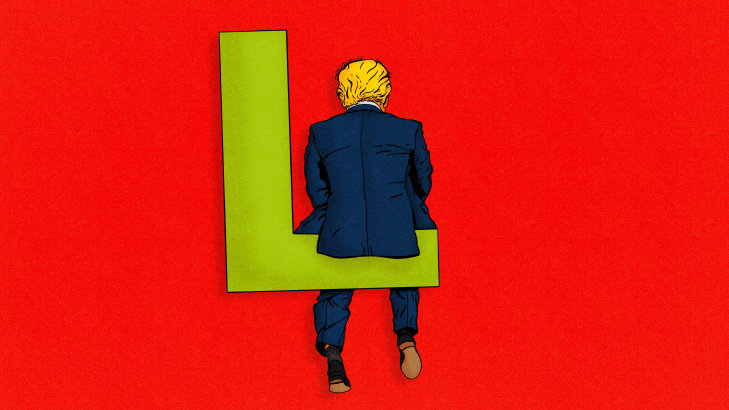
After weeks of wall-to-wall press for Palin, Agassi, and Carrie Prejean, it’s clear our narcissistic culture is obsessed with memoirs. Critic Ben Yagoda hopes the fad might be over.
Three years ago, when I began working on a history of memoir, I subscribed to a Google News Alert for the word “memoir.” The book is done, I’m on to new things, but I just can’t quit that alert. Just this past week, I’ve gotten the lowdown on new or forthcoming autobiographical works by Andre Agassi, Sarah Palin, Capt. Chesley “Sully” Sullenberger, Mary Karr, George Carlin, Paul Shaffer, Clarence “Big Man” Clemons, David Plouffe, Andy Williams, Coach Roy Williams, Michael Chabon, former French President Jacques Chirac, former NBC head Warren Littlefield, Tracy Morgan, Hulk Hogan, Valerie Bertinelli, Anne Murray, Wyclef Jean, former Miss California USA Carrie Prejean, Full House’s Jodie Sweetin, American Idol’s David Archuleta, Duane “Dog the Bounty Hunter” Chapman, Mary Weiland (estranged wife of the Stone Temple Pilots’ Scott Weiland), and actor Jerry O’Connell, Rebecca Romjin’s husband, who is coming out with a parenting memoir called Cry, Feed, (Make Love to Wife), Burp. (For the sake of convenience, I put those names roughly in order of prominence—and of course apologize to anyone who feels offended, especially Monsieur Chirac.)
The main reason for the ebbing of the memoir tide is ecological; we are running out of good true stories. Every stunt worth undertaking has been undertaken; every disease worth chronicling has been chronicled.
Memoirs have been around for millennia, but they have seen an unprecedented and uninterrupted boom roughly since the early ’90s. In Britain, in both 2007 and 2008, memoirs accounted for seven of the top 10 bestselling nonfiction hard covers. Those books and the ones named above are mainly by A-, B-, C- or D-list celebrities, but works by regular folks have been at least as popular—see Frank McCourt, Jeannette Walls, Dave Pelzer, Elizabeth Gilbert, Mary Karr herself (unknown outside poetry circles when The Liars’ Club was published), and so many others. In the U.S., according to Nielsen Bookscan, sales in the categories of Personal Memoirs, Childhood Memoirs, and Parental Memoirs increased more than fourfold between 2004 and 2008.
How come? Lots of reasons. In academic parlance, the memoir boom is “overdetermined.” Let’s start with:
Memoir: A History. By Ben Yagoda. 304 pages. Riverhead. $25.95.
1. Zeitgeist. In our therapeutic age, people have long been eager to share intimate details of their life. More recently (and more surprisingly), others have started to enjoy listening to them. As my daughter Lizy once put it, “Voyeurism has caught up with exhibitionism.” Traditionally, writers put autobiographical material into novels, but now, they and we seem to crave the literal. In the ’60s, Sylvia Plath wrote The Bell Jar as a novel. A quarter of a century later, Girl, Interrupted, a memoir about a comparable experience in the same mental institution, started off with a facsimile of the first page of the author’s case record folder.
2. Lazy publishing decisions. For a book editor, saying “yes” to a proposal for Andy Williams’ autobiography is a lot easier than working with an author to come up with a smart and original idea. Fame, even on the Andy Williams level, is a brand—one perceived, probably more than it deserves to be, as guaranteeing some degree of book sales. Editors are also notorious copycats. A.J. Jacobs wrote a memoir about reading the entire Encyclopaedia Britannica (a smart and original idea), which engendered a book about reading the entire Oxford English Dictionary (considerably less s. and o.) and dozens and dozens of other examples of “shtick lit.”
3. Smart publishing decisions. Except for the already famous, it is next to impossible for a novelist to get on Oprah or Fresh Air. And rightfully so: Once you have answered the “Is it autobiographical?” question, about the only thing left to discuss is No. 2 pencils versus Microsoft Word. But Elizabeth Wurtzel could talk about how Prozac helped her manic depression, and Mikal Gilmore about what it was like to be Gary Gilmore’s brother. As Julie Grau, the editor of Girl, Interrupted, once explained in an interview about memoirs’ marketing advantage: “You can send the ‘I’ out on tour.”
4. Our odd political culture. As the Palin and Plouffe books—and forthcoming titles by George W. Bush, Laura Bush, Dick Cheney, Karl Rove, and Condoleezza Rice—suggest, it has become customary for politicians and ideologues to justify their positions, burnish their own brands, and sometimes attempt to salvage their reputations through memoirs. With rare exceptions, large numbers of people do not read these books, but publishers seem to find it very hard to turn them down. (See reason No. 2, above.)
5. Art and craft. There is a reason the most common advice in writing classes is “Write what you know.” It is excellent advice. An intimate knowledge of the material helps engender strong, authoritative prose. Any intelligent, self-aware person with an interesting story can write a decent and readable memoir. If you are a talented writer and/or have had unusual or dramatic experiences, you have it in you to produce a really good memoir. It takes a whole other level of storytelling ability and imagination to produce first-rate fiction. Thus the fashion and custom for memoirs has led to a lot of worthwhile books (though a lot of dull and self-indulgent ones as well).
All that being said, the memoir boom is finally quieting down a little bit. Currently, the highest-ranked memoir on the USA Today bestseller list is Agassi’s much-hyped Open, at No. 4. Then nothing till Greg Mortenson’s nearly four-year-old Three Cups of Tea, at 59. The only other memoirs in the top 150 are works by Ted Kennedy, George Carlin, Patrick Swayze, Jeanette Walls, Plouffe, and Tucker Max. (Palin’s Going Rogue went on sale after the list was compiled.)
The main reason for the ebbing of the memoir tide is ecological; we are running out of good true stories. Every stunt worth undertaking has been undertaken; every disease worth chronicling has been chronicled. As for memoirs of difficult childhoods, the bar of difficulty, steadily raised for a couple of decades, was probably propelled beyond any author’s grasp by The Glass Castle, Walls’ riveting account of her Looney Tunes parents.
A similar depletion can be observed over on the celebrity front. There will of course continue to be interest in bigfoot memoirs from the Agassis, Kennedys, and Palins of the world, but otherwise it is becoming evident that the bottom of the barrel is being scraped. After Prejean, Sweetin, Archuleta, Weiland, and O’Connell, who could possibly be left?
The signs of a shakeout are evident beyond the bestseller list. In the U.K., one bookseller told The Sun that branches would not be stocking the latest autobiography by model Katie “Jordan” Price. A spokesman said: “She has done three already. This is not a book we would say to our readers, ‘You must buy.’” The British journalist John Sergeant announced this week that he paid back a book advance worth tens of thousands of pounds because he couldn’t face producing a second memoir. “You can’t go on writing the same book,” he said. “Not only is it boring, it’s a terrific strain, too.”
You could substitute “reading” for “writing” in that last quote and be completely on the mark. My hope is that the coming years won’t see even more iterations of the same memoir, but comparatively small numbers of fresh ones.
Plus: Check out Book Beast for more news on hot titles and authors and excerpts from the latest books.
Ben Yagoda is the author of the just-published Memoir: A History and About Town: The New Yorker and the World It Made. He is a professor of English at the University of Delaware and he blogs at campuscomments.wordpress.com.
For more of The Daily Beast, become a fan on Facebook and for more books coverage follow Book Beast on Twitter.
For inquiries, please contact The Daily Beast at editorial@thedailybeast.com.


fmrwriter
One could argue that no memoir has lived up to the first American one, written by Ulysses S. Grant in 1884. Grant's was written at the (almost literal) end of a distinguished, accomplished life. The only accomplishment required of modern memoirists seems to be having distinguished yourself by some gimmick or trickery. Dog the Bounty Hunter? Carrie Prejean? Do we really want to read what they have to say, especially when we know they won't write it themselves.
johnwr3
Did you feel the same way when Bill Clinton released his memoir?
gak001
It's definitely reflective of the narcissism of our age. I think I'll put out a memoir - Whitebread or The So-far Unremarkable Life of an Early 20s, White, Anglo-Saxon, Protestant, Middle Class American Male. Although, I've been to Japan and spent a semester abroad, so that at least puts me over the 50 percentile mark as far as excitement in my age group goes. I see this memoir as being the anti-memoir - a meta-act in realism. I expect to make at least - what did Sarah Palin get? 1.5 million? I figure if I actually write my own memoir it should make up for not being a national media train wreck.
lyndainfrance
good for you : now about me...born in Michigan,lived in Switzerland and Paris,spent nearly 6 years in Viet-Nam during the war , went around the world a few times,had 3 kids and went through a really horrible divorce and I forgot, I was drop dead gorgeous. Do you think there is something here for a memoir? Why do people think they have something to say,and why do they think anyone would pay to know? And gakOO1....good luck for the rest of your life!
gak001
Bo-oring.
Just kidding. That actually sounds like a good book. I'd throw in some pirates and a secret black ops mission for good measure, though.
Buddhahoo
It has really become ridiculous when a vapid phoney like Carrie Prejean can get her memoir published. She obviously still has so much to learn about life, but since she thinks she already has a complete story to tell, such learning will probably not occur.
Thank you.
As a first time user, your comment has been submitted for review. It can take anywhere from a few hours to a day or two for your comment to be reviewed, depending on the time of week and the volume of comments we receive.