0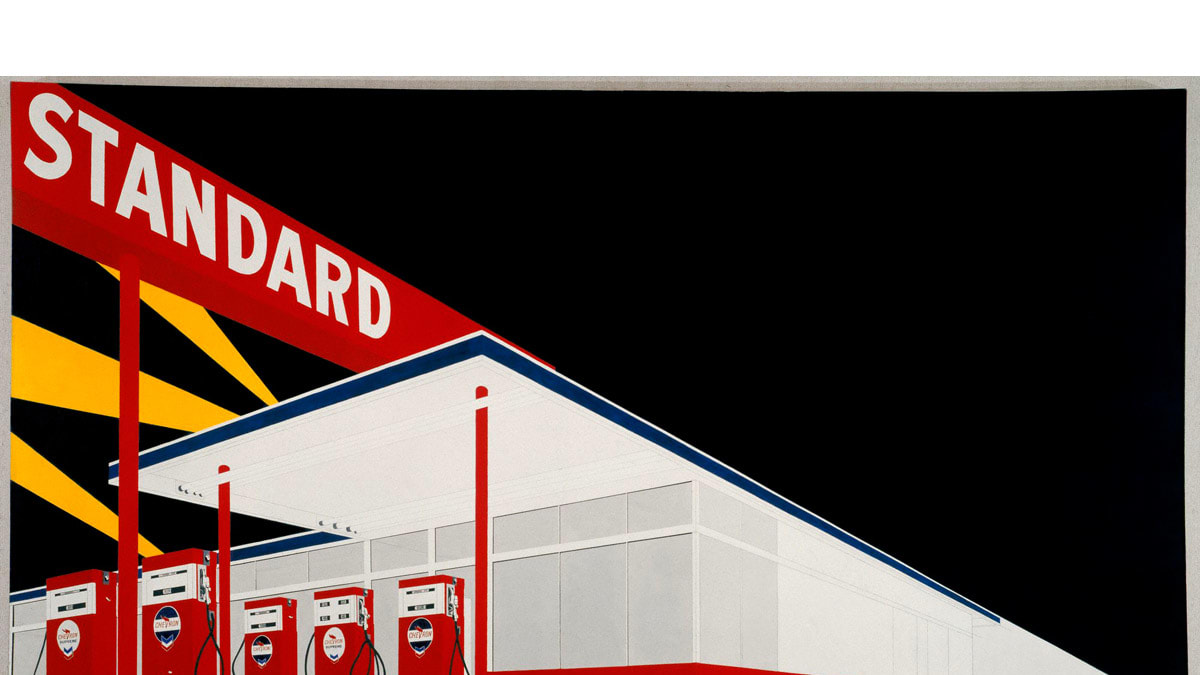
Pacific Standard Time: L.A. Artists on the Hottest Pieces to See
Pacific Standard Time
The ‘Pacific Standard Time’ fair presents a bird’s-eye view of SoCal painting and sculpture. By Blake Gopnik and Isabel Wilkinson.

© Ed Ruscha. Hood Museum of Art, Dartmouth College, Hanover, New Hampshire

© Ed Ruscha. Hood Museum of Art, Dartmouth College, Hanover, New Hampshire

'My Shadow' (1977) by Robert Colescott.
Courtesy the Oakland Museum of California, Kravets Wehby Gallery, and the Estate of Robert Colescott

'Silvertop – Hollywood Dawn' (1972) by Leland Y. Lee
Courtesy the artist and Michael H. Lord Gallery © Leland Y. Lee

'The Door (Admissions Office) (1969) by David Hammons.
Gift of the California African American Foundation; Collection of Friends, the Foundation of the California African American Museum

'Big Blue Pink' (1971) by Judy Chicago.
Courtesy Tom Jancar Gallery, Los Angeles © Judy Chicago, 1971 - Photo © Donald Woodman

'Birds Wave Goodbye' (1972) by Asco.
©1972 Asco. Photo by Harry Gamboa, Jr. Courtesy of the artist ©Harry Gamboa

'No Time for Jivin’,' by John Outterbridge.
Mills College Art Museum Collection

'Untitled' (1967) by Chris Burden.
Courtesy of the artist, Photo credit: Chris Burden

'L. Red' (1963), a ceramic work by Kenneth Price
Collection San Francisco Museum of Modern Art. ©Kenneth Price, Photo: Courtesy SFMOMA

' ''15'' Cube,' made of vapor-coated glass, by Larry Bell
Courtesy the artist. Photo Alan Shaffer


Got a tip? Send it to The Daily Beast here.