American Dreams: The 20th Century in Novels
What American novels best tell the story of the 20th-century? In a new monthly series, Nathaniel Rich sets out to chart the history of the American Century through its novelists and their work.
If history is written by the winners, who tells the story of the losers? Who sings of the strivers, con men, lechers, failed artists, degenerates, alcoholics, barbiturate poppers, neurotics, depressives, hustlers, cranky intellectuals, dissolute heirs, and whores? The novelist—that’s who. These losers are the heroes of most of the greatest novels of the 20th century. With apologies to Howard Zinn, the people’s history of the United States has been written by its novelists. And it’s a living document.
The idea is to choose a novel that, looking back from a safe distance, seems most accurately, and eloquently, to speak for the time in which it was written.
This monthly series will chronicle the history of the American century as seen through the eyes of its novelists. The goal is to create a literary anatomy of the last century—or, to be precise, from 1900 to 2012. In each column I’ll write about a single novel and the year it was published. The novel may not be the bestselling book of the year, the most praised, or the most highly awarded—though awards do have a way of fixing an age’s conventional wisdom in aspic. The idea is to choose a novel that, looking back from a safe distance, seems most accurately, and eloquently, to speak for the time in which it was written. Other than that there are few rules. I won’t pick any stinkers.
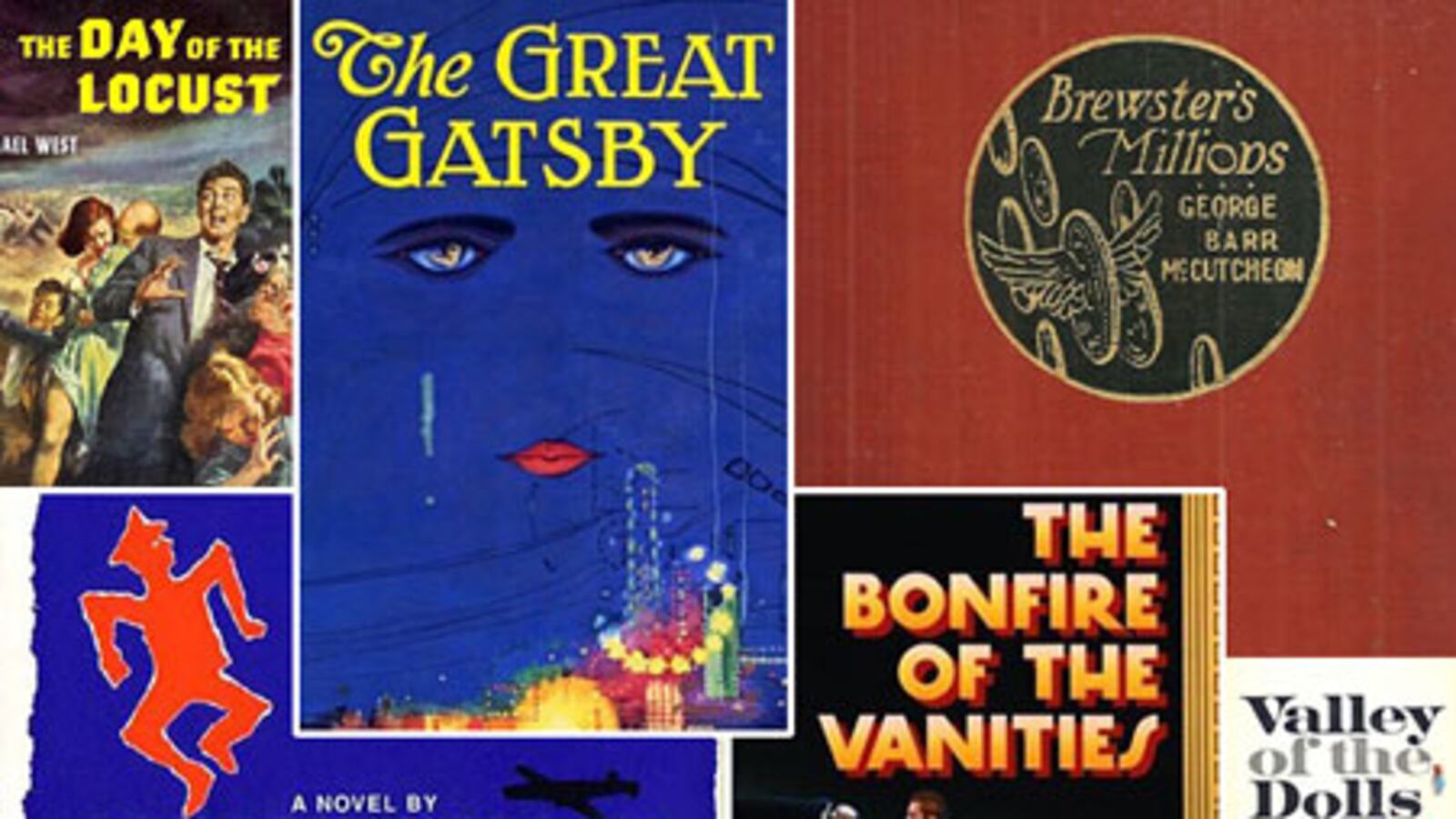
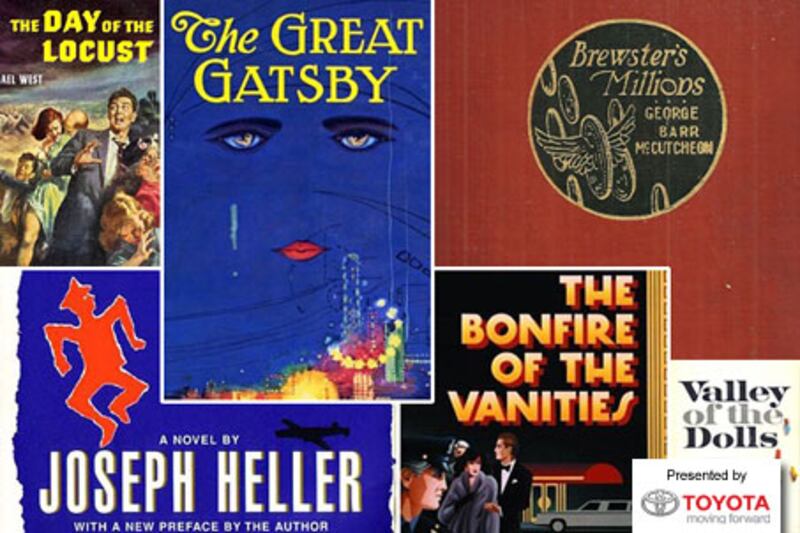
The whole project will be extremely subjective and idiosyncratic, like all reading of fiction. Some of the novels will have been, at the time of publication, the most-discussed book of the year (Catch-22, Valley of the Dolls, The Bonfire of the Vanities come to mind); in other cases I’ll choose novels that were ignored initially, but discovered later (The Great Gatsby, say, or The Day of the Locust, which sold 22 copies in Nathanael West’s lifetime). There will also be books neglected both at their birth and today, but deserving of attention. The hope each month will be to find a novel that defines the age in which it was written with an intimacy and nuance unmatched by any history book, newspaper article, or film.
To avoid being mired in any one era, the columns will advance a decade every month. In other words, 2012 will be devoted to novels published during the years ending in 2: 1902, 1912, through to 2012. (And 2013, if we get that far, will be devoted to years ending in 3.) Readers are encouraged to send in, or post below, any suggestions for those years; the less obvious, the more appreciated. First up—in January—will be Brewster’s Millions, a Gilded Age ode to the edifying qualities of wealth. One hundred ten years after its publication, the novel still reads as if it were written, if not yesterday, then sometime shortly before the collapse of Lehman Brothers.
About
What American novels best tell the story of the 20th-century? In a monthly series, Nathaniel Rich sets out to chart the history of the American Century through its novelists and their work.
Latest From
Book Beast
Jellyfish Rule the Seas
Going to the beach this weekend? You’ll find jellyfish blooms are getting larger, and the cause is climate change. By Lisa-ann Gershwin.
The Atrocity Exhibition
The Stylish Historian of Infamy
The Believer
Sheila Heti: How I Write
iBook
The Gpistolary Novel
Latest
Hot Reads
-
This Week’s Hot Reads
From a 1980s literary superstar’s return to a study of American trailblazers with... More
-
This Week’s Hot Reads
This week, from the women who conquered Paris and Tuscany to a man made—and ruined—by... More
-
This Week’s Hot Reads
From Jeannette Walls’s venture into fiction to a Chinese poet’s Kafkaesque account of... More
Latest
Book Bag
-
Janet Evanovich’s Summer Reads
The author of the Stephanie Plum series picks five books she’d like to read this summer,... More
-
Graduation Must Reads
What’s the essential book to read before you graduate?... More
-
Khaled Hosseini’s Book Bag
The author of ‘The Kite Runner’ picks his favorite short-story collections.... More
Latest
How I Write
-
Sheila Heti: How I Write
Why does Sheila Heti put books she doesn’t like on her bottom shelf?... More
-
Ma Jian: How I Write
The Chinese author Ma Jian, whose new novel is ‘The Dark Road,’ talks about angering the... More
-
Benjamin Percy: How I Write
The author of the new allegorical werewolf novel ‘Red Moon’ talks about his abysmally low... More
Latest
Longreads
-
The Week’s Best Reads
From the lonely quiet in Newtown, Connecticut, six months later to the tragic fate of... More
-
The Week’s Best Reads
From Kim Jong-il’s sushi chef to a falsely accused man facing the real killer, The Daily... More
-
The Week’s Best Reads
From the looming defeat of the NRA to Amish teens gone wild on Facebook, The Daily Beast... More
Latest
The Big Idea
-
Jellyfish Rule the Seas
Summer’s here, but if you’re going to the beach this weekend, you might find swimming... More
-
How Sex Became a Civil Liberty
Did the ACLU’s involvement in the ’60s Greenwich Village scene help American courts... More
-
Big Idea: Our Global Cost
How do we measure and predict the human cost of climate change? Andrew T.... More
Latest
The City
-
Bristol, Bridge to the Wide World
Travel writer Sara Wheeler, famous for her stories of polar expeditions, returns home to... More
-
Australia's Outpost at the Edge
Writer Barry Lopez has had a long affection for Australia's lone west-coast city, which... More
-
Please Call It Bombay
The city might have a new name, but King George's colonial legacy is still everywhere.... More


Comments