
The bloodshed and the images of street protests coming out of Afghanistan have horrified Americans who wonder why in the world their men and women are giving their lives to a country that would so wantonly kill them. Their anger is heartfelt and understandable.
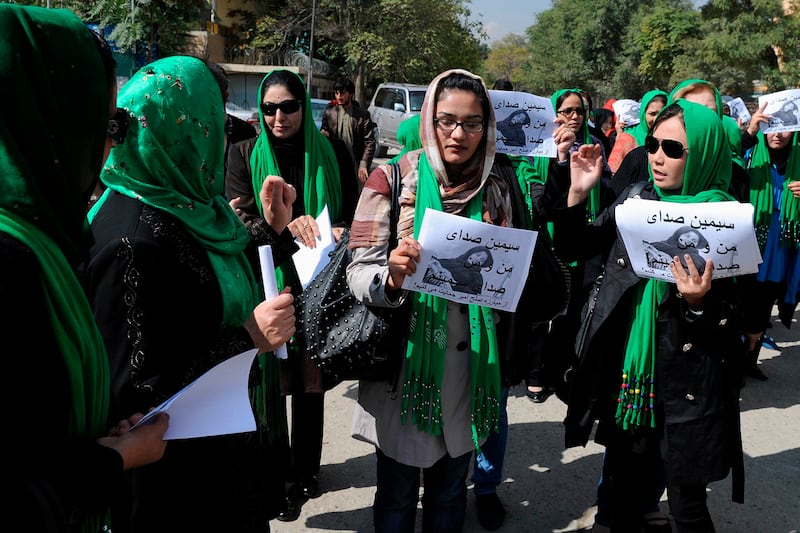
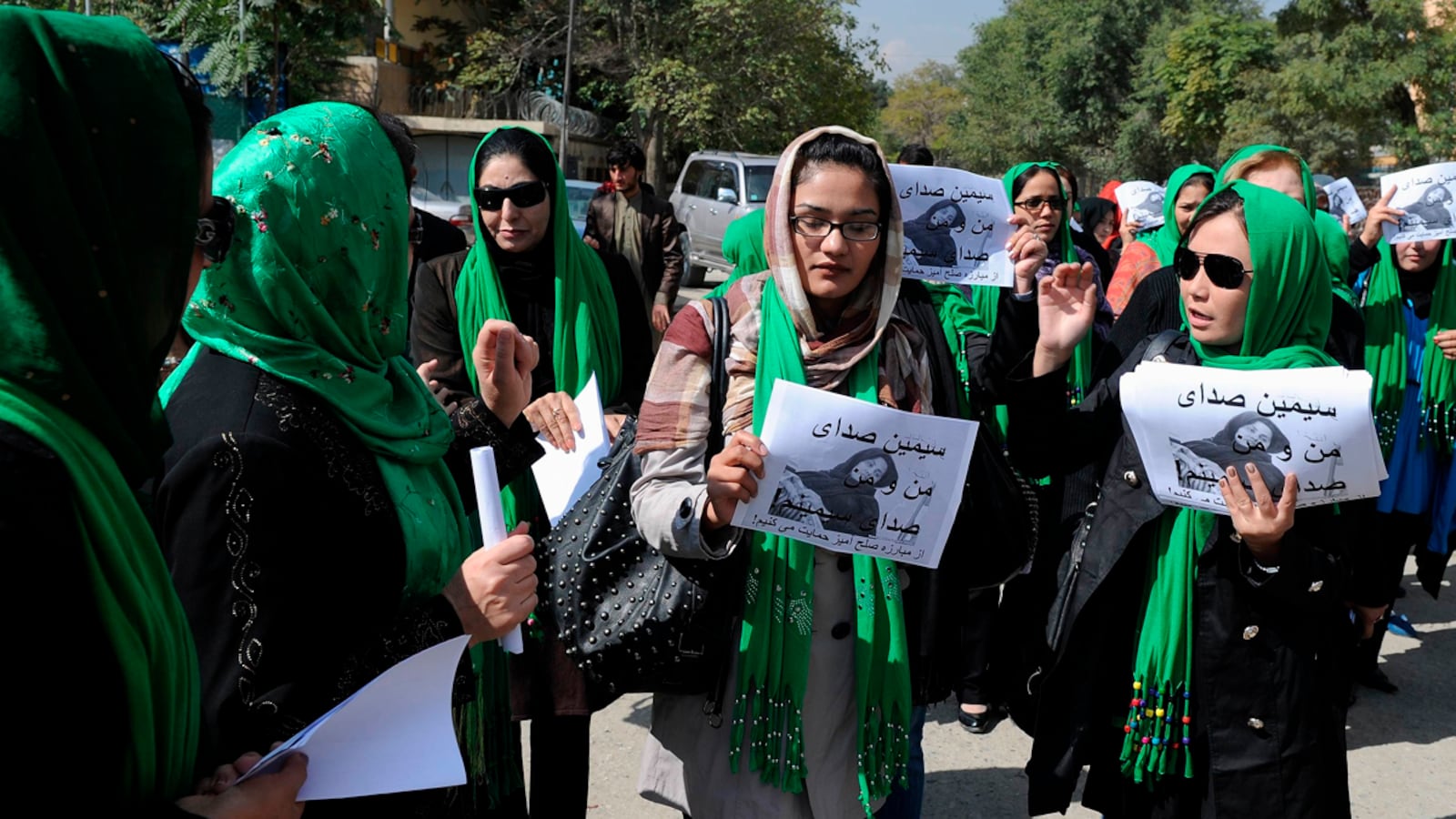
But what the video of men in the streets misses is the quiet majority that deplores the burning of the Holy Quran but refuses to take part in violence. And the women who are trying to calm the uproar while getting on with their work.
“Most people are more angry at the protesters than at the U.S. troops who did it,” said Manizha Naderi, executive director of Women for Afghan Women. “One person actually said, ‘When the Taliban are blowing up schools or mosques, aren’t they burning the Quran? Mosques are filled with hundreds of copies of the Quran. How come no one is saying anything about this?’”
Another journalist who is covering the protests notes that the men on the streets were incited by a media-savvy Taliban who understand the value of the images created.
“I was a witness from the beginning of the demonstrations. The Taliban sent lots of email to people. They said, ‘Stand against foreigners, [especially Americans,] fight them wherever they are, find Americans, kill Americans, enter their bases and start jihad against former invaders,’” said one Kabul-based journalist who asked not to be named for security reasons. “The Taliban get lots of benefit from these games.”
On Twitter, Afghan activists said that while they shared in condemnation of the Quran burning, the violence was harming their country—and benefiting neighbors who want to see the country unstable.
“Request frm a religious cleric why women not demonstrating for Quran. I explained we’re not violent. He declared us ‘muslims with no feeling,’” tweeted human rights activist and Afghan Women’s Network member Wazhma Frogh. On Saturday she wrote, “Deeply sad for loss of ISAF and afghan lives. All being done by enemies to make us abandoned again.”
“Female MPs were trying to calm down the enraged male parliamentarians who were declaring jihad on national television, provoking more violent protests,” said Frogh. “For male politicians in this country, this was a big opportunity to engage more public support by condemning the Americans, while for women it was the chaotic situation that mattered, because women are more threatened in such circumstances.”
Fawzia Koofi, a parliamentarian from the northeastern province of Badakhshan who recently published a memoir, The Favored Daughter, said she was fearful at the outset that conservatives could misinterpret her condemnation of the protests. But she felt it was worth the risk, she said, and she chose her words carefully.
“Holy Quran is a red line, and we accept no disrespect to our religious beliefs, but we need to recognize this is a fragile situation, and if more people die and we destroy our country, we don’t gain anything,” Koofi said. “I told [parliamentarians], ‘Please don’t politicize this issue, because if you really politicize this issue this will benefit our neighbors.’”
Said Koofi, “I condemn the fact that there was a disrespect to my religion and to the Holy Quran, but I condemn also those who misuse and try to politicize any emotional feeling of my people.”
Koofi spoke about the “angry, unemployed Afghan youth” who are “used by different networks of neighboring countries,” namely Pakistan and Iran, to further their own ends in Afghanistan. “A few hundred people in the streets does not represent the Afghan nation,” she said.
It is clear why there were no women on the streets, she said: they understand the stakes are too high, for themselves and their children.
“Women are already afraid about the violence, and we don’t want to make the situation worse,” Koofi said. “In the worst-case scenario, if the international community decides to leave tomorrow, women will be the first victim of the Talibanization of the government.”
Frogh echoed that sentiment, saying that is why Afghan women like Koofi have tried, in their own ways, to stem the violence.
“I know many families, especially mothers, who didn’t allow their sons to go out of their home during the protests just so that they didn’t engage in violence,” Frogh said. “These are big indications of why Afghan women need to be in charge of their country. They won’t be manipulated by their neighbors like their male counterparts, nor will burn buildings to make the conservatives happy.”