
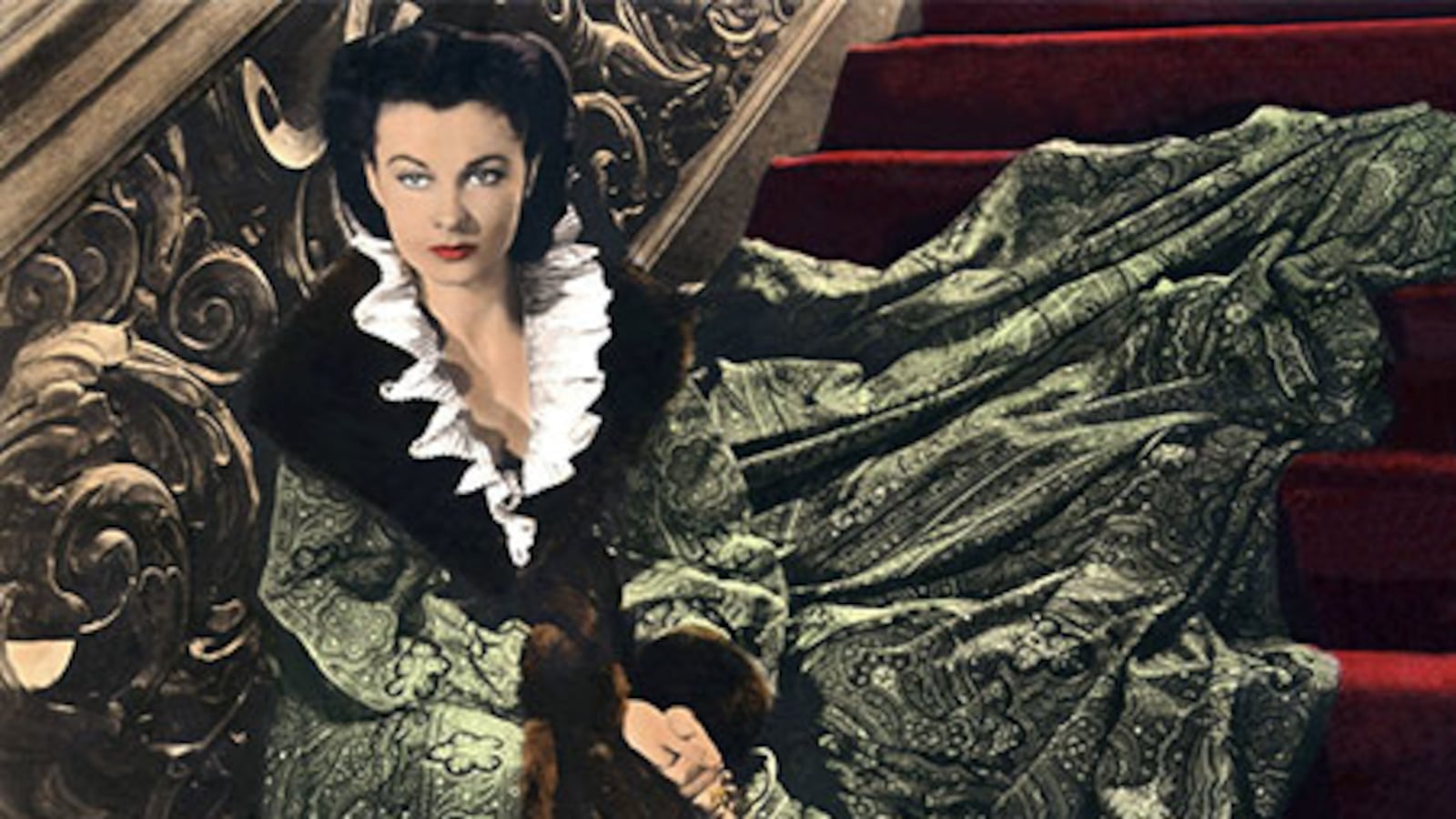
Some 75 years before 16-year-old Katniss Everdeen (The Hunger Games) fought to the death against teenage rivals, another teenage young lady captured the hearts of millions by doing pretty much the same thing. Scarlett O’Hara is every bit as jaded and calculating as Katniss, and her battle for survival takes place against a similarly grim panorama that was as close to a real apocalyptic nightmare as our nation has ever known, the Civil War. Though Scarlett’s survival skills are the coquettish ones of eye-batting flirtation, not archery or hand-to-hand combat, the stakes are every bit as grave.
Death and violence and the dissolution of the old order stalk Scarlett throughout this 1,000-page epic, and she must flout every rule of decorum and the ladylike restraints of her age to achieve a modicum of physical and economic security. She even kills a Yankee soldier who is invading her war-ravaged home of Tara, an act that barely ruffles her petticoats.
Whether people will still be reading The Hunger Games 75 years from now is debatable, but the future of Gone With the Wind seems assured. The novel held the No. 1 spot on the bestseller list for two years starting in 1936 and sold a million copies in its first year.
Winning the Pulitzer Prize didn’t hurt the novel’s popularity although that honor hardly conferred on Gone With The Wind anything close to literary acceptance. Many literati at the time regarded Margaret Mitchell’s winning the award as cheap pandering to the rabble, an act of aesthetic gutlessness by the selection committee meant to avoid controversy. The American Writers Congress, which awarded the other major literary prize of that era, was not cowed by popular opinion when it slapped Scarlett lovers everywhere by giving the best novel of the year prize to John Dos Passos for his Modernist treatise, The Big Money. The final vote of the awards committee? Mitchell: 1. Dos Passos: 350.
Dos Passos was praised for his Modernist daring, his willingness to ditch ordinary storytelling and character making, all that malarkey that would appeal to a casual reader-for-pleasure. Such favoring of technical virtuosity over story and character has become an article of faith to those who regularly dismiss popular novels.
Though Dos Passos never made a dent in the bestseller list, many of the writers we today consider part of the literary canon spent weeks or months riding atop the list. Melville was immensely popular in his day, and such uncompromising artists as Edith Wharton, Hemingway, Nabokov, Faulkner, Harper Lee, William Styron, John Updike, E.L. Doctorow, and Pat Conroy are charter members of the bestseller club.
But the reality is that at any given moment the basic storytellers far outnumber artistic prose stylists in popularity. Of the top 10 all time bestsellers, only two are Pulitzer Prize winners: GWTW and To Kill a Mockingbird. The literary respectability of the top five bestsellers of all time, Da Vinci Code, The Godfather, The Exorcist, Peyton Place, and Valley of the Dolls is almost nil.
GWTW has survived the vagaries of literary fashion partly because Scarlett is a feisty, larger-than-life character, but more important because she was an embodiment of many of our nation’s most vexing hot-button issues. (Hot-button issues is one of 12 recurring features shared by the biggest bestsellers of the 20th century as I describe in my new book, Hit Lit.)
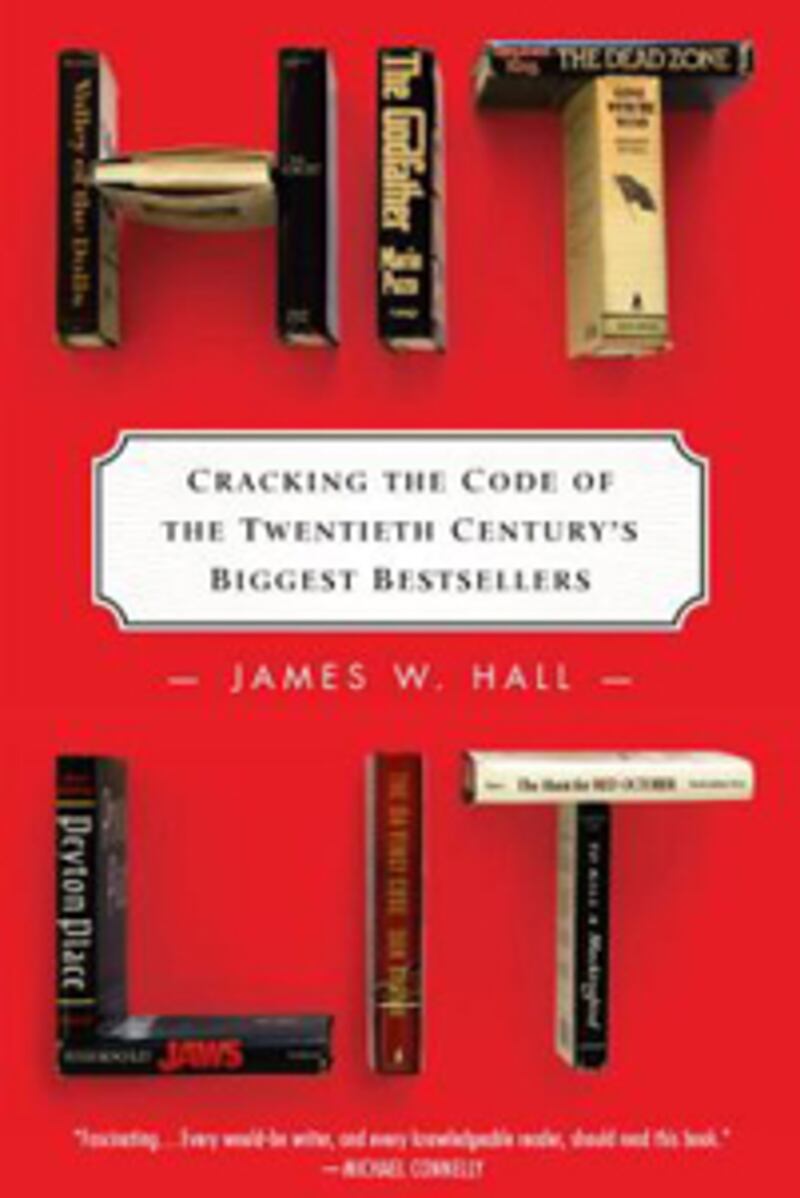
Almost from the start, controversy surrounded the novel. It wasn’t only the romantic passions of Gone With The Wind that enflamed readers, it was Mitchell’s volatile mix of racial and gender politics. Her glorification of the Old South and its racial bigotry outraged many in her day, and that outrage burns just as hotly with lots of modern readers as one can see from the recent commercial success of The Help.
Just as disturbing to some was Scarlett’s ruthless money grubbing during and after the war. Published only a couple of years after the Great Depression, the novel reenacts a story that was fresh in the minds of readers of that era who had just witnessed their own version of financial collapse.
Her survive-at-any-cost morality, her slippery situational ethics were perfectly suited for the time this novel appeared and are still as relevant 75 years later. To many, Scarlett’s cutthroat behavior was evidence of all that was wrong with capitalism, while to others she was a symbol of all that’s right. And for a woman, of all things, to dominate her male counterparts both in the boardroom and the bedroom made many readers bristle all the more.
As the film critic Molly Haskell says about Scarlett “… you hate her and you love her, a heroine of ambiguous morality who is revolutionary … in that she refuses to be chastened, brought to heel …”
However, books that catch the fancy of a particular era by courting controversy can only survive over the long haul if the issues they raise are securely rooted in some larger, deep-seated, and unresolved conflict in the national consciousness. Or as William Hazlitt put it, “When a thing ceases to be a subject of controversy, it ceases to be a subject of interest.” Whether the exploitiveness of reality TV, which plays such a central role in The Hunger Games, will still concern anyone in 75 years is doubtful. But there’s little question that our national discourse will still be galvanized by issues of race and gender and avarice, all of which Gone With The Wind so richly explores.
To read more in the American Dreams series, including reviews of Sinclair Lewis’s Babbitt and Brewster’s Millions, please go here.