When Heather Barr began interviewing female Afghan prisoners and detainees for a new Human Rights Watch report released Wednesday, one phrase stood out. “So many of them started out saying, ‘I fell in love with a boy,’” Barr told The Daily Beast from her home in Kabul. “They’re like teenage girls anywhere. But in Afghanistan, you end up in prison.”

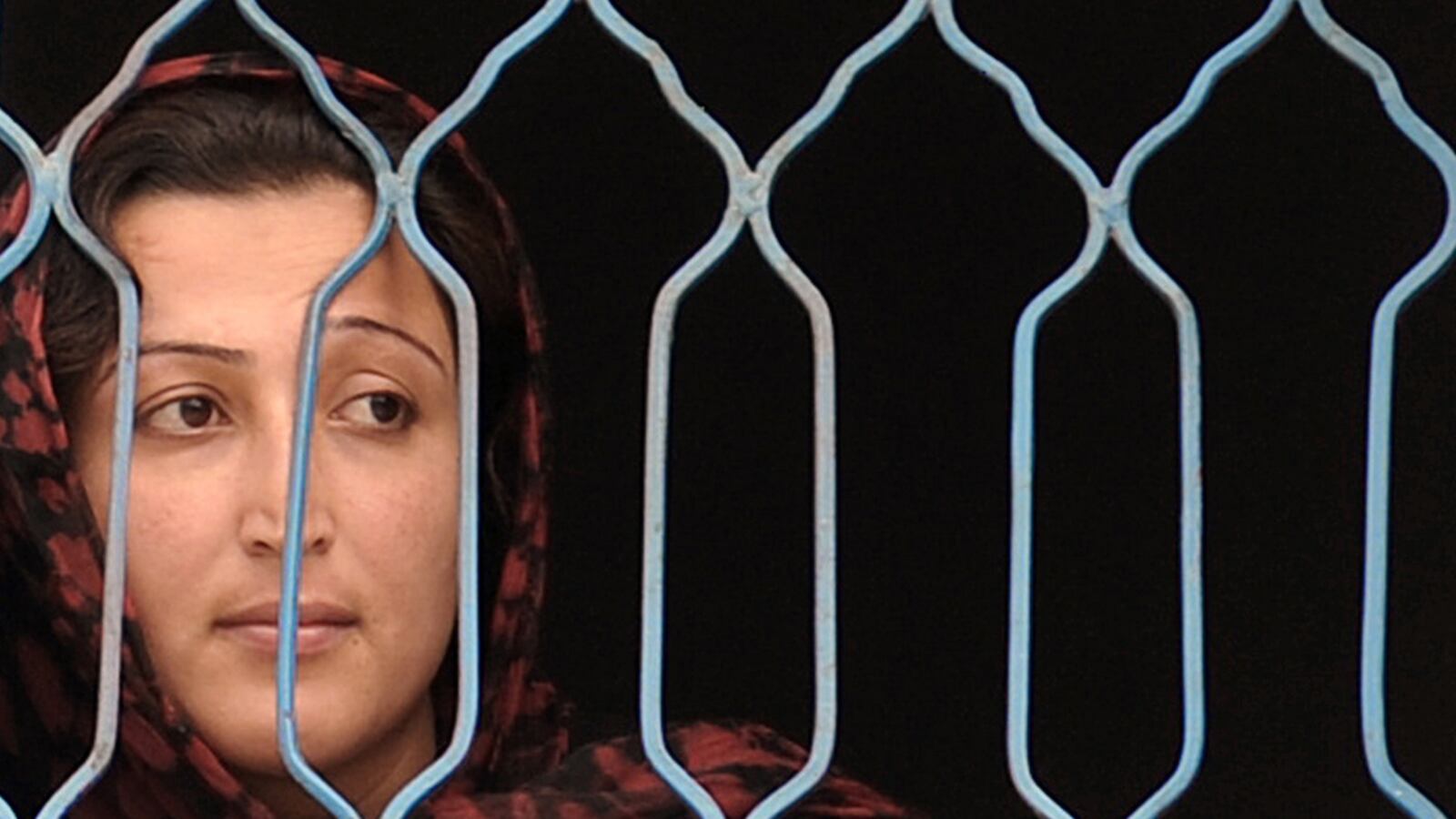
At least these ones did. The report, “I Had to Run Away: Women and Girls Imprisoned for ‘Moral Crimes’ in Afghanistan,” details the plight of nearly 60 Afghan women and girls—just a fraction of the estimated 400 overall—languishing in prisons and juvenile detention facilities for various “moral crimes,” including running away from impending forced marriages, fleeing abusers, and having premarital sex. In telling their specific stories of abuse and mistreatment, the report also examines a “twin injustice”: where women may face vigorous prosecution and imprisonment for their so-called transgressions, their abusers and rapists rarely face any consequence at all, despite the fact that the Law on Elimination of Violence Against Women was ratified by President Hamid Karzai in 2009.
“Almost always, the story starts out with the girl or woman running away from some kind of abuse,” Barr says of the female prisoners she and her translators interviewed in six different facilities across the country. “So most of the women we interviewed are crime victims, but what you find is that none of the perpetrators of those crimes have been investigated, let alone prosecuted.”
According to a report released last fall by Oxfam International, some 87 percent of Afghan women have experienced intimate violence, whether in the form of forced marriage or physical, sexual, or psychological abuse. Of the 42 married women Barr interviewed, 22 were arrested as a direct result of running away from abusive husbands or extended family members. But in interviews with prosecutors, Barr could find just one instance when a man had been arrested for perpetrating such abuse. A woman the report identifies as “Nilofar M.” (All the women’s names and identifying details were withheld by HRW in order to protect their safety) was hospitalized after being stabbed repeatedly in the head, chest, and arms with a screwdriver. Her husband was arrested, but released after just a month. When asked why he had been released so quickly, the prosecutor told Barr: “The way he beat her wasn’t bad enough to keep him in jail. She wasn’t near death, so he didn’t need to be in prison.”
Then the prosecutor drove the point home. “He was standing over me and he brandished his fist, and he said, ‘If I only punched you, should I be in prison?’” Barr recounted. “This is the mindset. This is the attitude.”
Indeed, while the number of women imprisoned for “moral crimes” may have increased in the last decade—according to the latest United Nations figures, some 600 women and more than 100 girls are currently serving sentences, more than Afghanistan’s total prison population before the U.S. invasion in 2001—efforts like the 2009 decree are still largely anathema to a culture and tradition that has long treated women as little more than property. A spate of recent cases made international headlines because of brutal details that underscored the ongoing contempt for women in the region.
Earlier this year, a 15-year-old girl who had been sold into marriage was found locked in the basement bathroom of her in-laws’ home, where she had been denied food and water and had been tortured for refusing to go into prostitution. And in December, President Karzai pardoned a young woman who had spent two years in jail for adultery after being raped by her cousin’s husband. Her release was bittersweet; it was accompanied by concern for her safety and speculation that she would have little choice but to marry her rapist to avoid further shame for her family.
“Being pardoned doesn’t solve an injustice,” Barr says. “And for these women, just the fact of being arrested for a moral crime is very likely to create a situation where your family won’t take you back. One of the things that was the most heartbreaking [about these interviews] was how grateful some of these women and girls seemed to be for these prisons. One of the women said, ‘I chose this prison as my safe place.’”
But Barr says the new report is intended not only to shed light on the plight of these female prisoners, but also to open up a broader conversation about Afghan women in general. “It would be wrong to minimize the progress that has happened,” she says, citing decreased rates of child and maternal mortality, and the sky-rocketing numbers of female political participation and access to education since the days of Taliban rule. “On the other hand, the progress has been a lot less than women heard or expected in the optimistic days since the Taliban fell. And it’s really fragile.”
With international forces slated to depart Afghanistan in 2014, the progress made thus far seems especially precarious. In March just two days before International Women’s Day, Karzai sent what many perceived as a particularly ominous message, defending a “code of conduct” issued by the government-supported Ulema Council, a body of religious leaders, on how women should act and behave. “Men are fundamental and women are secondary,” the statement said. It was later posted on the website of the presidential palace.
“The international community needs to look back at some of the things they said in 2001,” Barr says citing speeches made by then-president George W. Bush, Cherie Blair, and others about the importance of liberating Afghan women. “Those were promises. I don’t think there’s any excuse to walk away ... because it’s life or death for women here.”