
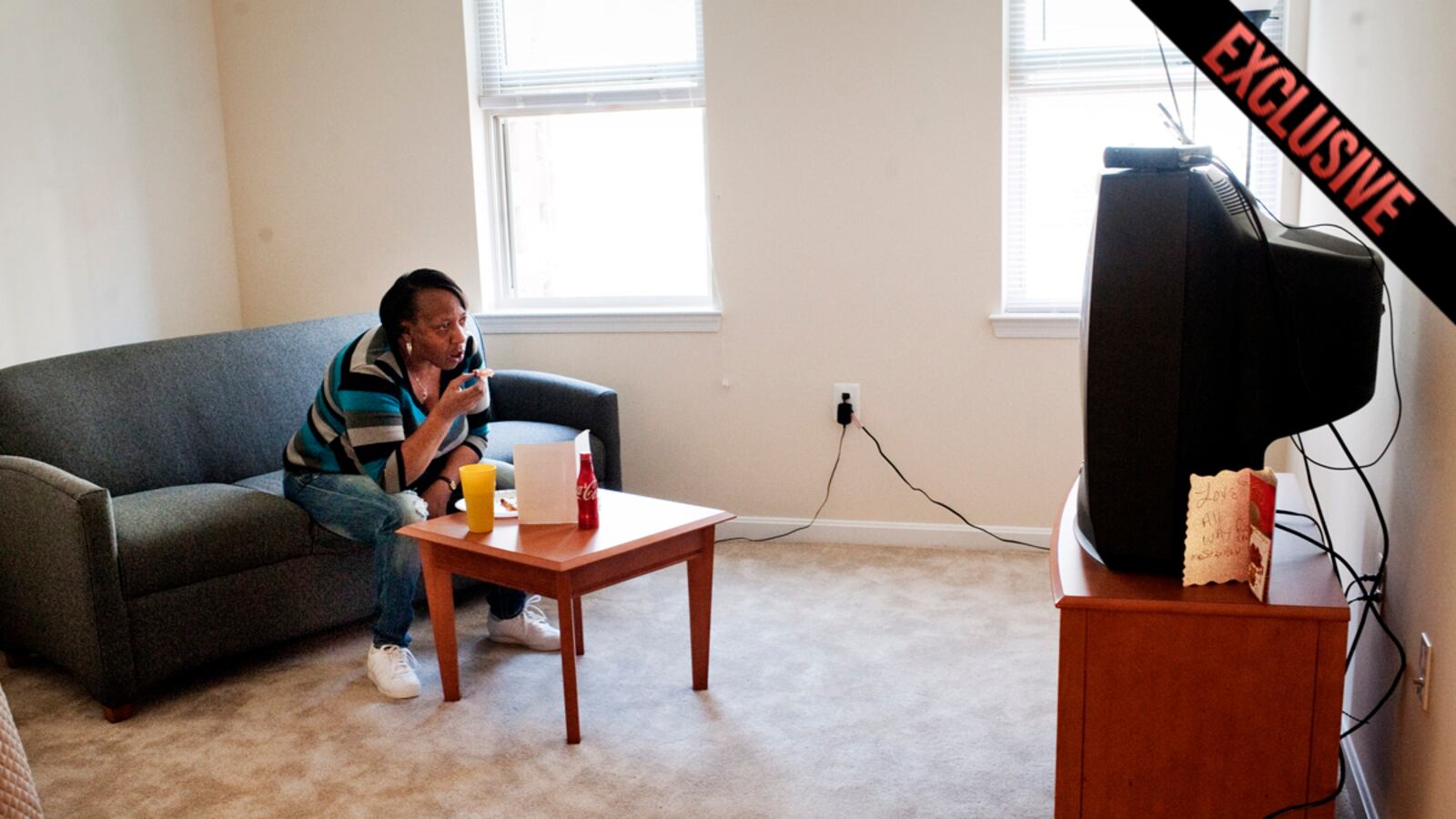
The majority of older women in America are unable to cover their basic living expenses, and the percentage of those in distress is 50 percent higher than that of men, according to a new analysis of U.S. Census Department data conducted by Wider Opportunities for Women, a nonprofit organization based in Washington, D.C., that focuses on women and workforce issues.
“Three out of five women over 65 have incomes that won’t cover their most basic daily needs, whereas among men it’s 40 percent,” says Donna Addkison, president and CEO of the organization. “Older women are at much greater risk of economic insecurity than older men.”
For many the consequences are serious. “We are seeing evidence that older women are making choices that are untenable,” Addkison reports. “They’re very quietly, at home, deciding to choose between having heat in the wintertime or putting nutritious food on the table, or they’re choosing between food and the medications they need. They make choices that get them by, but they’re very dangerous choices to be making. We’re not talking about eating out, or buying birthday presents for grandchildren, or any of those extras. We’re talking about shelter, food, clothing, and transportation—the basics we need to survive in this country, let alone thrive.”
The W.O.W. report, which is called Doing Without: Economic Insecurity and America’s Families, analyzed the living circumstances of older Americans in comparison with the Elder Economic Security Index, which is defined as “a measure of the income older adults need to age in place in their communities and meet basic daily expenses. The Elder Index defines economic security as income (from Social Security, pensions, retirement savings, and other sources) sufficient to meet these necessary daily expenses without borrowing or assistance from public support programs.”
According to the W.O.W. study, “Forty-two percent of all women, 63 percent of African-American women and 66 percent of Hispanic women lack economic security.”
Among its conclusions: “Economic insecurity is a pervasive threat for women of all ages, and the economic security gender gap persists across and throughout the lifespan.”
A gender-based income gap is not surprising; retirement incomes reflect pay differentials that penalize women throughout their working lives, as well as interruptions in labor-force participation due to child-rearing and other caregiving responsibilities. But as they age, women pay a growing price for those inequities.
“Elder men studied report typical annual incomes that are nearly 75 percent higher than the typical elder woman’s income ($24,300 compared with $14,000),” the survey noted. “Women of color report median incomes that lag even further behind.”
Marriage offers some protection; women living alone are far more vulnerable to financial hardship than those with partners. “Couples are much more likely to be economically secure than singles,” the study found. “Sixty-one percent of single elders living alone report household incomes below the Elder Index, compared to just 36 percent of elder couples.”
But husbands are no guarantee of economic security for women as they age. “Women typically outlive their male counterparts, so the odds of women living alone for some portion of their later years is significant,” Addkison explains. “A lot of the time, they also outlive their savings.”
And when it comes to a person’s odds of remaining partnered or ending up alone, the gender gap is even more striking. “Two-thirds of men over 65 live with a spouse or partner, compared with 44 percent of women,” Addkison says. “Over the age of 85, 60 percent of men live with a spouse, but only 17 percent of women live with a spouse.”
The reasons range from men’s tendency to pair off with younger women to the fact that males simply don’t live as long as females. “There are 5.6 million more women than men over the age of 65,” Addkison says.
At any age, the financial health of women is increasingly crucial to the welfare of families as well as the national economy, given the growing proportion of households headed by single mothers and of married women earning more than their husbands. “Very few families headed by single moms—only 18 percent—are living with economic security,” the W.O.W. study reported. “Only 9 percent of Hispanic single moms and 12 percent of African-American single moms are able to cover their families’ expenses at current income levels.”
“A large number of American households are now solely or in large measure reliant on the income of women, so this is a question that really requires us to use a gender lens,” Addkison says. “We have to do something about the wage gap and pay inequities facing women, because those things track into old age. It’s a much larger question of how older women get to this place. What are we doing while women are in the workforce? It’s important to pay women what they’re worth while they’re working, and to create systems that allow women to accrue the necessary assets for retirement, so their Social Security payments are adequate. Older women rely on Social Security for the bulk of their income, but they receive smaller payments; the median women’s payments lag behind men’s by $4,500 a year.”
Despite such inequities, the extent of women’s economic distress remains notably absent from the public and political dialogue, although it is well known to experts. “This flies below the radar,” Addkison observes. “This may be a quiet struggle, but it’s a very real struggle that affects not only older adults but also their families. The depth and breadth of economic insecurity facing older adults in this country is staggering, and yet we’re not having a robust national conversation about what’s happening to our existing older adults, and about what’s going to happen to the rest of us as we age into retirement.”
With more than 75 million baby boomers now moving into senior citizenship, and a growing proportion of women living into their 90s, such issues involve social-policy questions of increasingly critical import. “We have to think beyond marriage, to what happens when women are living alone,” Addkison says. “It’s the ‘what if’ and the ‘what then?’”