Burma’s ruling generals have always been extremely superstitious, consulting astrologers, wizards, and numerologists before doing anything. But even the most rational of them could be forgiven for believing that, in their contest with Aung San Suu Kyi, they were up against someone with otherworldly powers.
She had her first close encounter with death during a campaign tour in April 1989, when a column of soldiers in a far-flung village was given orders to shoot her and her colleagues. Her companions stuck to the side of the road, but Suu Kyi walked into the middle, plumb in the line of fire. In an interview she later explained, in her disarming way, “It seemed so much simpler to provide them with a single target.” The order was countermanded by a more senior officer at the last moment. “We just walked through the soldiers who were kneeling there,” Suu Kyi recalled. “Some of them were actually shaking and muttering to themselves.”
She survived a second, meticulously-planned attack while campaigning up-country in 2003, thanks to the skill and courage of her driver. Senior General Than Shwe later admitted that the plan to assassinate her, in which more than 70 party colleagues died, was his own idea.
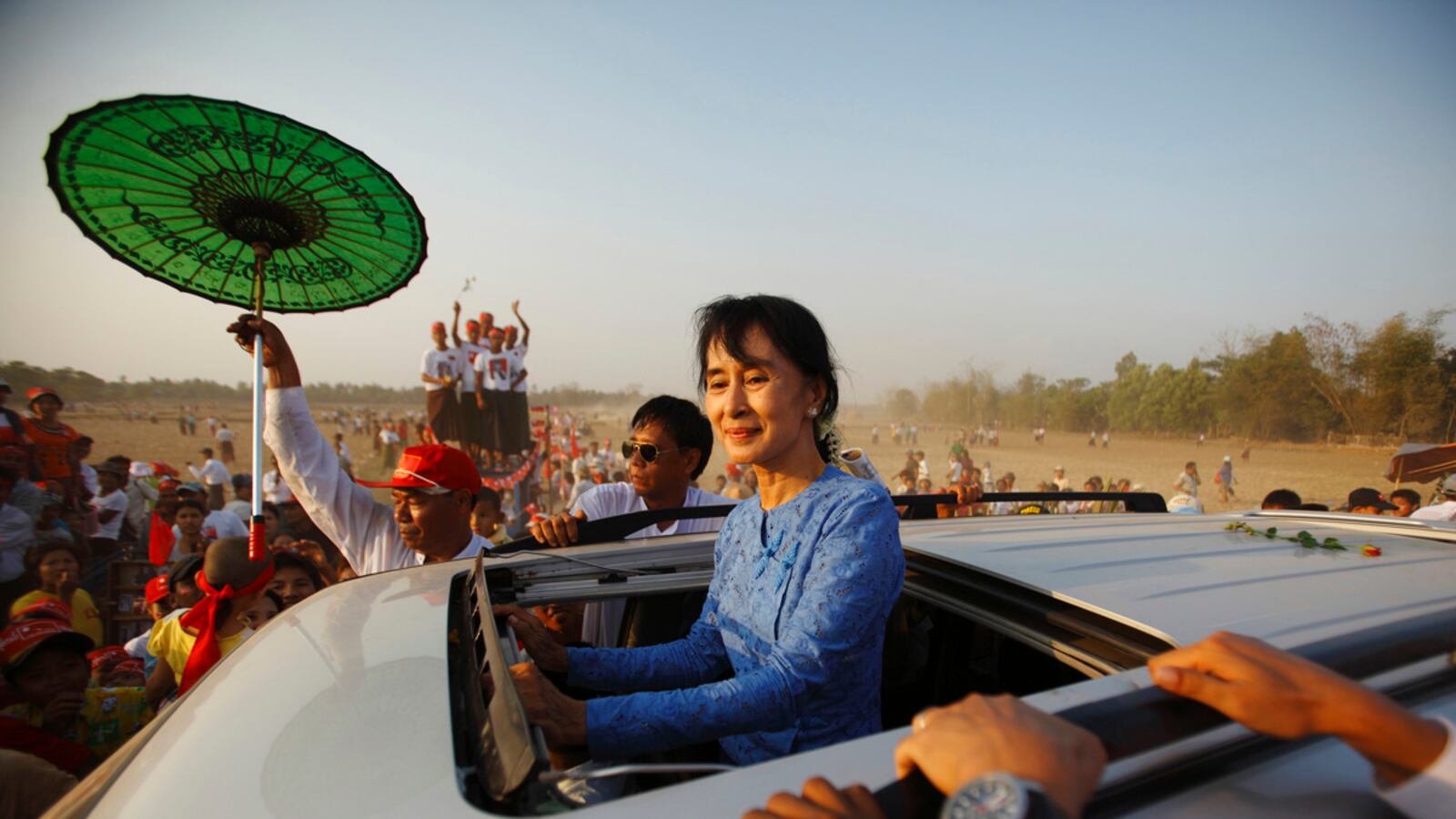
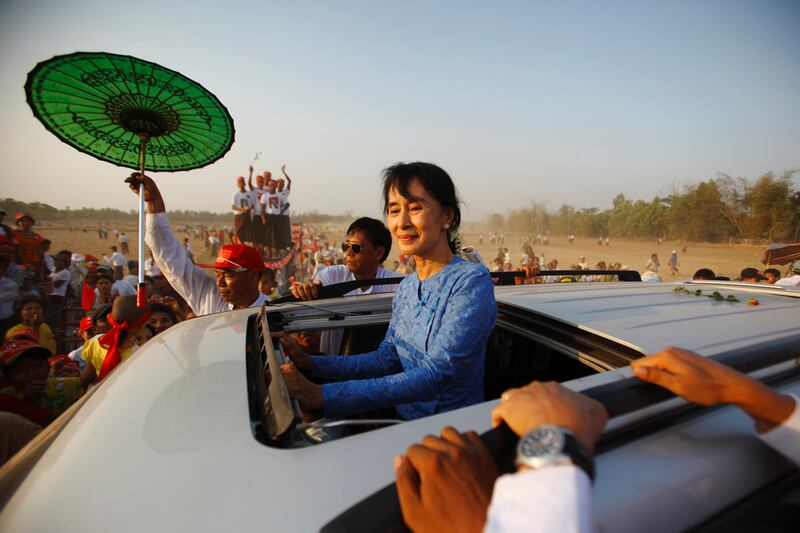
The second attempt was followed by more than seven years of almost complete isolation under house arrest, which finally ended in 2010. Yet when Suu Kyi began campaigning for the Burmese by-elections this year—scheduled to take place on April 1—it was as if she had never been away. On a good day, she looked almost unchanged from 1989 and 2003. Not only was she invulnerable to bullets and clubs; she had apparently drunk the elixir of eternal life.
This uncanny ability both to survive and to shine while her enemies crumple and collapse is one of several reasons that Aung San Suu Kyi is held in such uniquely high esteem by millions of ordinary Burmese. Early in her career, the idea began to get around that she was more than merely human—that she was perhaps a bodhisattva, a living Buddha, born to save her people from suffering. In 1990, after the regime chose to ignore the landslide election victory of her party, the National League for Democracy, it was reported that Buddha statues around the country had begun to weep from the left breast. This was seen by many as confirmation of Suu Kyi’s supernatural provenance, and an indication that sooner or later this tender woman—the left breast indicating the feminine principle, weeping out of pity—was bound to prevail.
We may find these Burmese perspectives on Suu Kyi quaint and exotic, but a very similar way of regarding her quickly pervaded the Western media after her sudden rise to prominence as a democracy campaigner in the early months of 1989. She was strikingly beautiful in a fragile way; she spoke English like the Queen of England; she smiled and waved somewhat woodenly, and she seemed to be free of any blemishes or imperfections. She emerged into our consciousness as a sort of political saint—then, in July 1989, she disappeared from view for five years after the regime slapped her with detention.
Then her party won the election, the Buddha’s nipples wept, the Nobel Prize committee named her the peace laureate for 1991. But all this time she remained locked away, beyond the reach of cameras and microphones. For many of us, she seemed two-dimensional—admirable, no doubt, in a slightly chilling way, but not entirely human.
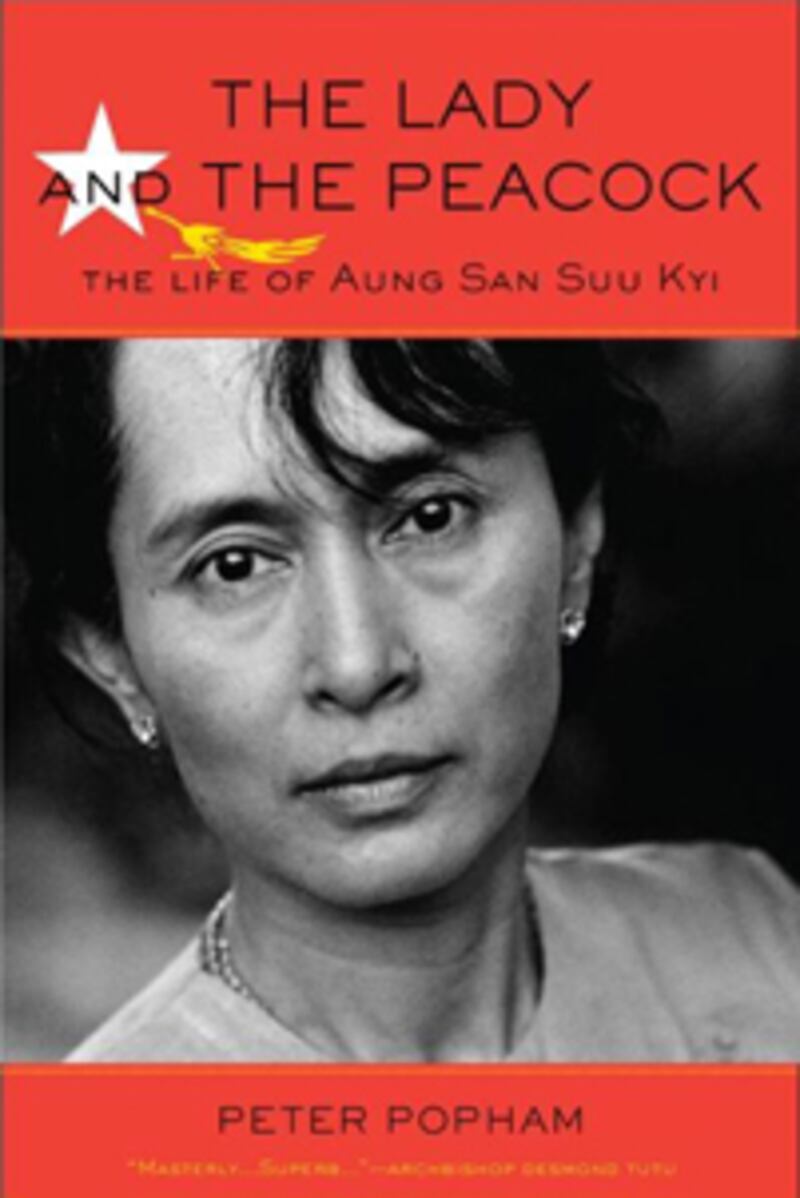
So when, some six years ago, I set to work on The Lady and the Peacock, a new biography of Aung San Suu Kyi—published this week in the U.S.—one the of main challenges was to uncover the human being that had got lost in translation.
Sometimes I would fantasize about what I might turn up: a secret vodka habit? A betting compulsion? A passion for collecting shoes, like Imelda Marcos? On all these I drew a predictable blank. But in the end I did get my ‘Eureka’ moment.
The identical twin brother of Suu Kyi’s late husband Michael Aris one day paid me the great compliment of letting me look through some of Suu’s letters to him. Before her marriage, Suu took the traditional Burmese step of writing both to her own closest relatives and to the members of the British family she was about to join, asking for their consent. She wrote to Anthony Aris with this request, but she had to admit to him that her own mother and brother had yet to give her the go-ahead. She did not however seem unduly bothered by this lacuna. “I am sure my mother and brother will get over their initial disappointment,” she wrote, “at what they probably consider my usual waywardness.”
Here, in one sentence, we have Suu Kyi before us: her English expression rather formal, even starchy, but shot through with a subtle irony. She is going through the proper procedures, as ordained by tradition, but she betrays no anxiety about the outcome: her self-confidence borders on arrogance. She is certain she will prevail. And there is that surprising—for those used to thinking of her only in saintly or bodhisattva terms—burst of self-awareness in the phrase, “my usual waywardness.”
Saints are not wayward: they are just the opposite. But seen from the perspective of her family, once Suu Kyi had left home and gone to study at Oxford, her progress was anything but predictable. One can imagine her mother reading her letters home with mounting anxiety. Twice she tried to change subject at Oxford; barred from doing so she came away with a lowly third-class degree. She fell in love with a Pakistani student, and the romance lasted beyond her degree course. Instead of flying home to Burma and marrying a suitable Burmese boy, she set off in the opposite direction and stayed for nearly three years in New York, working at the United Nations. Then she proposed marrying an Englishman--a scion of the hated ex-colonial power. Not until their first child was born would her mother forgive her.
What we see during the decade between Suu’s leaving her mother’s home and marrying is how she was learning to discover her own will, and, once she was clear about it, acting on it. She was learning how to form relationships with the great world beyond her homeland, and slowly and erratically trying to understand what it was she wanted to do with her life. Brought up in the shadow of her dead, heroic father--the assassinated nationalist general Aung San, founder of the modern Burmese army--she was never in any doubt that she wanted to be worthy of him. But it would be many years before she discovered what an awesome, all-consuming commitment that would involve.
By that time, fortunately for her and for Burma, she had forged an extraordinary strength and clarity of will. It remains her most impressive attribute today, as she stands on the cusp of the most momentous change in her life.
The Lady and the Peacock: the Life of Aung San Suu Kyi by Peter Popham, will be published by The Experiment on March 29.