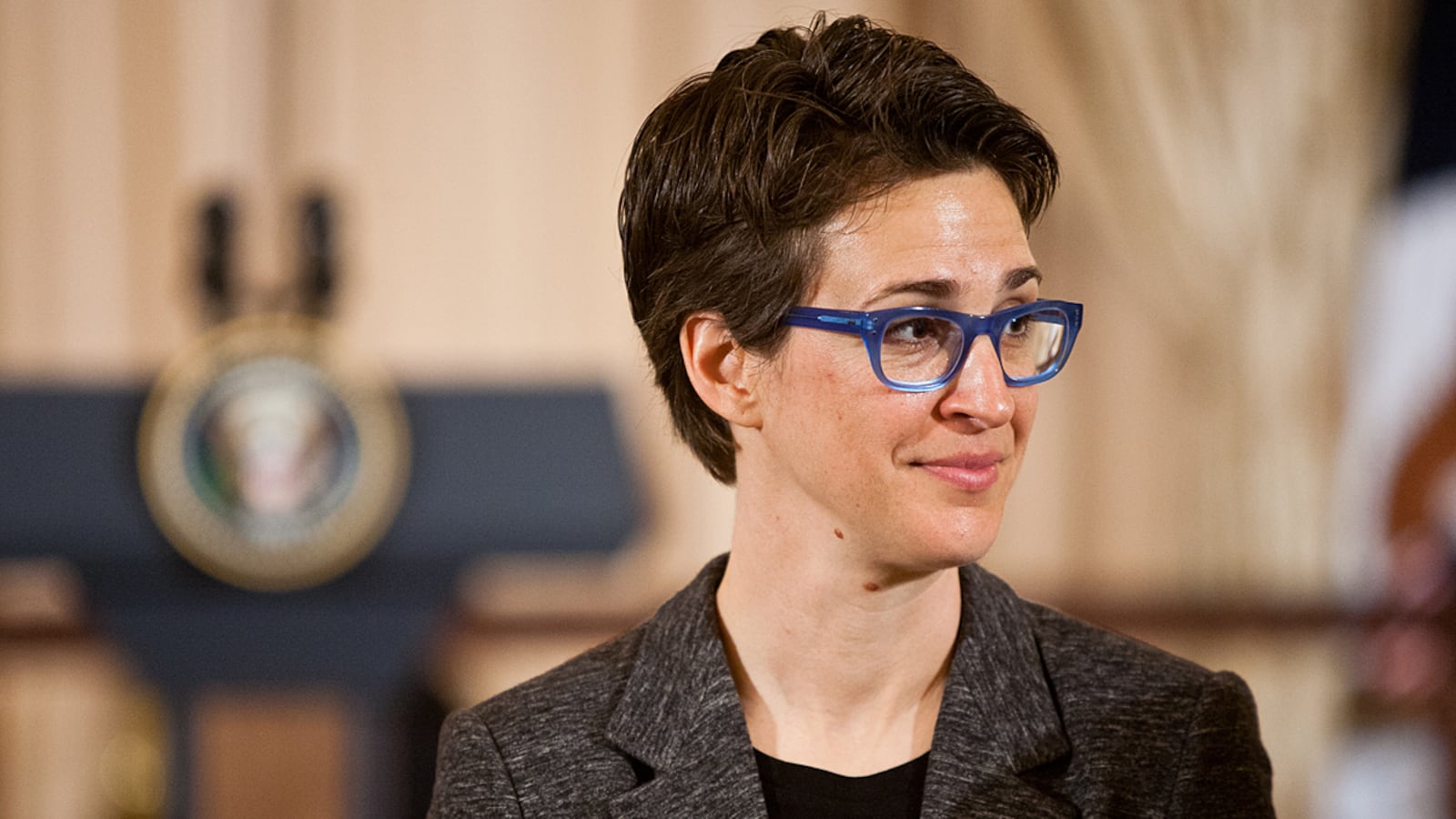
As the first openly gay primetime anchor, and that rare woman on television who exudes warmth and both dresses and coifs herself to direct exclusive focus on her brains and words, Rachel Maddow is an icon for feminists and activists. Both men and women respect her, want to be her, or date her (although she’s taken), and most of all want to hear what she has to say. But don’t try to label her. She’s not into that.
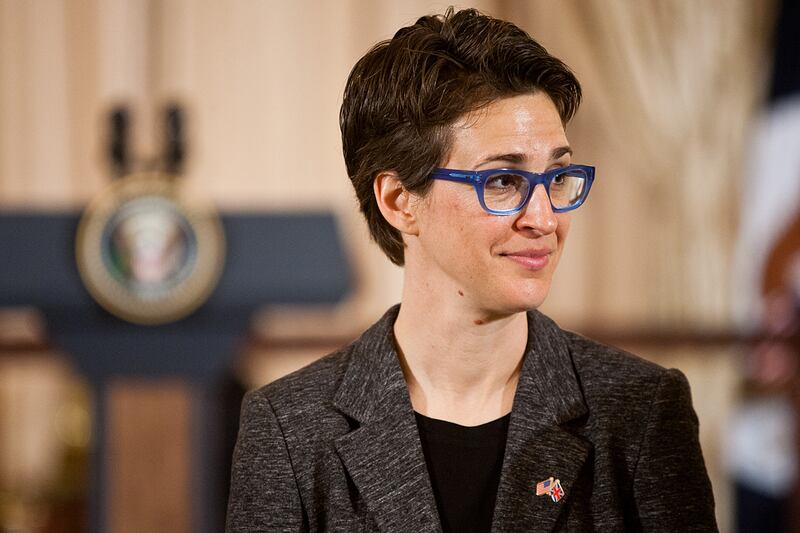
About being a feminist, she identifies, but also qualifies, “I don’t think I’m as reflective as you might think I am.”
She’s often said she won the job lottery as the host, force, and soul behind MSNBC’s top-rated The Rachel Maddow Show, but while fans and detractors think they know her from spending weeknights listening to her play-by-plays of debt-ceiling talks or Etch a Sketch–gate, she’s quick to break down those opinions, too.
“I think a lot of people think of me as an activist. That I’m trying to change things and to get people to do something. I’m not trying to do that. I’m trying to explain the world in a way that people find helpful,” Maddow told The Daily Beast.
Not a lot of women write books about war. Knowing her disregard for labels, it seems that in writing Drift: The Unmooring of American Military Power, she’s right where she belongs: untangling 40 years of American foreign policy, combat operations, and swaggering presidential power—and then sussing out how the American public detached itself from its own wars. Accustomed to small, styled journalistic pieces for TV, she said the only form that could contain such an investigation was a book.
Maddow eschews military expertise, too (“politics is my gig”), though she’s traveled to war zones, and reported on conflict, and her father was an Air Force captain. Her military attachment goes back to her college days, in the early ‘90s, when she says the gay community was rallying around two issues: the fight over “don’t ask don’t tell” and marriage equality.
“Are these really the issues we want to be focusing on? I was unsure about the marriage thing, but I never really had any doubts about the military,” Maddow said.
She had always considered “military service a variant of public service,” and said she would have contemplated joining had the military allowed gay members at the time. Even now, she says the military is a “can do” organization, and believes they’ll successfully implement the repeal of “don’t ask don’t tell.”
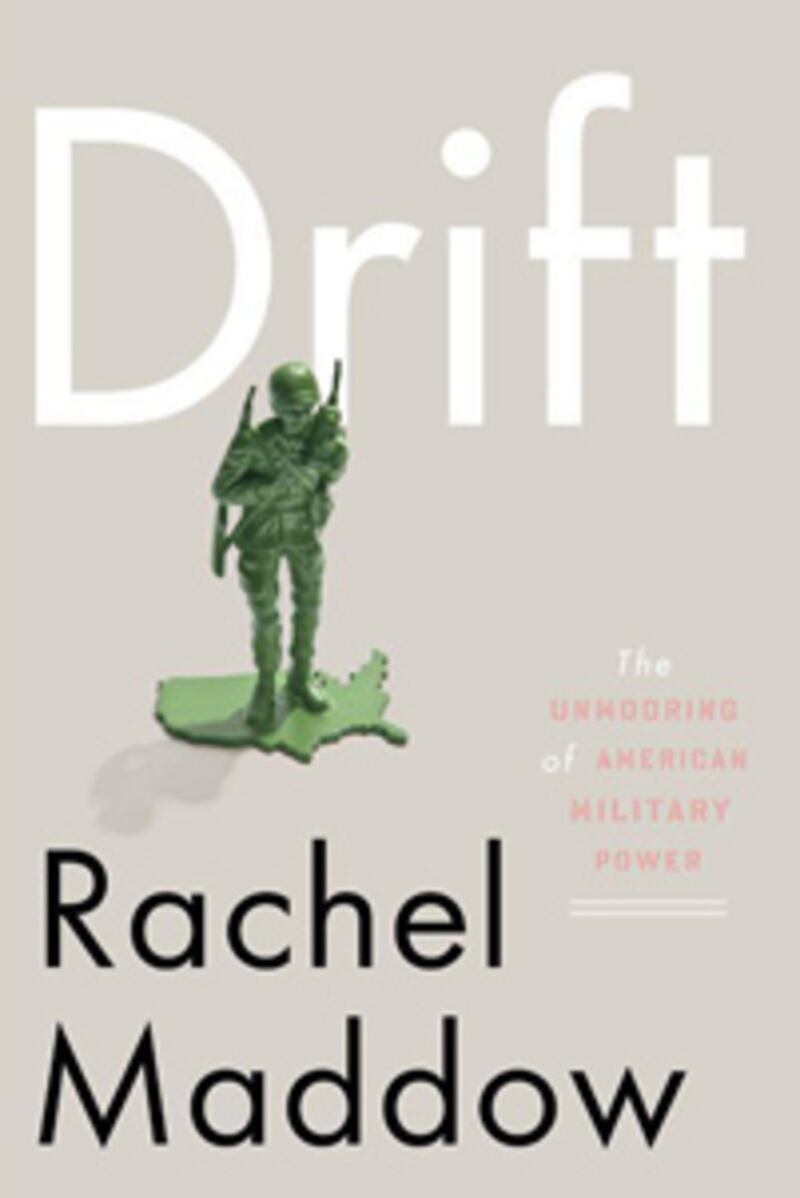
The voice and tone of Drift will feel familiar if you watch her show. Much of it sounds like what she reads nightly from the teleprompter, which often is very much her conversation with producers recorded and made into a script. Political media personalities are so publicly their opinions, so although she leans left, she assures potential readers that this story is postpartisan with exterior jacket blurbs from such philosophical opposites as Roger Ailes, Ira Glass, and Naomi Klein.
The most poignant takeaway from Drift is one that has been written a lot about: the ever-widening civil-military divide. Maddow cites a study in which “two thirds of Americans believe the disproportionate burden shouldered by those who have served is ‘just part of being in the military.’ ” Her chief exploration lives in that word, “unmoor.” The military’s distancing from the regular American womb was slow, deliberate, but not maliciously so, and perhaps irreversible.
“Civilians have broadly no sacrifice whatsoever. That divide feels wrong to people. And I think it should feel wrong,” she said.
Deployment is more frequent, taxing, longer than ever before, and is unfair and unhealthy for families, and Maddow says it’s only 1 percent of America’s population that is involved. She also writes that we have little sense of the great amount outsourced—to private contractors and drones who execute operations for us. We no longer have a compulsory draft. What’s clear is that future generations move progressively further from the horrors of war.
Maddow brings levity to all the heaviness with saucy descriptions and whizbang language (Barry Goldwater the “anti-communist badass,” our desert weapons complex is “atomic-kitschy”). She is also deliberate in her publicity, leaving a media breadcrumb trail for the two people she wants to interview most, but who have yet to agree to sit down. The dedication reads, “To former Vice President Dick Cheney. Oh Please let me interview you.” Her other dream grilling is Hillary Clinton.
“For her to have seen the world all the ways she has, there’s nobody like that in our history,” Maddow said.
She admits she has no solution for getting more women in political office and in positions of visible leadership, but her response to the deficit is tough talk.
“There are many ways to envision female success. Ultimately, you don’t do anybody any favors by putting people in jobs they can’t do well in. The best way to win is to be better than everybody else,” Maddow said.