Lionel Shriver, the author of the harrowing and patient We Need to Talk About Kevin, delivers something altogether different: a callous and romping political and journalistic satire.
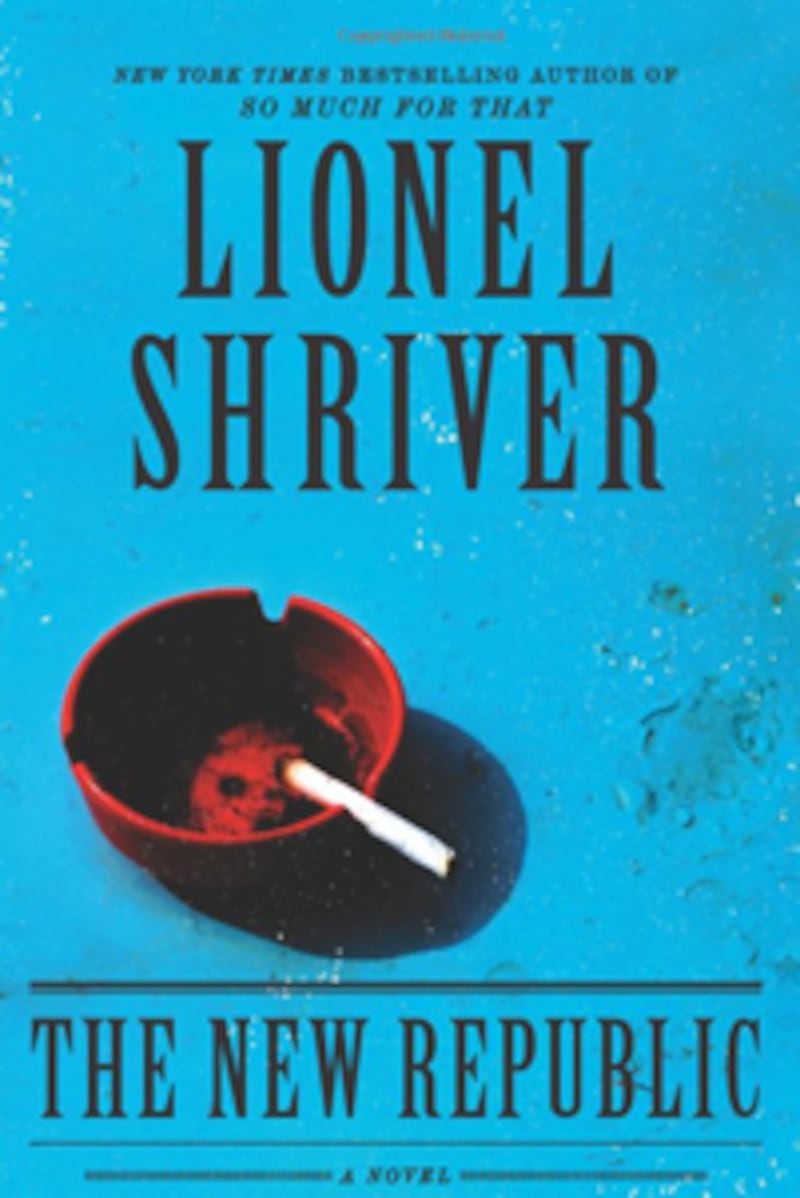
I delight in every opportunity to bring up the namesake of my publication. And so when Shriver conjured up a satire featuring a journalist who’s sent to a fictional state that’s in a sort of a civil war, it’s hard not to think: Scoop! In the Evelyn Waugh riot, the bumbling William Boot, foreign correspondent for the Daily Beast, gets an exclusive on a coup in the African state of Ishmaelia, because he’s too lazy to leave town. In The New Republic, the hapless fool is Edgar Kellogg, stringer for the National Record, who’s sent to the imaginary Portuguese province of Barba, which juts into the Atlantic like an ancillary appendage, an extra Gibraltar. He begins taking credit for bombings by the terrorist group Os Soldados Ousados de Barba—acronym: SOB—and has a friendship with a gonzo reporter who might no longer exist. Recall, if you will, that David Foster Wallace, Zadie Smith, Don DeLillo, Thomas Pynchon, and Paul Auster all pepper their novels with such features as a Québécois liberation front called the Wheelchair Assassins, a nun named Sister Edgar who may or may not be the reincarnation of J. Edgar Hoover, an Islamic terror group with the acronym KEVIN, and a protagonist—or even the author of the book you have just read!—who invented a charismatic alter ego in his head. Is Shriver parodying this hardened genre—hysterical realism—or is she re-creating it? It is safe to say that Shriver is not nearly as ambitious. But she is also less absurd, which lends the project a sense of sincerity, turning the scalpel more toward the cult of journalism and terrorism—back to the scathing world of Scoop.
Art historian Justin Wolff’s definitive biography of America’s first major painter, whose sculpted, strong figures looked forward to a better, bolder world.

It’s hard to love Thomas Hart Benton by reading about him. He disapproved of abstraction. He believed ideas are only valid if they are useful. He chose not to question American nationalism. He sounds more like a high-school principal than like America’s first great painter. But situate him in his unique place and time—a roaring America in the ’20s—and take a look at the fullness, the three-dimensionality, of his rise-up-in-life figures, and you might begin to appreciate the vital link he represents between Manifest Destiny (his great-grand-uncle, the first Thomas Hart Benton, was the champion of westward expansion and a U.S. senator) and the energy of the action painters (his most famous student at the Art Students League was Jackson Pollock). His pragmatism had a naiveté and sense of humor to it: having once said that paintings should be hung not only in museums but where they would do the most good, he arranged for a huge canvas (a grim study of a sharecropper) to be exhibited facing the hospital bed of an ailing lady.
We might assume that language is something we learn. (Mandarin night classes, anyone?) Yet it is the radical and counterintuitive “universal grammar” theory—that language is innate, like an organ—that is the dominant belief among experts. Linguist Daniel Everett reignites the debate.
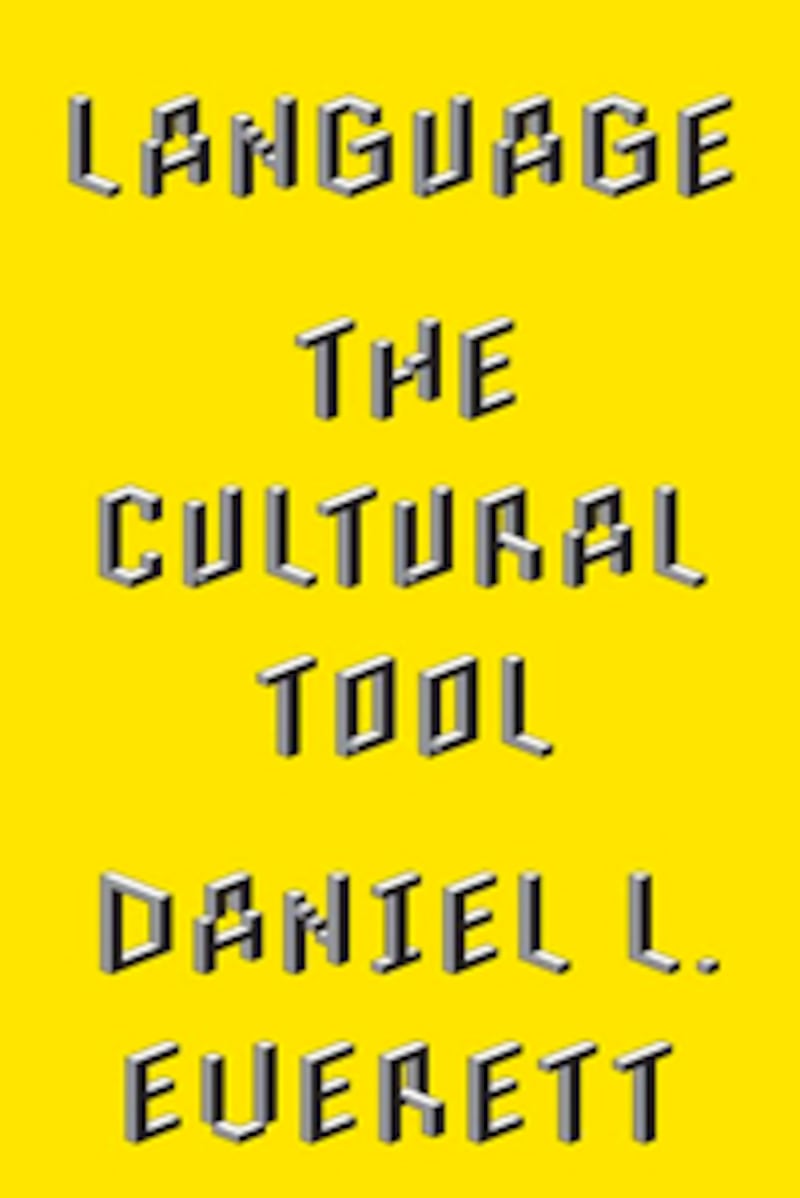
Noam Chomsky’s universal grammar is as seductive as they come as far as broad theories go in evolutionary psychology. Language is considered by many to be the human faculty with the clearest signs of being an adaptation—meaning that it is hard-wired into the brain and manifested genetically, in the form of a “language organ.” It can explain a lot, including the mystery of how babies overcome the extraordinary intellectual challenge of learning a language from scratch. Chomsky disciples swear by it in an almost dogmatic way, and the great man himself doesn’t bother defending it in the trenches. But in 2005, Everett lobbed a bomb into the party. He published a paper claiming that universal grammar has been falsified by the language of the Amazon tribe called the Pirahã (pronounced pee-da-HAN), which he learned while living with them on and off for 35 years. The Pirahã is possibly one of more than 6,000 known languages to lack what’s called “recursions,” a uniquely human linguistic operation that consists of putting one thought into another, as when you combine the phrases “put the pencils into the box” and “the box is under the bed” into “Put the pencils into the box under the bed.” Everett believes that language is not an organ but a tool, a technology learned and sculpted to fit our specific needs, and the way the sword is wielded is different for each culture. Some experts believe Everett doesn’t disprove universal grammar, that he is only framing the problem in the wrong way. Whatever the outcome—and there won’t be a conclusive one for many, many years, thanks to the glacial pace of scientific maneuvers—Everett has a point: blind faith in Chomsky only holds linguistics and evolutionary biology back. Language deserves a most rigorous discourse. Let the games begin.
Famous literary agent Bill Clegg’s looks and career could have been described by one word: flawless—until he got addicted to crack. In his second memoir, he makes his way out of the abyss.
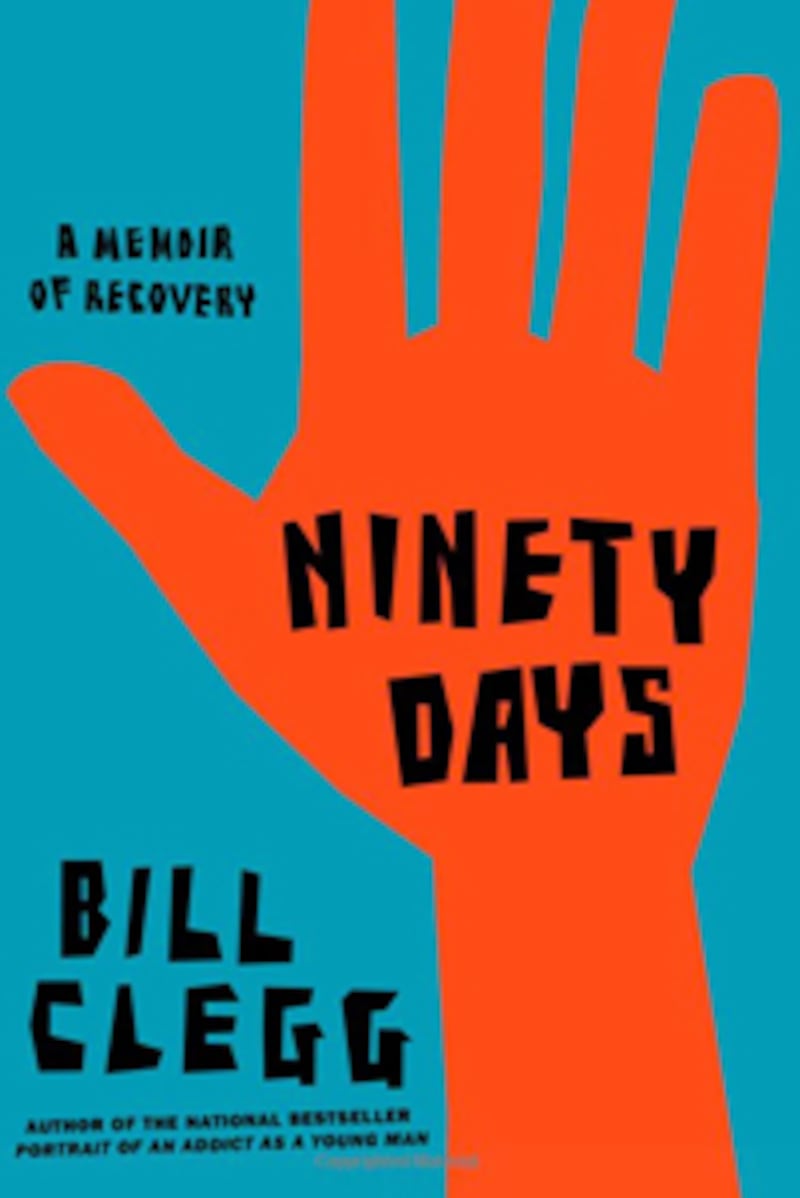
Bill Clegg looks like he should be in charge of something. And he was—he quickly rose to the top of the book-publishing industry and founded the literary agency Burnes & Clegg. Then he became addicted to crack, a decadent fall told in 2010’s Portrait of an Addict as a Young Man. His new memoir, Ninety Days: A Memoir of Recovery, picks up where it left off, as Clegg sets himself the goal of remaining sober and swearing off sex with anonymous men for three months. He tells the story in plain, innocence-drenched sentences that bring to mind the wonderful Edmund White, as if to adorn the events would be dishonest. The short paragraphs are separated by extra-long gaps—he’s pausing to regroup, taking one step at a time. It is a bedtime story for adults, filled with first names only—Jack and Polly, Jane and Jean, Asa and Madge, Luke and Annie. A soothing and intimate book, and we hope Clegg has found peace at last.
Anne Tyler, the Pulitzer-winning matron of sympathy, demonstrates once again the beauty of understated plenitude with a story of a husband who goes on seeing his dead wife.

Airy. Anne Tyler, whatever else she has done in her 19 novels, is a master of space, a writer who leaves you room to feel, the opposite of the hysterical maximalists. She tells the love story of Aaron, a middle-aged man, and his wife, Dorothy, only that Dorothy is dead, killed by a fallen tree. That doesn’t stop Aaron from continuing to see her. “I was rinsing vegetables for my supper, and I turned from the sink to reach for a towel, and I saw Dorothy.” They have conversations. They take walks. They love each other. And why not? This is not Patrick Swayze and Demi Moore, and the muted tones are very deliberate. Tyler is one of the least physical, crying-out-for-attention novelists America has ever produced, and her novels, always remarkable, envelop you without ever squeezing hard—they leave an impression but not a bruise. Sometimes you want her to push harder, to knock you out with something essential and impossible to ignore, but she is too fine to oblige. She is comfortable in her semi-suburban, semi-elegiac, semi-Southern limbo, so why budge? Take Aaron and Dorothy. The space between them is vast and multidimensional, but at the same time they are closer than most souls. Aaron has absorbed Dorothy and will never let go. Why would he?