
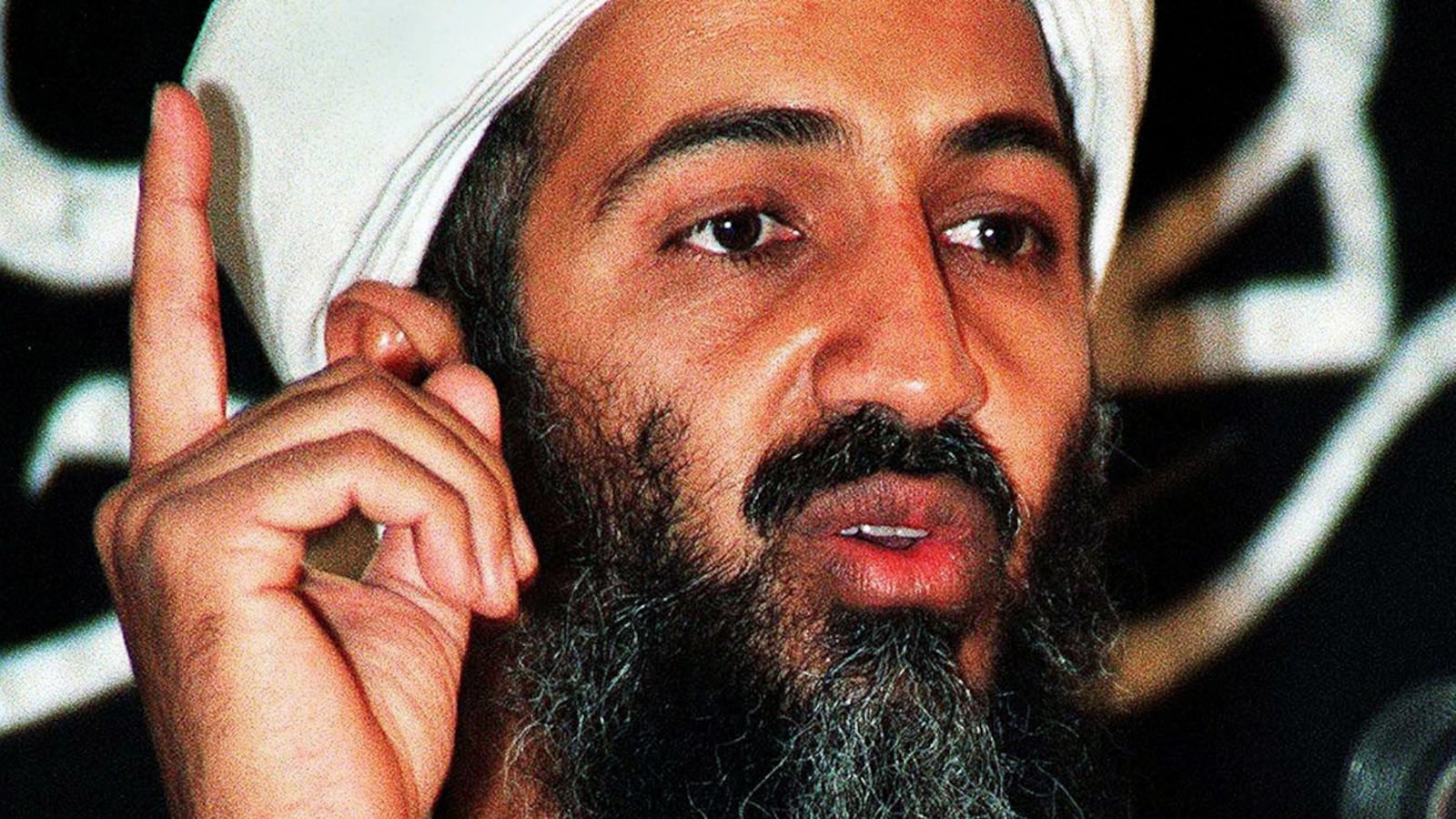
As it turns out, Osama bin Laden did not spend nine years on the run moving from one cave to another. He spent them moving from one maternity ward to another. It doesn’t take a village to raise a child; it takes a terrorist network.

Bin Laden’s youngest wife, Amal Ahmad Abdul Fateh, giving birth to four children in Pakistan between 2003 and 2008 is but one of the intriguing details emerging about his years on the run between the escape from Tora Bora in 2001 and his demise in Abbottabad in 2011. They are based on documents seized in last year’s raid that killed bin Laden and the Pakistani investigation since then.
A decade ago, President Bush said 9/11 changed everything. If a group like al Qaeda could hijack four airplanes and fly them into the Twin Towers and the Pentagon, they could do anything, including acquire a nuclear weapon. The country was impelled to act, not based on what was known, but what was feared.
Ten years later, the portrait of bin Laden that emerges from Abbottabad is strikingly different: the caliph in waiting was not larger than life but a quite ordinary figure still full of grand plans despite operational capabilities reduced by outside pressure and internal squabbles. He was also a leader who recognized that his erstwhile subjects were less and less interested in what he was selling: an al Qaeda brand tarnished by excessive violence against Muslims and badly in need of a makeover. And he was a fading media star who bemoaned even the demise of the animating political slogan “war on terror,” which the Obama administration consciously dropped in 2009.
The Obama administration, which has promised to declassify and release documents obtained during the raid, is meanwhile leaking this description of a diminished, even vain bin Laden as part of an ongoing counterterrorism communication effort to damage al Qaeda’s standing in the Islamic world.
As intriguing and valuable as this information is, it doesn’t necessarily provide a compelling political argument to sustain long-term political, financial, and military support for Afghanistan and Pakistan. This year alone, funding existing operations in Afghanistan will cost $111 billion. Meanwhile, Pakistan receives an estimated $4.5 billion a year in civilian and military aid. Some military assistance was suspended last year in the aftermath of the bin Laden raid.
As budgets get squeezed, these will be ripe targets for cuts. Add mistrust on all sides, accentuated by the actions and reactions to the friendly-fire deaths of Pakistani soldiers in November, Quran burning, and the murder of Afghan civilians, and the future of these relationships remain in doubt.
But notwithstanding increased calls to scale back these relationships at least, if not largely disengage, there are strong reasons to stay, albeit with a restructured approach to both Afghanistan and Pakistan.
President Hamid Karzai has been publicly critical of what he views as disregard for the impact that ongoing operations have had on the Afghan people. But he knows that Afghanistan cannot afford to send the U.S. packing. It will need significant U.S. and international help for years to come. It is more likely than not that the U.S. and Afghanistan will resolve outstanding issues and sign a status of forces agreement that will ensure a reduced if meaningful presence beyond 2014.
Bin Laden’s hideaway underscores why Pakistan and, by extension, Afghanistan, remain important. But there are a few wild cards that make the future uncertain.
A formal parliamentary review of the U.S.-Pakistan relationship is under way. A central irritant is ongoing drone operations that are invaluable from a U.S. standpoint but which the Pakistani population views as a violation of sovereignty. Given that a majority of Pakistanis sees the United States as an enemy, parliament may place conditions on future cooperation that the U.S. government will find hard to accept.
Congress has its own questions, principally whether the Pakistani government was complicit in protecting bin Laden. While there remains no evidence that the top echelon of leadership in Pakistan even knew bin Laden was in the country, he clearly had civilian allies, undoubtedly some with long-standing ties to Pakistan’s intelligence agencies and perhaps its military.
The Pakistani government is trying to figure out how bin Laden could live in the shadow of a number of key military installations without detection. Its best defense right now is incompetence.
While the latest details offer greater understanding of the final years of bin Laden’s life, where he was and what he did, they are still not enough to answer the core question posed right after 9/11: who in Pakistan is with us, who is against us, and what we should do about it.