Seven years ago, I resigned from my job as assistant Food and Drug Administration commissioner for women’s health because I believed that, under the Bush administration, politics was taking precedence over science and women’s health.
In an email to my colleagues at the time, I wrote: “I can no longer serve as staff when scientific and clinical evidence, fully evaluated and recommended for approval by the professional staff here, has been overruled.”
That was in 2005. After the election of Barack Obama, I and many others were filled with a renewed hope that scientific findings would once again guide the decisions of the FDA. But as a New York Times article on Tuesday laid out, that has not always been the case. In fact, some of the same mistakes are being repeated.
In the Times article, I was quoted as saying that President Obama had not lived up to his pledge to depoliticize our decision making, but that nevertheless “I’m an optimist and hope that the president will find a way to stand by his promise.”
It’s true: today I am a real optimist, but sometimes it is hard to remain one.
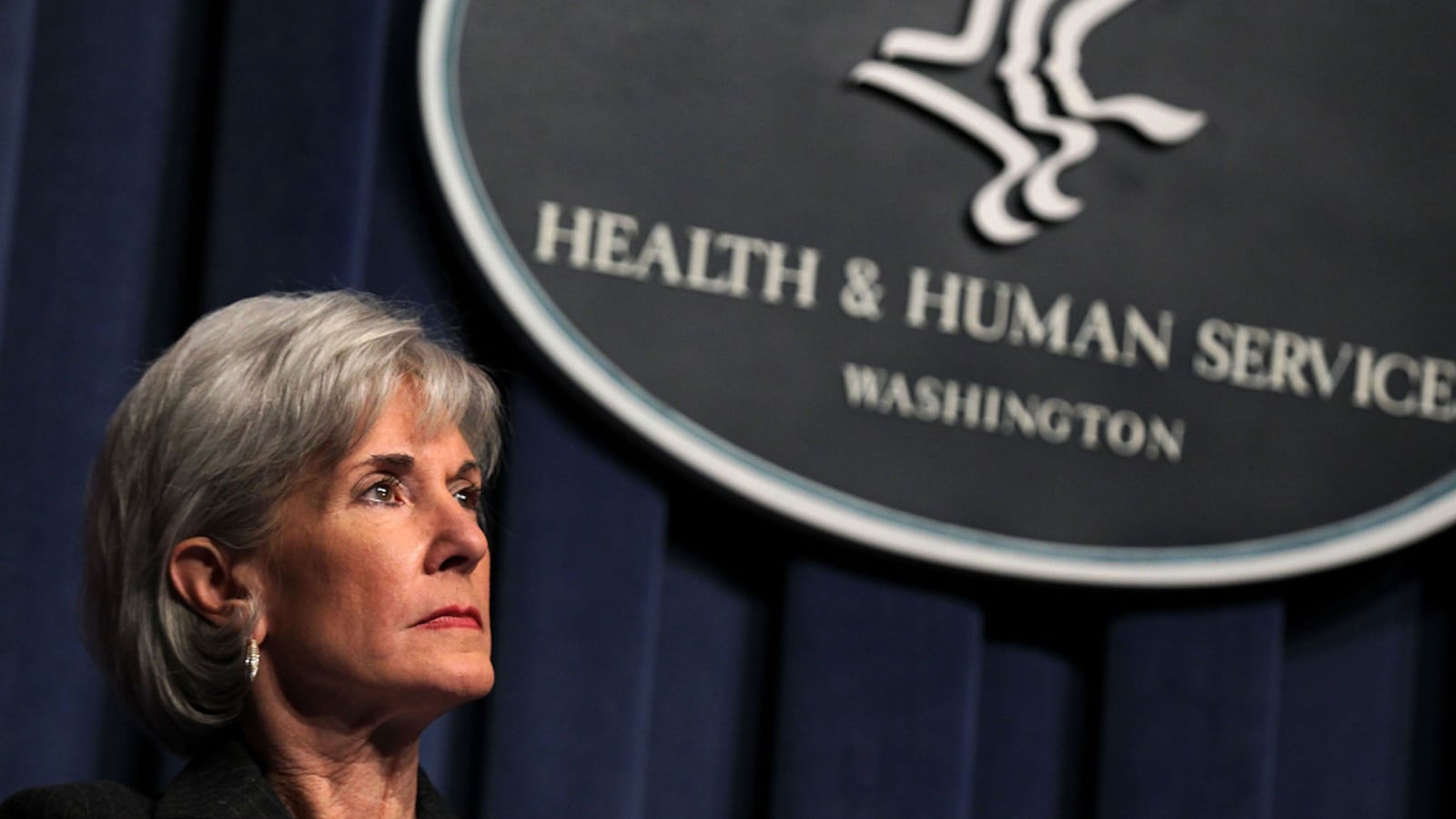
Let’s take a specific example: the decision in December by Health and Human Services Secretary Kathleen Sebelius to block the nonprescription sale of emergency contraceptives—known as Plan B—to all women who need it, including girls younger than 17.
Sebelius insisted that she had a “scientific” rationale for overruling the science-based recommendation of the FDA: there wasn’t enough data to satisfy her, she said. What was missing? Data that showed girls as young as 11 could correctly use emergency contraception. But this rationale doesn’t hold water.
To test this, I went to a pharmacy recently to purchase some Plan B and to see for myself how the process worked. Early on a Saturday evening, I had to go to three stores to find an open pharmacy counter. I then needed to stand in two different lines and show my ID (though I am obviously over 17 years old!). After paying $50 for a single Plan B pill, I bought a bottle of children’s acetaminophen (bubble-gum-flavored) for $5—enough chewable pills for any 11-year-old to suffer life-threatening liver damage. Also on the shelf, of course, were many types of condoms, available to anyone with a few dollars in his or her wallet.
So the Plan B decision was clearly not about safety or effectiveness—indeed, the FDA commissioner, Peggy Hamburg, clearly stated that the agency was ready to approve it fully over the counter. It was also not about use by preteens, because by keeping emergency contraception prescription only for those under 17, any woman who needs it fast—whether in her 20s, 30s, or 40s—will have to find that open pharmacy and the pharmacist to give it to her.
Let’s remember that Plan B is simply a higher dose of regular birth-control pills and works the same way, only immediately after unprotected sex, not before. Despite the scare tactics and misinformation campaigns being waged by the Catholic hierarchy and others who oppose allowing women to access contraception, Plan B is not the abortion pill (sometimes known as RU-486), and it will not interrupt a pregnancy.
On its surface, the secretary’s action was a small thing. After all, invoking concerns about sexually active preteens is enough to garner the support of most parents, no matter what. But when Sebelius decided to block the FDA’s recommendation, and when she asserted her own interpretation of medical and scientific data, she set a new and potentially dangerous precedent.
While the HHS secretary does have final legal authority to make decisions for the FDA, by law these decisions must be made based on very specific and limited criteria. Political considerations are not one of them. The FDA makes recommendations based on scientific evidenc to ensure that the products it approves are safe and effective. Approving or blocking medications based on political or other grounds is a slippery slope.
Imagine a future secretary appointed by a president who objects to, say, embryonic stem-cell research. Pointing to the Plan B decision, this new secretary could assert that he or she doesn’t believe the data showing effectiveness of a stem-cell-based cancer therapy and so could deny approval. Or maybe a major political contributor wants a new drug or device approved (or blocked)? The secretary—a senior political appointee, after all—could identify a “scientific” rationale to overrule the decision by the professional medical and scientific staff at the FDA.
There is a good reason why earlier secretaries have not publicly or formally overruled “controversial” FDA product-approval decisions: it doesn’t benefit the public’s health, and all of us are at risk if we cannot trust the FDA’s decisions.
There are real options for the HHS and FDA to revisit the Plan B decision and to ensure that it does not set a very risky precedent. It all starts with giving independence back to the scientists and physicians at the FDA—who, it should be noted, have recommended full approval for Plan B over the counter for nearly 10 years.
We depend on the FDA every day so that we have confidence that all of the medicines—whether prescribed to us or bought over the counter—are safe and effective. Yet the controversy over Plan B that started under the Bush administration unfortunately has continued into the present, and it serves as a canary in a coal mine. The Obama administration, which is championing expanded insurance coverage for contraception as a preventive service for women, needs to find a way to back the FDA decision—both for the benefit of women and to ensure a strong, independent FDA that truly protects and promotes our health.