A new Newsweek/Daily Beast Poll finds that America is facing a deepening level of racial division and polarization.
Majorities of both whites (72%) and blacks (89%) believe the country is divided by race, the poll finds. But twice as many blacks (40%) as whites (20%) say it is very divided. And just 19 percent of whites say that racism is a big problem in America, vs. 60 percent of blacks.
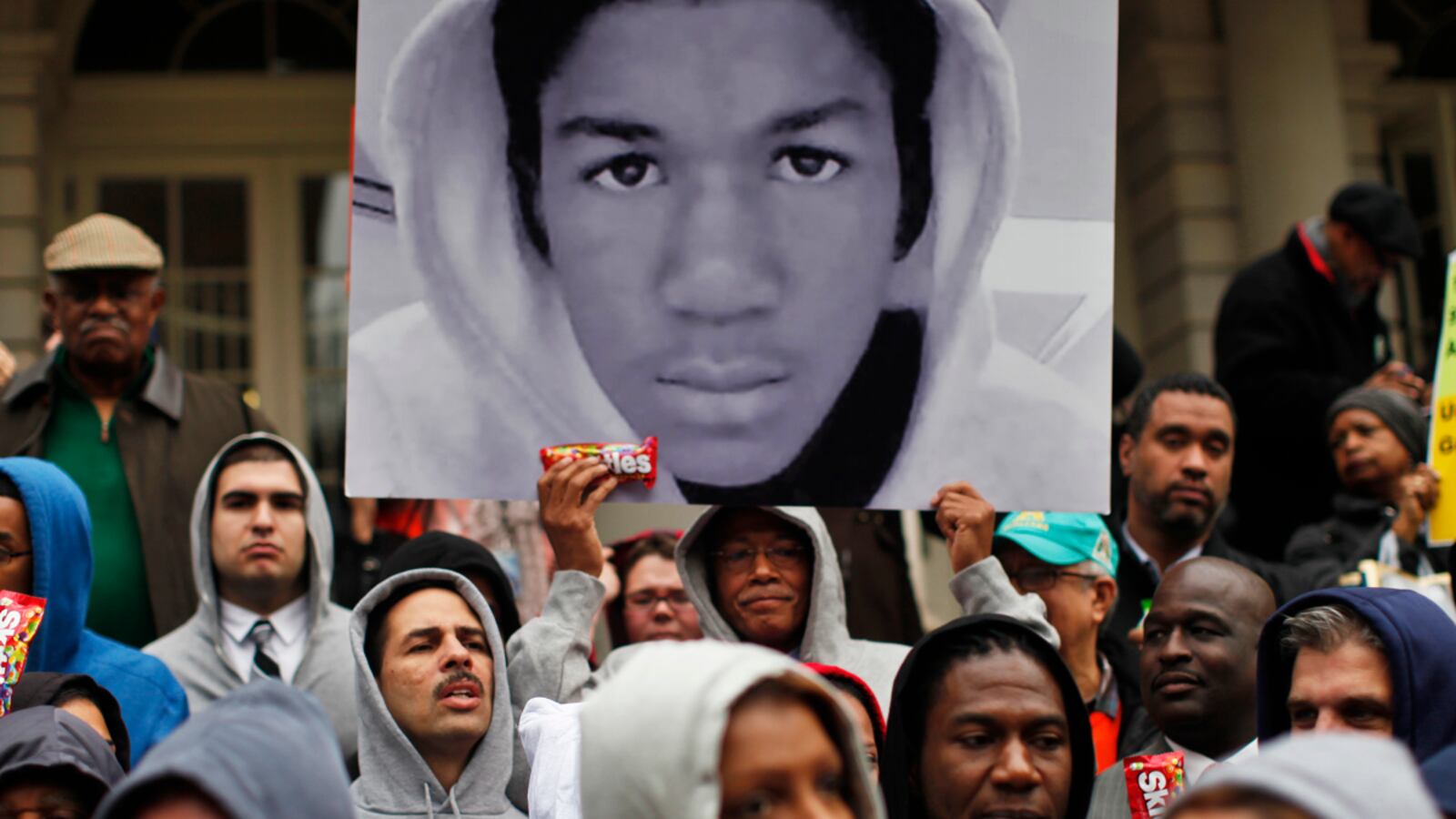
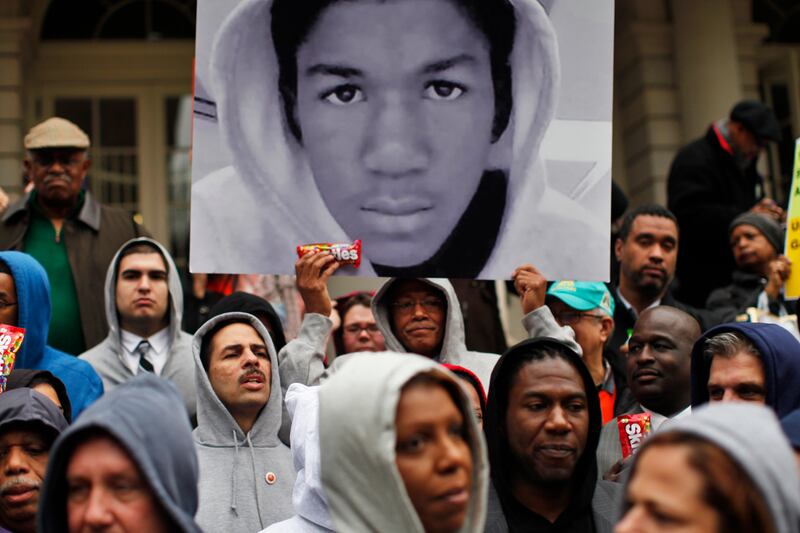
Meanwhile, the killing of 17-year old Trayvon Martin has further polarized America along racial lines, the Newsweek/Daily Beast Poll finds. In the survey, whites are divided over whether they think Martin’s death was racially motivated. Thirty-five percent of whites say Martin’s death was racially motivated, while 30 percent say Zimmerman acted in self-defense and 35 percent are not sure. African-Americans, however, are convinced it was racially motivated (80% vs. 2%).
Whites also are divided on the question of whether Martin was targeted because he was a young black man–41 percent say yes, while 34 percent say no and 21 percent are not sure. Blacks are convinced he was targeted because he was a young black man (85% vs. 4%).
There also is a significant split over President Obama’s handling of the Trayvon Martin controversy—with a majority (52%) of whites saying they disapprove of the way he has handled the shooting while only 38 percent approve.
Blacks say the opposite—with near unanimous (87% vs. 5%) approval for the president’s handling of the shooting.
Nearly four years after the election of the nation’s first African-American president, majorities of both whites and African Americans surveyed say that race relations in the country have either stayed the same or gotten worse. Sixty-three percent of whites and 58 percent of African-Americans say race relations have either stayed the same or worsened—while only 28 percent of whites and 38 percent of African-Americans say they have gotten better.
Similarly, on the question of how Obama has handled race relations since he became president, whites disapprove (47% vs. 41%) while blacks are overwhelmingly positive (84% vs. 8%).
And when asked whether or not Obama has been helpful or not in bridging the racial divide in the country, whites say not helpful (51%) while blacks say helpful (69%).
The Newsweek/Daily Beast Poll found that both whites and blacks agree that racial stereotyping still occurs in American society today and majorities of both whites (72%) and blacks (89%) say America is divided on the basis of race.
But blacks and whites have fundamentally different perspectives when it comes to frequency, severity, and longevity of racial discrimination blacks face.
Whites and blacks disagree–and disagree fundamentally when it comes to when—blacks will achieve racial equality with whites. While a clear majority of whites (65%) say that blacks have achieved or will soon achieve racial equality, blacks are much less optimistic about the state of black progress. Only 16 percent of blacks say they have already achieved racial equality and nearly half of blacks (47%) say that they will not achieve racial equality in their lifetime or will never achieve racial equality.
African Americans were particularly sensitive to the economic downturn and were much more likely than whites to say that the prolonged recession contributed significantly to more discrimination in employment and housing. Sixty-five percent of African-Americans surveyed said that the current economic situation today has played a role in promotion racial discrimination, compared to just 42% of whites.
And while 70 percent of whites think that blacks in America have the same chance as whites to get housing they can afford, only 35 percent of blacks agree.
Similarly, 70 percent of whites think blacks in America today have as good a chance as whites to get a job for which they’re qualified—a view shared by only a quarter of blacks.
And while virtually all whites (92%) and blacks (95%) agree that racial profiling occurs at least some of the time, the two groups diverge over whether profiling happens all of the time—a solid 63 percent of blacks say yes while less than one-quarter of whites agree.
Both whites and blacks agree that it is the responsibility of the federal government to make sure that the courts and the police treat minorities and whites equally. But the two groups disagree fundamentally over whether it is ever justified for police to take factors such as race ethnicity and overall appearance into consideration when making an arrest. A majority (56%) of whites say that it is at least sometimes justified for police to use factors such as race, ethnicity, and overall appearance–a view shared by only 28% of blacks.
Nearly six times as many African-Americans as whites (29% vs. 5%) say they have been unfairly stopped by the police because of their race or ethnicity all or some of the time.
When asked whether the police and courts treat blacks the same as they treat whites in America today, 82 percent of whites say that police treat blacks the same as whites all or some of the time, and 86 percent say the same of the courts. A majority of blacks however, say that blacks are rarely or never treated equally by the police (53%) or the courts (52%).
The Newsweek/Daily Beast Poll was conducted by telephone between March 30 and April 1 from a random sample of 600 registered voters and a separate oversample of 400 registered African-American voters. The margin of error for the first group is plus or minus 4 percent while the margin of error for the second group is plus or minus 4.9 percent.