The passing of Mike Wallace has got me thinking about the passing of a journalistic generation.
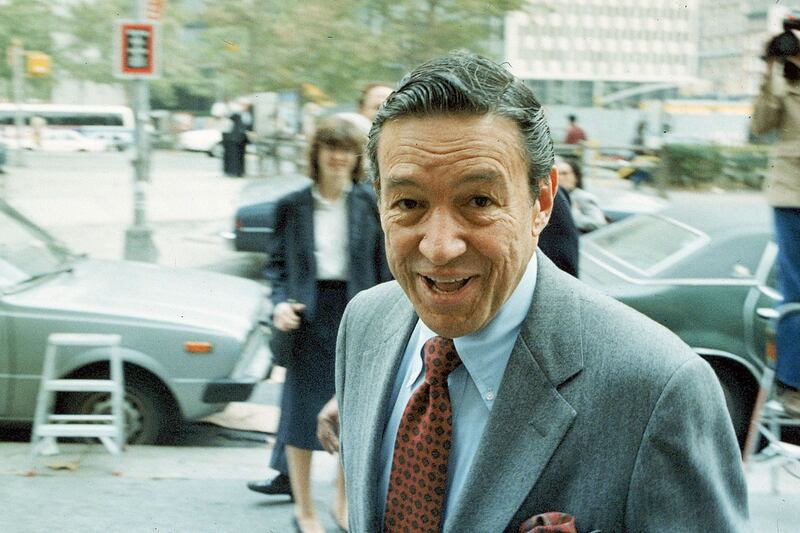
Wallace was unusual, to say the least, in that his career spanned seven decades and he helped create—and came to define—investigative reporting on television. But in recent years I have gone to memorial services for, or memorialized in print, such industry giants as Walter Cronkite, Don Hewitt, Peter Jennings, Daniel Schorr, Tim Russert, and Johnny Apple. And the likes of Charlie Gibson and Barbara Walters (mostly) have headed into retirement.
This is not a lament that things have gone to hell in a handbasket since some mythical golden era. There are tremendously talented journalists today, and they must operate in a faster-paced, multimedia environment. Anthony Shadid of The New York Times, who died recently in Syria, was as fine a foreign correspondent as has ever traveled the globe.
Perhaps the men (and they were mostly men) of Wallace’s era loom larger because they occupied the stage in an era of media monopoly. When 60 Minutes (“I’m Mike Wallace, I’m Morley Safer…”) launched in 1968, there were three major television networks. When Apple was filing political dispatches for the Times (and eating enormous expense-account meals), that paper had no real competition from huge Web publications.
And some of them just lived a helluva long time.
Still, it’s hard to escape the feeling that something has been lost. Wallace was no saint—as I noted Sunday, he pioneered the use of ambush interviews and hidden-camera techniques that we find dubious today, and which he backed away from later in his career. But he, Cronkite, Jennings, and the others seemed thoroughly schooled in old-fashioned journalistic values. They made the necessary bows toward entertainment—Wallace, for one, liked sitting down with showbiz stars--but they spent most of their lives in a culture less dominated by celebrity-driven fare than today’s TMZ world.
No one wants to go back to a time when Cronkite was one of the few with a megaphone loud enough to tell us that’s the way it is. And 60 Minutes, which took 13 years to add its first black correspondent, the late Ed Bradley, fields a more diverse team than it did at the start.
Perhaps our mourning for these titans of yore reflects a longing for a simpler time, when right and wrong was as clear-cut as Mike Wallace chasing a bad guy down the street.
Note: In a Newsweek story this week on the morning-show wars, I made the point that MSNBC has lately hired mostly opinionated hosts rather than those with journalistic backgrounds. In citing three of them, I didn’t mean to lump them together and regret if I inadvertently left that impression.
Joe Scarborough, a former congressman, runs one of the most substantive and fair-minded programs on television, in the morning or at any other hour. Rachel Maddow, a former activist, has a doctorate and brings intellectual firepower to her brand of liberalism. Al Sharpton, a former presidential candidate, remains a civil rights activist, and I’ve been critical of his overlapping roles in the Trayvon Martin case. None of them are shy about sharing opinions, but they could not be more different.