
Ofir Akunis has some new friends. Akunis, a Likud minister and Deputy Speaker of the Knesset, is best known for sponsoring legislation to ban select Israeli NGOs from receiving foreign-government donations of more than 20,000 shekels (roughly $5,000). Defending the bill in a Israel Hayom op-ed against criticism that it is illiberal, he called it necessary to preserve Israel’s sovereignty, and wrote, “I do not know of any country in the world that tolerates external interference in its domestic affairs.”
I’m sure he’ll be pleased to hear that Cairo agrees. The Egyptian Ministry of Insurance and Social Affairs recently released a draft of new legislation on Egyptian NGO’s, and it looks like they don’t brook any foreign interference either. Like Akunis’s bill, the Egyptian law would restrict foreign contributions; the law comes on the heels of Egypt’s denying licenses to eight U.S. based NGOs, for reasons of “national sovereignty.” (The eight include the Carter Center, named after former president Jimmy Carter, so it looks like Akunis and Egypt’s custodial government even share an enemy.)
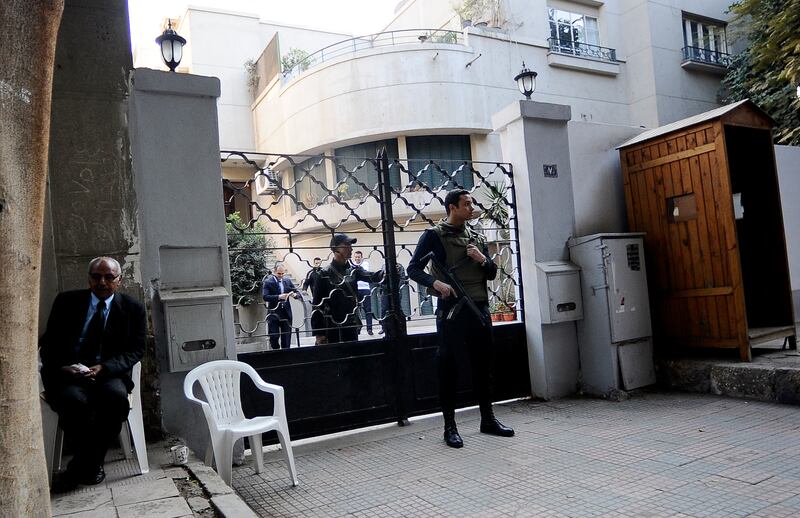
Unsurprisingly, Egypt’s clamping down on foreign NGOs has provoked the ire of the international community: Navi Pillay, U.N. high commissioner for human rights, called the law, "a potentially serious blow to the human rights aspirations of fundamental freedoms for which so many Egyptians have struggled for so long and at such cost." The proposed law standardizes restrictions which, under Mubarrak, were implemented selectively to crush dissent. As Pillay and others across the West have pointed out, it’s a bad sign that the custodian government is reverting to Mubarrak-style tyranny.
Pillay’s condemnation proves something else: there’s no international double-standard on NGOs. Attacks on civil society are always illiberal and dangerous, whether in Egypt, Venezuela (where the government monitors NGOs) or, yes, Israel. Rooting out “foreign interference” is McCarthyism, plain and simple—just ask Akunis, who thinks that McCarthy “was right in every word he said.”
In each case, “sovereignty” is used to justify trying to crush the opposition. For Akunis and Likud, it rings particularly hollow. Israel Hayom, the same paper which published his op-ed about “sovereignty,” is distributed and free and operated at a loss by American right-wing billionaire Sheldon Adelson, who spent, between 2007 and 2010, more than $70 million of his own money on the tabloid. Israel Hayom is nicknamed “Bibiton” for its sycophantic pro-Netanyahu propaganda (in Februrary, it came out that one of its columnists was simultaneously on the prime minister’s payroll as a speechwriter) and has been cited as a key force in Likud’s recent electoral ascendency. Of course, Akunis isn’t about to make that infusion of right-wing, foreign dollars an issue: it’s not “interference” when it’s your friends.