
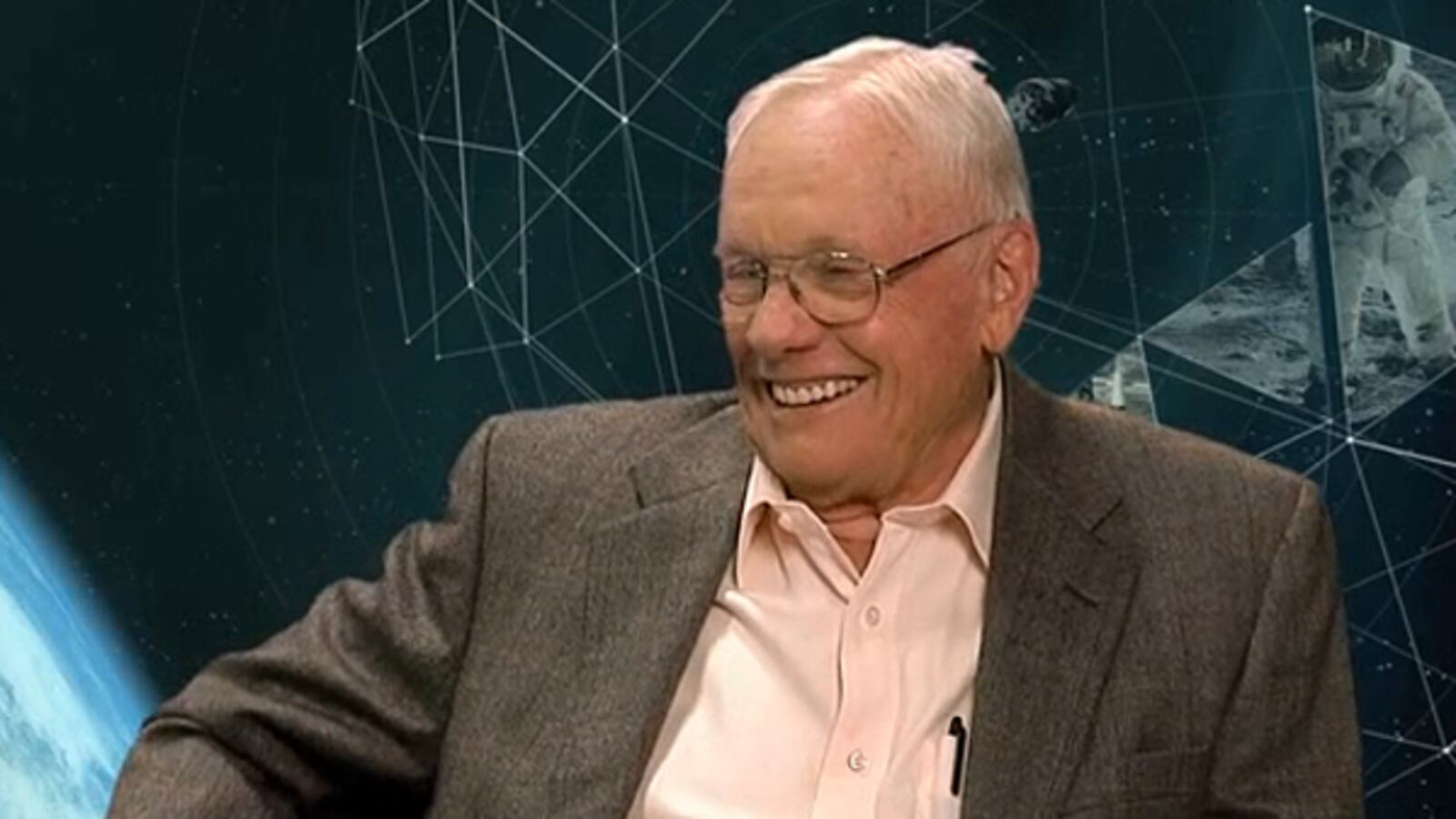
For all his global fame, Neil Armstrong is a remarkably modest man. So modest, in fact, that he almost never gives interviews and insists occasionally that he hates talking about himself. He spoke with the Discovery Channel in 2008 for an anniversary special. But now Armstrong, 81, is finally opening up in great detail. In a puzzling move, he recently sat down with Alex Malley, head of the Certified Practicing Accountants of Australia. “I know something not a lot of people know about Neil Armstrong—his dad was an auditor,” Malley says, explaining his in with the famed astronaut. Describing his early love of flight, the growth of NASA, and the mission that led to his famous “first step for man” declaration, Armstrong offers a rare and fascinating glimpse inside one of the world’s most daring, and successful, missions.
—
It’s possible the world would never have heard of Armstrong if not for a narrow escape from a perilous flight early in his career. Armstrong recounts how he cheated death while he trained to be an astronaut.
The first mission, Apollo 1, never got off the ground after a fire killed its crew on the launch pad. Armstrong provides details of the tragedy that took the lives of his friends, and explains the hidden benefits that resulted.
Apollo 11 was actually an afterthought for Armstrong’s bosses, a flight so far in the future than no one believed it would be the first mission to land on the surface of the moon.
How do you sleep in space on such a high-stakes mission? Very carefully. The biggest risk was keeping the communication systems in touch with earth. With one tiny technical adjustment, all three members of the crew were able to sleep simultaneously.
During preparations for landing, the Apollo ship Armstrong was flying sounded an alarm that could have derailed the mission. Armstrong describes how he diagnosed the problem and landed the lunar module craft.
Where did those famous words come from? Armstrong explains that he didn’t come up with his famous declaration until after he landed. Mission control “had no confidence in our ability to get down safely,” he jokes.
After his moonwalk, Armstrong got a special phone call. He recounts hearing President Nixon’s voice, and how the president thanked him on behalf of the entire country.
Did the moon walk actually happen? Or was it just a conspiracy? Armstrong responds to the conspiracy theorists who doubt he actually walked on the moon.
Armstrong uses updated video mapping technology from Google in a detailed walk-through of his manual landing.
Armstrong criticizes the current U.S. leaders, who he accuses of treating NASA like a “shuttlecock” in what seems like a political game.