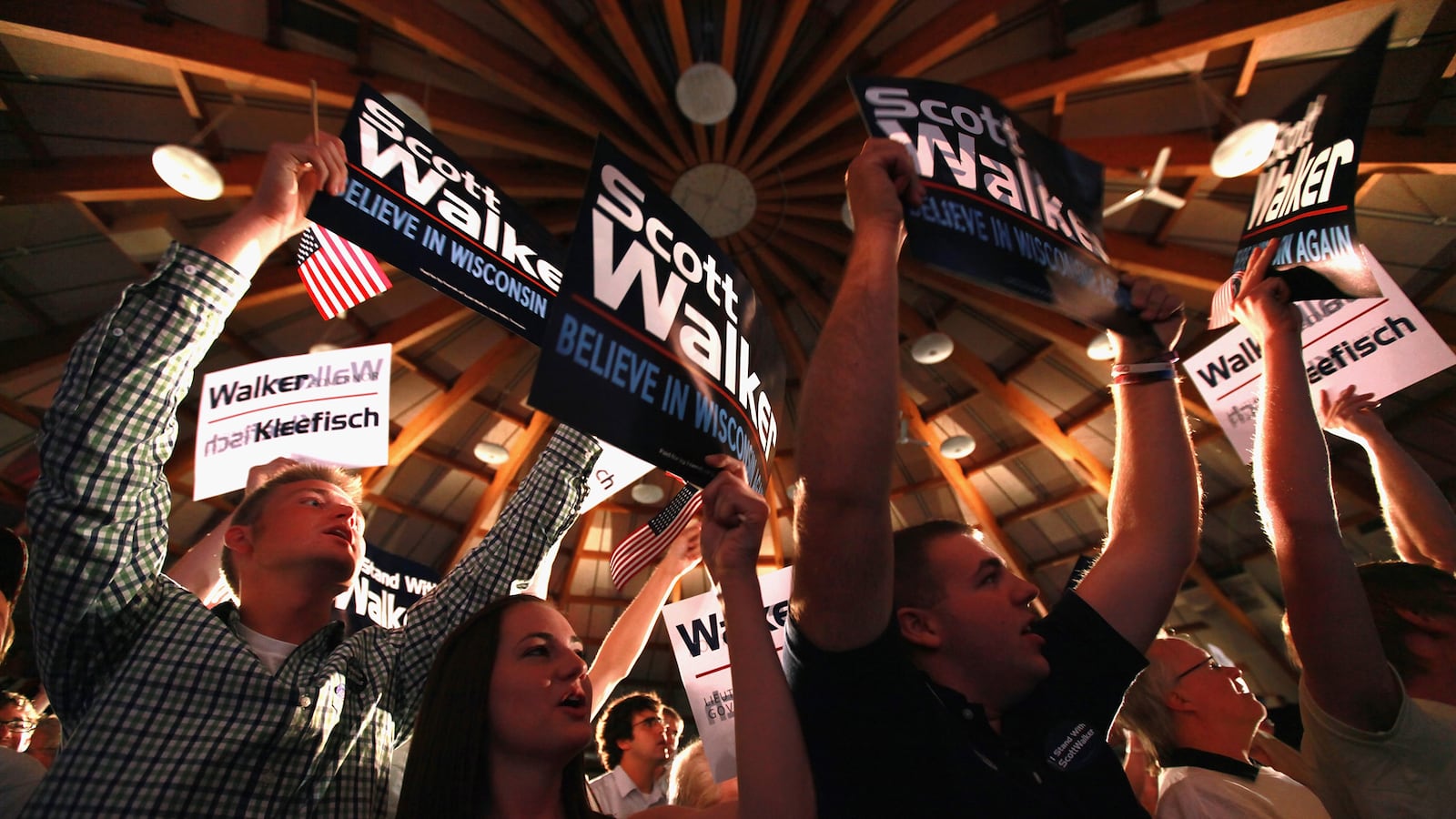
It was a big win for Scott Walker and a big wake-up call for Democrats.
The Wisconsin governor survived a recall effort that received more than a million signatures by gaining more votes in this special election than he did in 2010.
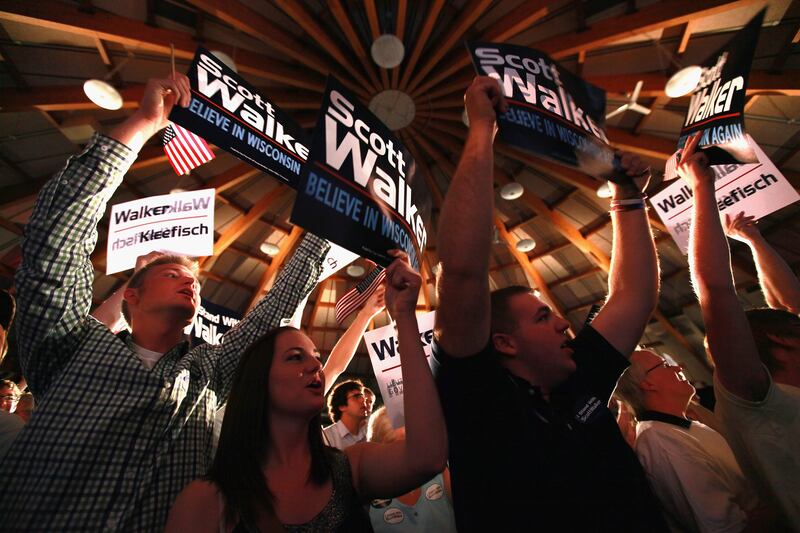
The policy implications of Walker’s victory will echo across the country as governors realize that they can take on public-sector unions and not face electoral oblivion.
The political implications for the presidential election will be overstated over the next few days—Wisconsin is still unlikely to break its 24-year Democratic streak this fall.
But there are plenty of lessons to learn from what DNC chair Debbie Wasserman Schultz infamously called “a dry run” for the general election. Here are my Top 3.
1. Labor Union Blues: Wisconsin ended up feeling a little like Waterloo for the labor unions that saw Scott Walker’s collective bargaining reforms as an existential threat. For all the vaunted Get Out the Vote operations offered by Big Labor, they were not able to inspire independents and middle-class voters to rally to their side. The “war on workers” rhetoric doesn’t seem to be working. Instead, voters earning between $30,000 and $100,000 went for Scott Walker. It’s not because his polarizing tactics are particularly appealing—it’s because there are signs (PDF) that his reforms are working, contributing to closing a $3 billion budget gap without leading to layoffs. Simultaneously, labor unions are coming off historically low approval ratings. People increasingly understand that the budgetary status quo is unsustainable and action toward addressing structural sources of state deficits is being rewarded as a sign of political courage (see also the controversial but popular New Jersey Gov. Chris Christie). Even one third of union households ended up pulling the lever for Scott Walker last night. That’s a stat that should keep strategists in Chicago awake.
2. Big Money Matters: This was the most expensive recall election in American history, and Scott Walker’s campaign outraised Milwaukee Mayor Tom Barrett 7 to 1, $30 million to $4 million. Two thirds of Walker’s money came from out of state. The total amount spent by super PACs has yet to be counted, but the overall expenditures are expected to exceed $60 million. It’s true that fewer than 10 percent of voters made their decision in the last few days, but every vote counts no matter how uneconomical the R.O.I., and you can bet that the big-money boys will take this win as a sign that super-PAC spending works. Republicans believe they have found a winning formula that can keep even an embattled incumbent in office, and they’ll try to run the same play in states across the nation. For Democrats, this resounding defeat just might be the wake-up call their big and small donors need to start donating again. To date the Obama-associated super PAC is trailing Romney’s by a 1 to 4 margin, and 90 percent of his small donors from 2008 have yet to pony up again. What was left of Democratic overconfidence should have been shattered last night. If Wisconsin doesn’t get their attention, nothing will. This election is going to be ugly, awash in a tsunami of sleazy super-PAC ads from both sides. But unilateral disarmament is not an option.
3. An End to Recall Fever: There were at least 150 recall elections last year as frustrated voters tried to overturn the results of elections they didn’t like, on the left and the right. This constant relitigation is expensive, and ultimately destabilizing to our democracy. Scott Walker decisively avoided the same fate as California’s Gray Davis in 2003, and given the all-in liberal opposition in Wisconsin, it might be time to rethink the reflexive recall strategy on both sides. After all the effort and expense, Walker is undeniably stronger today than he was in April when an astounding 46 percent of Wisconsinites said they “strongly disapproved” of his job performance. Leaving him languishing with those numbers might have been a wiser course while focusing on the fall elections and defeating him in 2014. While “an end to recall fever” may be more a hope than a clear takeaway just hours after the polls closed, it’s certainly worth careful consideration. Recall should have a high bar—an outright crime or indictment for example—but overuse of this extraordinary recourse ignores the fact that elections have consequences.