
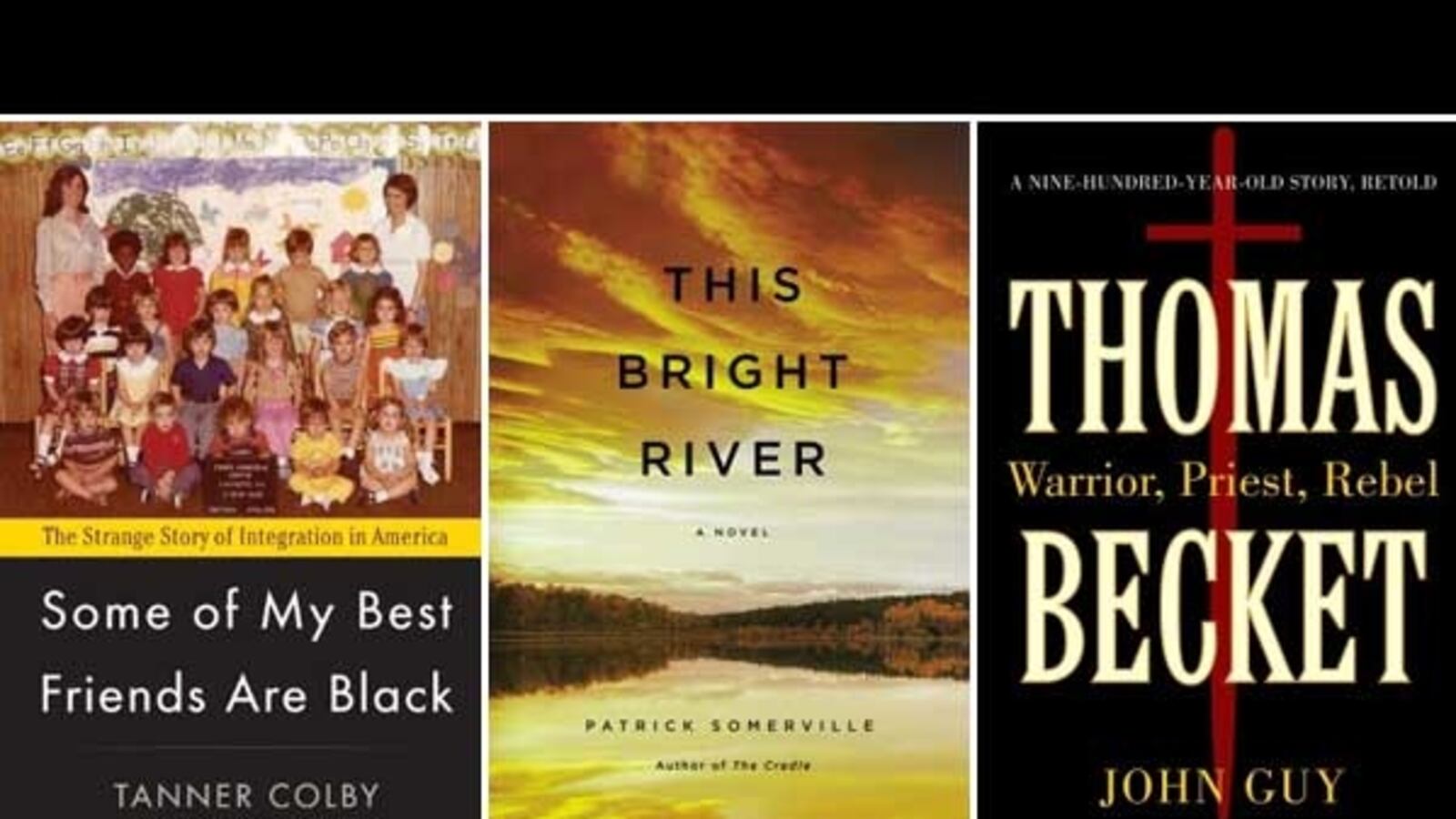
Some of My Best Friends Are Black
By Tanner Colby
A white writer tries to figure out how he could have gone without forming any substantive relationships with black friends.

Colby, emerging from the “comedians who died young” pigeonhole that he had made for himself after penning biographies of both Chris Farley and John Belushi, finds a new way into a national discussion, which is so cluttered at this point that it can be difficult to find the floor. His refreshing angle is based in aw-shucks honesty and an earnest humor. As he lays out in the preface, the book came about when Colby (who is white) realized, in the wake of the Obama election, that he had no close black friends. With this admission as an end point, he goes back to try to figure out how, even after a half-century of integration policies, the “standard middle-class pipeline” could have moved him through a public education, college, and a professional life in New York City without forming any substantive relationships with people of a different skin color.
This is not a legal history but rather a series of vignettes about everyday people and their experiences with integration across four different venues: school, real estate, the office, and the church. The picture Colby creates, of base tribalism and failed good intentions, is simultaneously disheartening and inspiring, but this contradiction seems perfectly in keeping with the larger contradictions of the land of the free.
By Andreï Makine
Reading the new novel by the author of ‘Dreams of My Russian Summers’ feels like encountering a rediscovered classic.
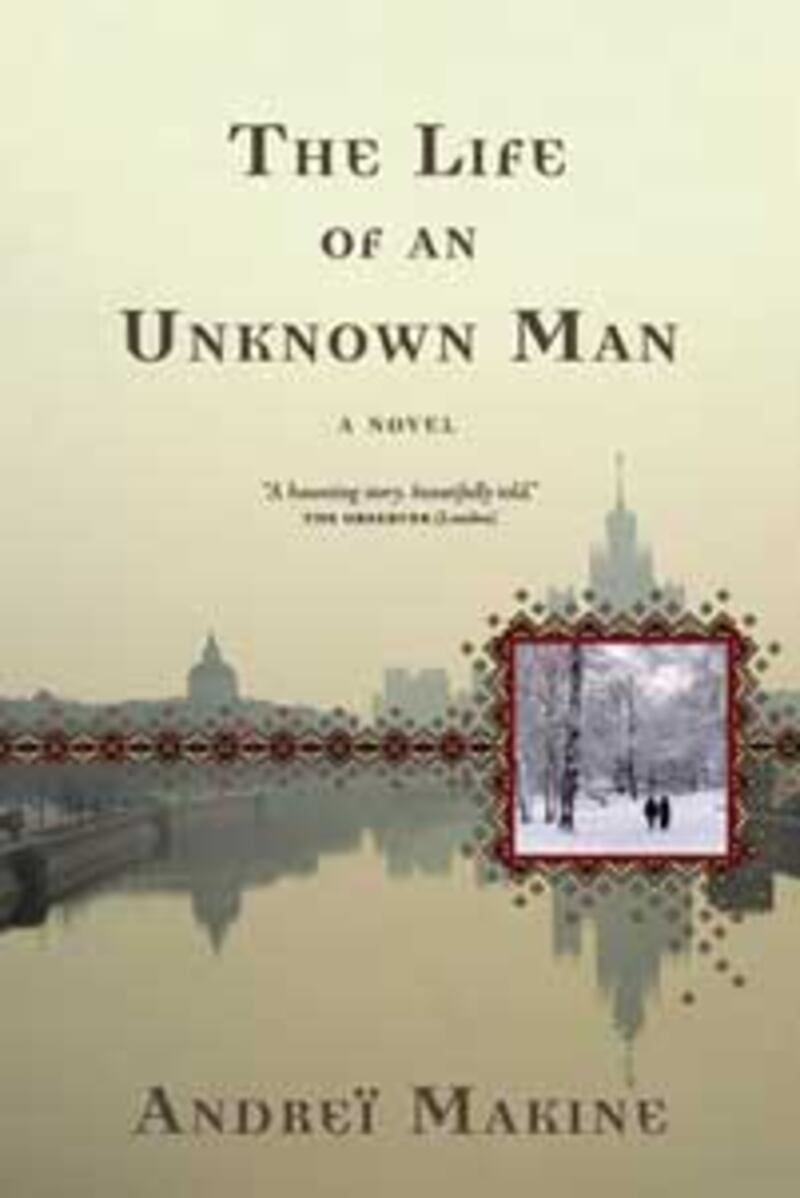
The author of the million-selling Dreams of My Russian Summers may have spent the majority of his adult life in France, but Makine’s new novel reads like it was written by candlelight under a blanket in Siberia, where he was born. The muscular and tightly structured book centers around a Russian writer living in France who returns to St. Petersburg in an attempt to get his writing groove back. While there, he befriends an old man who has much more to say than it at first appears about the bleak period of history that he endured, from Leningrad to Berlin, and the love that sustained him throughout.
There are overt nods to familiar Russians like Nabokov and Tolstoy, and especially Chekov, who hangs over the narrative like a stage light, whether on or off. Makine has control over an unalloyed contemplative unhappiness that is almost stereotypically Russian. But perhaps since American authors have never quite gotten a handle on unabashed sentimentality (the word has become almost a slur), reading this book feels, at times, like reading a rediscovered classic.
By Patrick Somerville
A novel that highlights the oddness and distinct challenges that come along with being a modern, thinking person.
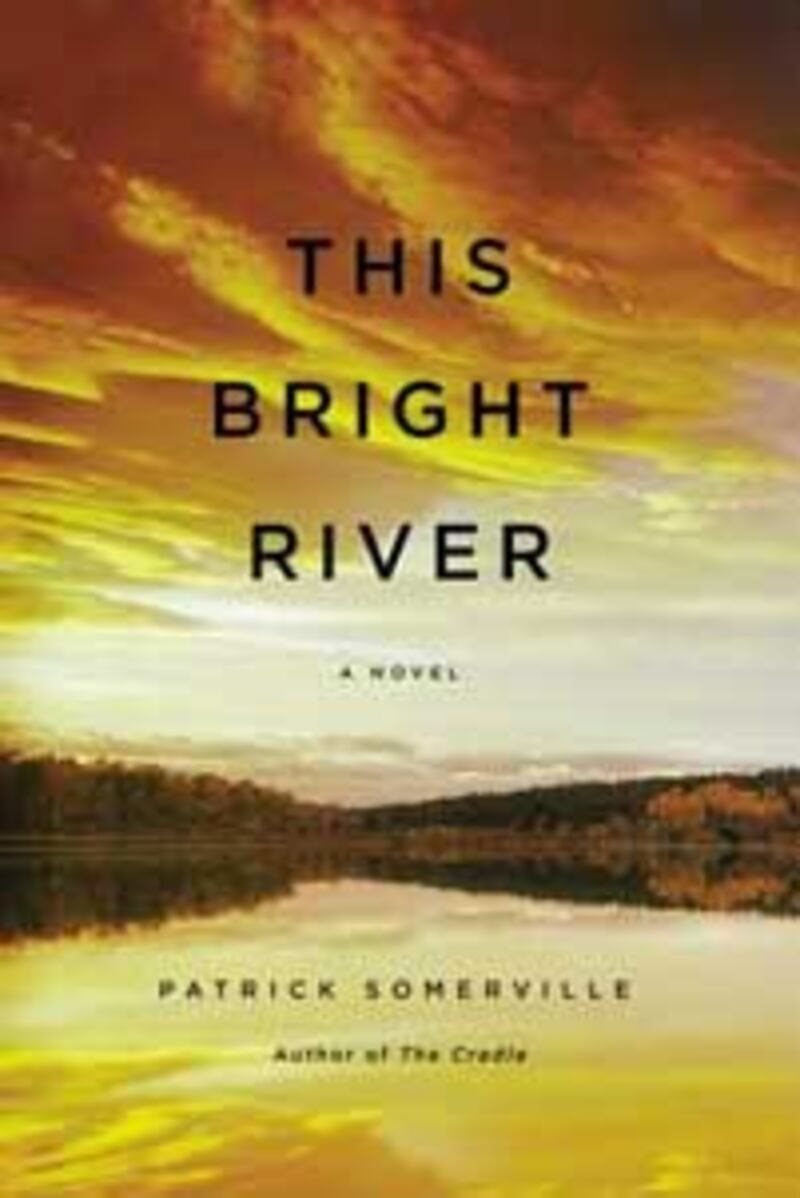
After blowing his trust-fund and doing a brief stint in jail, a prodigal screw-up returns home in order to fix up his dead uncle’s house and sell it. He reconnects with a woman whose past is also filled with pain and mystery. Woven into the narrative are G-chat logs, passive-aggressive emails, and all the trappings of the Frivolous Now. Each paragraph has at least one striking or hilarious line. Every few pages manage to bear the full weight of a short story. Dialogue snaps with a bizarre aptness reminiscent of Denis Johnson, and the novel in total presents a coiled, deeply sensitive intelligence. The dust jacket describes Somerville’s sense of humor as “dark,” but for readers of a certain disposition, the universe that he has created here will seem perfectly familiar and in line with the oddness and distinct challenges that come along with being a modern, thinking person. Go buy this book.
Thomas Becket: Warrior, Priest, Rebel
By John Guy
A biography of the archbishop of Canterbury that reads like a premium-cable costume drama.
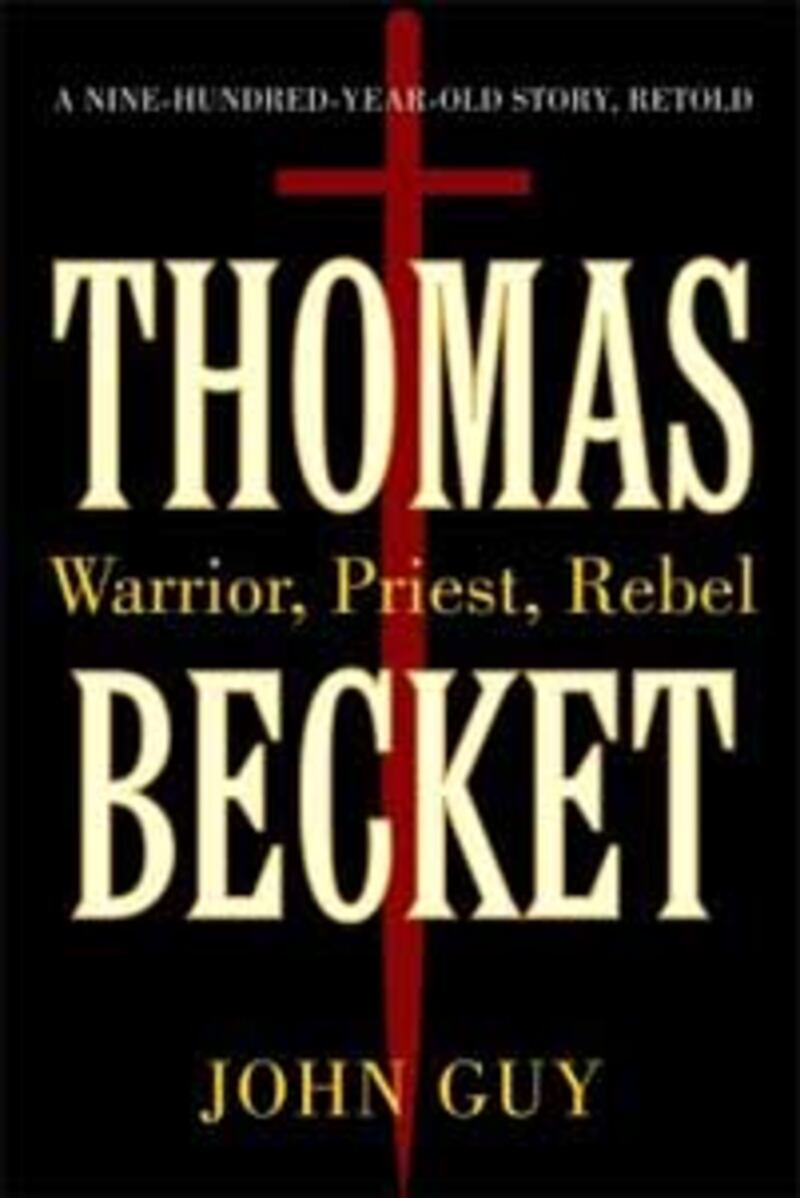
Much ink has already been spilled on the life of Thomas Becket, but regular BBC contributor John Guy offers a portrait that will appeal to both scholars and casual history buffs alike. Equally comfortable on a warhorse as behind an altar, the archbishop of Canterbury’s clash with his former friend King Henry II (not the most famous Henry, but no slouch himself when it came to kingly callousness) is one of history’s great grudge matches, and Guy tells the story with remarkable skill, especially considering the dizzying amount of research that must have been required.
To call this book a biography seems to sell it short, as it also vividly presents a picture of medieval London and its environs worthy of a premium-cable costume drama. In addition to the essential politics, there are grace notes on things like trade, architecture, and local custom, and the book is a study not only of Becket but also the entire feudal structure that he had to contend with. Becket was in his own cathedral when he was slain by four of Henry’s fully armored knights—the scene is pure Godfather, only more grisly.
By Tana French
The bleak landscape of an Ireland hit hard by recession comes through in this psychological detective thriller.
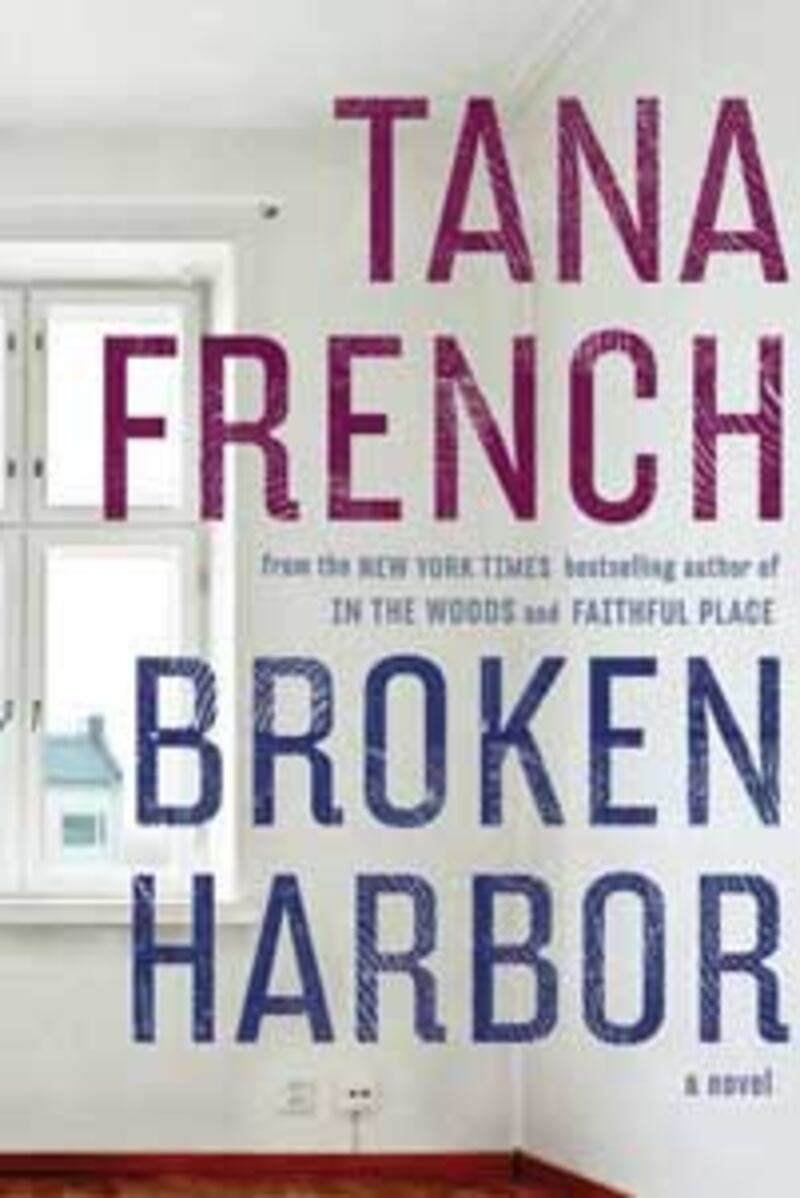
Mick “Scorcher” Kennedy, the Dublin detective who last appeared in French’s bestselling Faithful Palace, is back as the narrator of Broken Harbor. He prefers to play it by the book, but only because it gets him results. In this new installment, he gets tapped to lead the investigation of a high-profile murder that left a man and his two young children dead and his wife fighting for her life. As the mystery expands, Kennedy must contend with not only the twists of the case but also his own family’s dark past, which is inextricable from the old seaside town.
French’s plotting is gripping and original, but perhaps most impressive is her facility with the psychological implications of murder. There is evil at work in this book, but it’s an evil that can be found within human nature rather than contrived to give the hero something to grapple with. Also on display is a bleak landscape of an Ireland hit particularly hard by the recession.