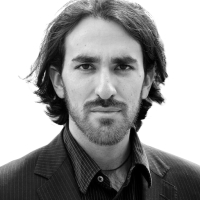

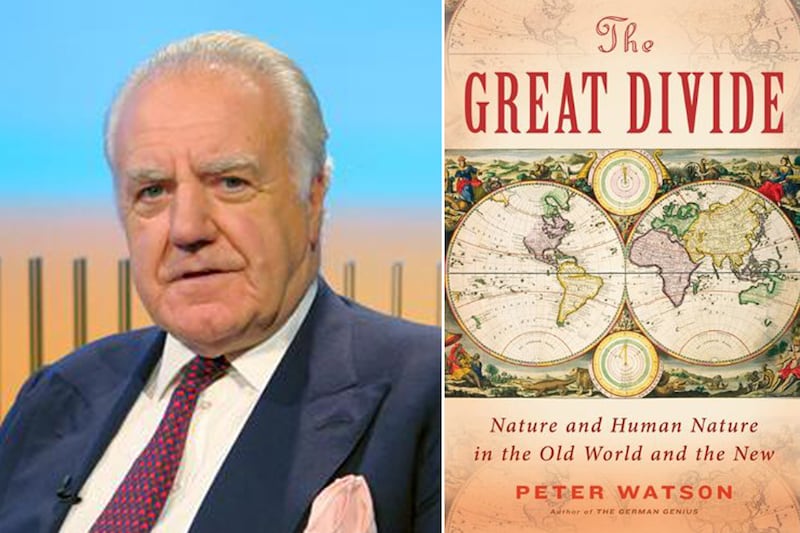
Peter Watson is the author of many books of cultural and intellectual history, including The Medici Conspiracy, The Caravaggio Conspiracy, and The German Genius. His latest book is The Great Divide: History and Human Nature in the Old World and the New, in which he attempts a synthesis of climatology, geology, paleontology, and archaeology to explain that geography determines the ideology of humans.
Of which of your books or projects are you most proud?
Sotheby’s: The Inside Story, because it did spark some change in the art and antiquities world.
That book was about the dark side of the art world, which is a private, exclusive club that can be difficult to penetrate. What advice would you give to researchers, writers, or journalists exploring these fields for the first time, searching for information on stories?
This question is a good one—crucial, in fact. W.H. Auden said somewhere that the first duty of journalism is to find out facts that people don't want you to know, facts that are of public concern, and to publicize them far and wide. One of the things that follows from this is that the good journalist can never hope to be at the top tables of any particular field. He or she is always destined to be an outsider and if people are unhappy with that, don't get involved. Half the London art world didn't talk to me for three or four years after publication of my Sotheby's book and while a lot of them have since gotten over it, some still don't talk to me.
A second point is that we have to distinguish between investigative journalism and “leak” journalism. Most of the best stories arise when one side in a private dispute brings in the media, beginning with a leak. So the best way to get leaks is to be inside a field, and to show that you are in no one's pocket. If you are far enough inside, and have your wits about you, you will soon realize where the good stories are. There is no substitute for a good brain.
You have written on a wide variety of subjects, from the German genius to Manet to Sotheby’s. Is there a through line that you can identify?
There is a through line, as you put it, in my work, in that one book invariably leads to another, though the line isn't really visible to anyone but me. I don't think that “line” would be of interest to anyone else; it was just that, in delving into one subject, another came into view that hadn't been done before.
And then there's luck. When I began my investigation into the Sotheby's antiquities scandal (which began with a leak from Brian Cook at the British Museum), I could not have anticipated that the man who answered the phone when I rang up Felicity Nicholson (Sotheby's head of antiquities) should have been on his lunch break and, at that very moment, reading one of my earlier books (The Caravaggio Conspiracy). So when, years later, he was caught with his hand in the till, and tried to do a deal with Sotheby's, a deal they wouldn't accept, he decided to go public and came to me.
The other line that links my books is this mantra: knowledge is pleasure. The more you know in life the more connections you can make, the more you can remember, the more you have a mind stocked with stuff. A famous actress said: “I’ve been rich, I’ve been poor; rich is better.” I’ve been ignorant (we all are when we are young) and I’ve been educated. Being educated is better.
When do you write?
I think the most important thing about my writing activity is that I don't have any children, so I have never had jam on my word processor. I am very disciplined, starting at 6:45, after breakfast, and reading the papers. I work till 1 pm, on the dot, have lunch, always fish, then start again at 1:30, work till 2:30, walk till 3:30 and then work again till 6:30.
I am unbelievably punctual and think it’s bad manners when others aren’t.
What is a place that inspires you?
Am I allowed three? I am an urbanite. As a resident of London, I feel I need to visit New York, Venice, and Hong Kong every year or so. They are so improbable as places. Just being in them, among the improbable buildings, is wonderful.
Describe your routine when conceiving of a book and its plot, before the writing begins.
The best answer I can give, though it’s not exactly what you are asking, is that I always have several months of what I call “wheelspin,” when a book is a vague idea, when the reading and thinking don’t quite gel. Then it gradually comes together. It’s important not to worry when you have wheelspin. Something is going on among what Cynthia Ozick called “the din in the head.”
Describe your writing routine, including any unusual rituals associated with the writing process, if you have them.
The only pecadillo is that I write with a big colored handkerchief over the word processor screen. My experience is that when you have an idea, for a paragraph say, the first form of words is always the best. So when you have a thought, keep going until it has been got down in its entirety. Don't go back and correct spelling mistakes until the idea is fully played out; otherwise you will lose something of the initial elan. It is easier to do that if you can't see the text you are writing. Hence the bandana …
Is there anything unusual about your work space?
I just have a lot of books (6,000 in one room; knowledge is pleasure), three photographs of my wife as a 3-year-old, and, my real treasure, a photocopy of a royal pardon, signed by the queen, exonerating a man in prison for a murder he never committed. It’s a typed document, not printed, because pardons are so rare. Two other journalists and I managed to convince the home secretary of the day that he was innocent. I never met him (that was important: journalism should be impersonal) but he sent me a copy of his pardon and I’ve had it framed.
Describe your ideal day.
Nonfiction in the morning. Lunch with old friends. Walk for an hour after. Fiction in the afternoon. Theater in the evening. Dinner with friends after.
Do you have any superstitions?
Don’t research a book until the contract is signed.
If you could bring back to life one person, who would it be?
Nietzsche. What he said was so outrageous—did he really mean it?
What do you need to have produced/completed in order to feel that you’ve had a productive writing day?
1,000 words; one insight; one phrase that sums up part of the argument.
What would you do for work, if you were not a writer?
Psychiatrist.
What is your next project?
A book about how we have lived since the “death” of God.
What advice would you give to an aspiring author?
What my father said to me: There is only one rule: there are no rules.