The Violinist’s ThumbBy Sam Kean
This history of the discovery of our genetic code is above all a story in humility—Mendel found that nothing was simple in life, and appearances are always deceptive.
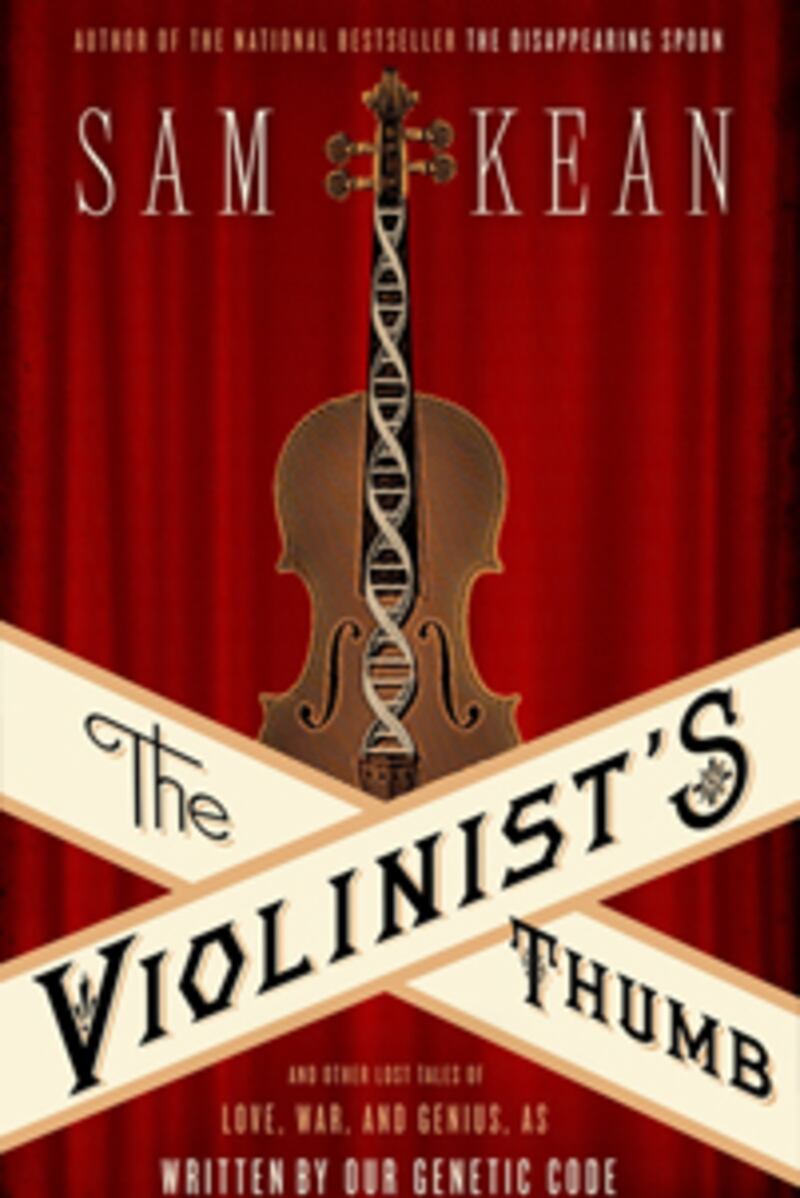
The pioneers of genetics rarely need to trumpet the power of their science. The rest of us mortals look to our DNA for answers—sometimes easy answers. Why am I not a better basketball player than Michael Jordan? Because I wasn’t born tall enough. Perhaps I could be as overwhelming a writer as Dostoyevsky, yet I am not an ecstatic, gratulant epileptic like him. Our tendency for genetic determinism is complicated by the fact that most of the public are not as aware as they should be about the power of DNA, and so the pendulum swings between ignorance and eugenics. The wonderful thing about Kean, a science writer whose previous book, The Disappearing Spoon, charted the development of the periodic table, is his ability to focus on a spiraling narrative while he climbs up the double-helix ladder in this history of genetics, remaining more of less at the center of the rungs while he goes from the struggles of Mendel and Miescher to the Human Genome Project. What we must remind ourselves is that we must not turn knowledge into excuses. His chapter on “The Art of the Gene” examines our DNA’s effect on artistic genius. Yet Paganini’s devilish talents and his Ehlers-Danlos syndrome (which makes his fingers nimble) only explain so much. Would Kean have benefited from talking to researchers who might at this very moment be making breakthroughs in the study of artistic genes? (Say, the efforts of Isabelle Peretz to apply the classic FOXP2 study to breakthroughs in finding a gene for the tonal encoding of pitch?) This is not the most cutting-edge survey of the science of genetics. Yet it is a handsome story. It is, most importantly, a story of humility. For biology is not as happy a companion of determinism as physics, and the more we know, the less likely that there is only one explanation for any given question. Life is not simple, and the biggest idea that Mendel ever had was that there were concealed instructions inside every little pea that did not manifest itself so obviously or physically. We might not look like Jordan or play like Paganini or paint like Toulouse-Lautrec. But all of us are artists in our own ways.
Our Kind of PeopleBy Uzodinma Iweala
At last, an account of the AIDS crisis from the point of view of the people most affected by it—men, women and children of Africa, who are not simply victims but are heroes and scientists as well.

Archaeologists in Hollywood films (Indiana Jones, The Mummy, etc.) are almost always white men who parachute in to fight barbaric natives who exploit their own treasures or are too ignorant to protect them. Never are the stories told from the natives’ point of view, nor are there ever any capable locals who love their land and know what is best for their people. The same could be said of the accounts about HIV/AIDS. Did it capture the world’s attention only when an outbreak occurred in America, and is allowing international doctors and organizations free rein inside Africa the only way to save the continent from the disease? What about the locals who are fighting day and night to keep the illness from obliterating communities and destroying the lives of their friends and families? Are they not capable of intelligence, science, heroics, humanity, empathy, or love? AIDS did not begin in San Francisco, but where is The Band Played On for the continent of Africa? Iweala, whose debut novel Beasts of No Nation told the complex story of child soldiers in West Africa from the point of view of a child soldier, this time gives us a picture of the AIDS crisis through the many Africans he spoke to: doctors, sex workers, truck drivers, shopkeepers, mothers, fathers, sons and daughters. These are people who have to live with the pandemic every day, and at last, here is their story.
Gun Dealers’ DaughterBy Gina Apostol
A Philippina is torn between her Maoist lover and her rich arms-smuggling family—she’s wired like a bomb, or sooner or later she would step on the land mines all around her and end this impossibly fraught existential crisis.
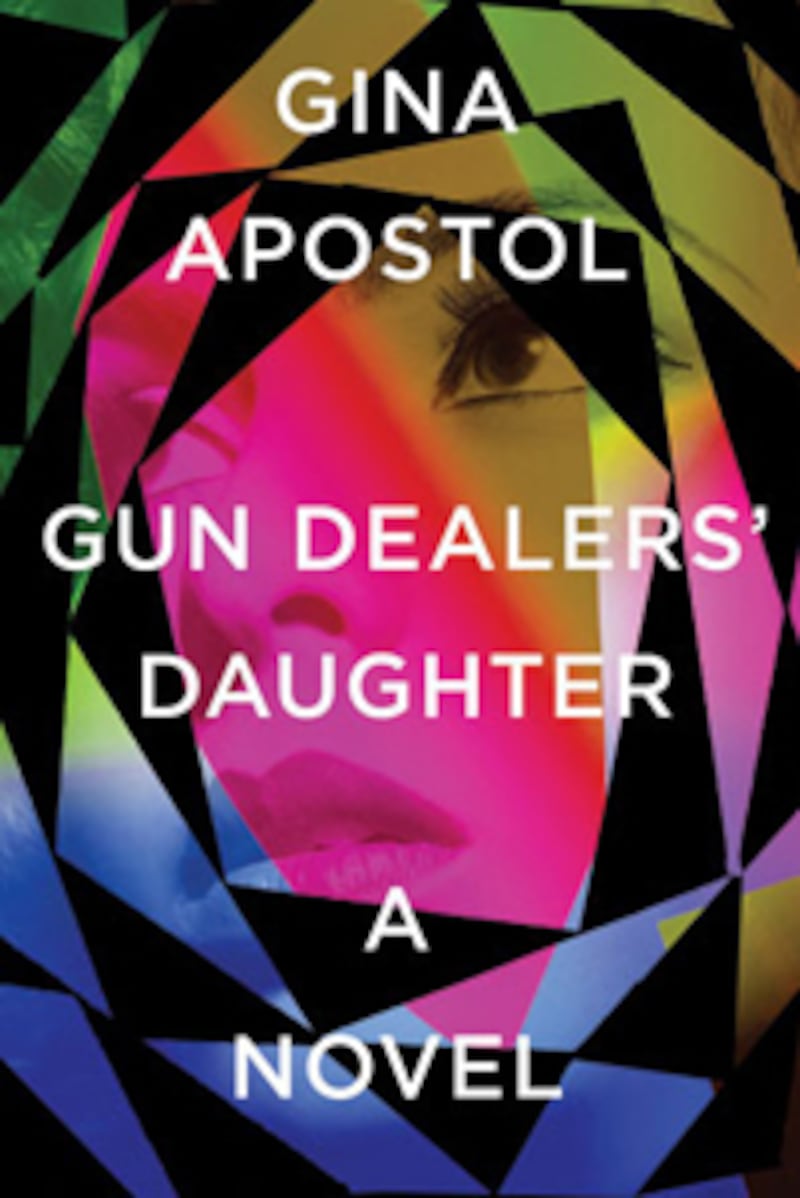
Some writers write for entertainment—Robert Louis Stevenson’s Treasure Island comes to mind. Others do it because they want to understand something—the nature of obsession, for Melville, or perhaps the obsession to see if he can put into Moby Dick every word in the English language at least once. Both books are referenced in Gun Dealers’ Daughter, and the two approaches are not mutually exclusive. Yet Apostol is very much in the second camp. Her third novel is the story of Soledad Soliman, a spoiled daughter of Philippino arms dealers is in New York recovering from a mental breakdown, amid “the soft butt-end of the Hudson’s light.” Soledad lives (and writes) with a determination to understand her place in the world and the proper course of action to take in her moment of history. And what a moment, as all around her revolution is springing up against Ferdinand Marcos. Will she help the Maoist (including Jed, who she’s fallen for) or does her allegiance lie with her morally-questionable family? Soledad’s circumstance is almost too perfect as a symbol of existential uncertainty, even more so than Pierre Bezukhov in War and Peace—neither of them have any firm footing on what they should stand for. But whereas Bezukhov is redeemed by his magnanimous virtures, Soledad is driven mad by the different forces tearing at her. The Philippines, too, emerge as an extraordinary symbol of a new world order. Whether one can really understand a person as conflicted as Soledad or a country as torn as the Philippines is another matter. The tragedy of Gun Dealers’ Daughter suggests such a task might be just too much.
The CollectiveBy Don Lee
An Asian-American writer commits suicide, and his manipulative ways make us think whether David Foster Wallace’s or Randall Jarrell’s art make their suffering all worth it.

The task to understand the collective experience of the Asian American might also be far too complex for just a handful of good writers to tackle. A great many things are—that’s why the mystery of artistic creation continue. Another question is whether artistic creation is worth all the pain after all. It brings to mind the death of David Foster Wallace, or the “suicide” of the poet and fabulous literary critic Randall Jarrell, who was struck by a car. That is the way Joshua Yoon was killed, as revealed in the second page of The Collective. From there the novel revisits Yoon’s past, including the Asian-American Artists Collective he formed with his fellow writer friend Eric Cho and the painter/sculptor Jessica Tsai. Lee explores what it means to be Asian-American and exactly what kind of racism we face, though the examination would be helped without the obligatory mentions of Bruce Lee, Charlie Chan, Cantopop and the fact that we are smart enough to occasionally read The Atlantic. Yoon is revealed to be manipulative and dangerous, and the novel asks whether it is his antics that make him a brilliant artist. Who knows—maybe it’s all in his genes.
TinderboxBy M.J. Akbar
The future of Pakistan is unknowable, and the present is a great mystery to those who are trying to navigate the “alliance” with the country. An acclaimed journalist gives us the one thing he can: an illuminating history.
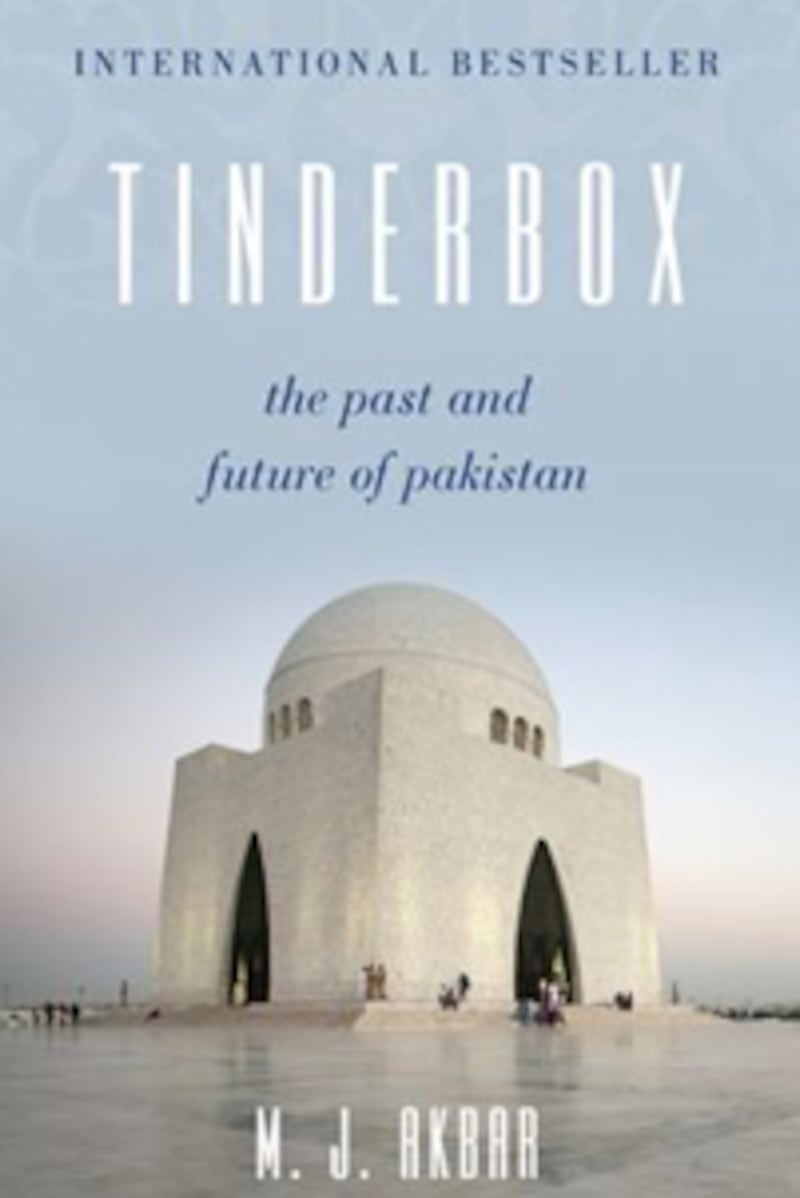
Subtitled The Past and Future of Pakistan, Akbar’s history is entirely all past and no future, if only that there might not even be a future in that tinderbox of a nation. In fact, what is the present state of that country? We don’t even know whether Pakistan is an ally to the U.S. or not. The “strategic dialogue” sought between the two has collapsed after countless drone strikes, betrayal by the I.S.I., the Raymond Davis affair, and the killing of Osama bin Laden. What remains can seem like a blackhole, but that doesn’t mean it’s unknowable—you only have to get sucked in, as Akbar has, to emerge with some clarity of the past, and to put down the story of these "midnight children," who built a nation on the very idea of fracture. No wonder the Muslim state that resulted is today so impossibly factioned.