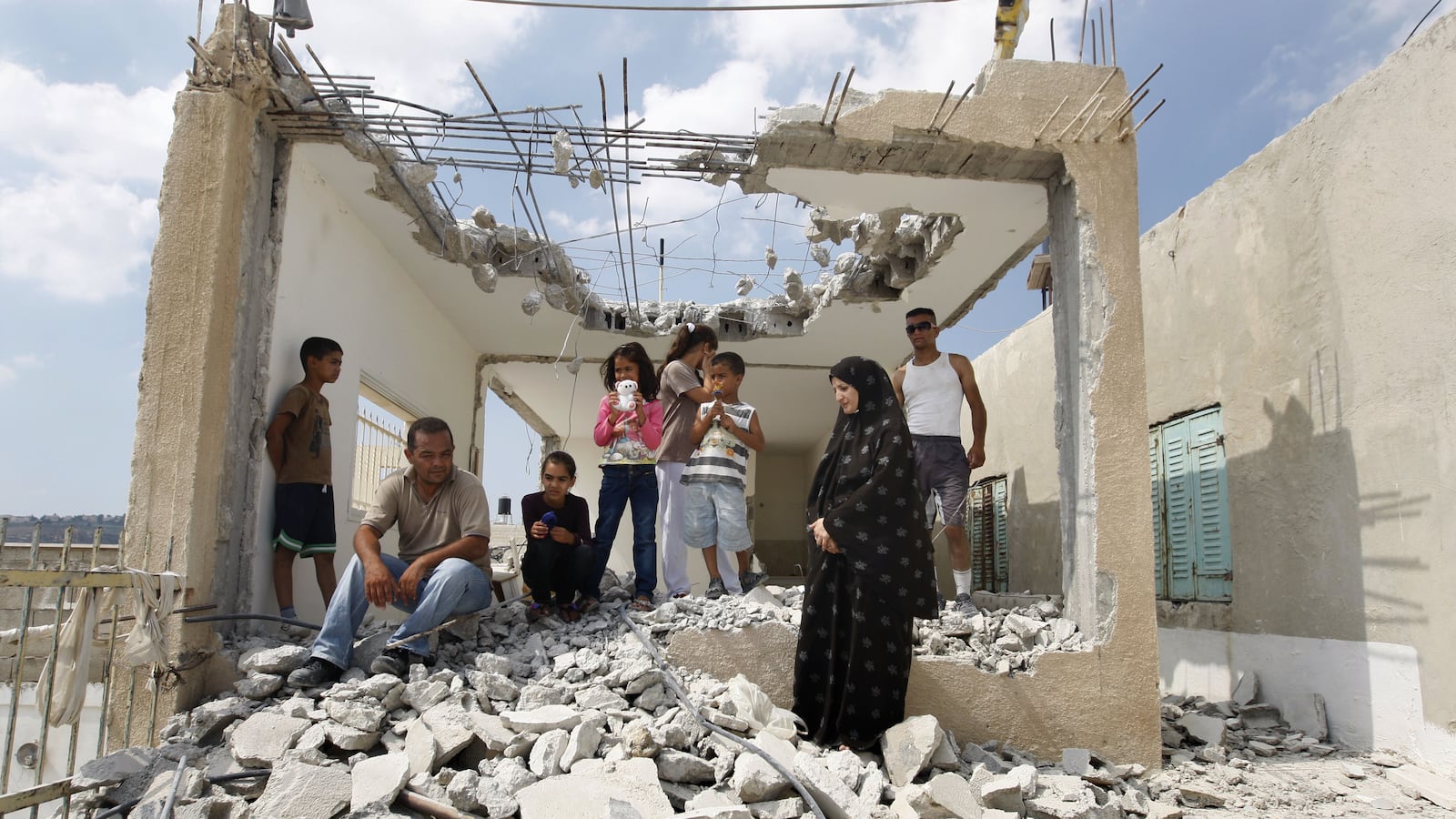
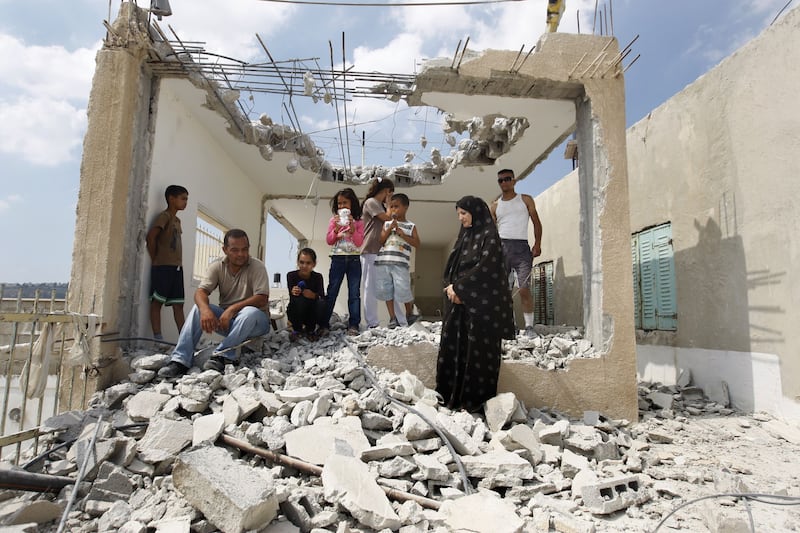
National Public Radio reports yesterday that “Israel has dramatically increased its demolitions of unauthorized Palestinian homes in the West Bank and east Jerusalem.”
Thousands of Arab homes have demolition orders against them in east Jerusalem and the West Bank's Area C–the Israeli-controlled portion of the territory that makes up more than 60 percent of the land.The Israeli military recently handed over demolition orders to an entire Palestinian village in the Hebron hills. Among the 50 buildings slated for destruction is a school.
The word “unauthorized” is the one that often trips people up–because come on, now. If I were to start building, all willy-nilly, in my backyard, wouldn’t my zoning board issue its own demolition order?
The difference is that my zoning board (and yours, too, probably, unless you’re living under occupation) is not ideologically opposed to me and mine building new homes or expanding old ones. My zoning board hasn’t used my efforts to provide a home for my family as a tool against me and mine for decades, in an effort to drive us from the town in which we’ve lived for generations.
Whereas in Jerusalem, that’s precisely what the Israeli government does every day.
As the United Nations reports:
Under the Israeli zoning policy, Palestinians can build in just 13 per cent of East Jerusalem and in just 1 per cent of Area C. In both cases these areas are already heavily built up.
Ultimately, the number of permits granted to Palestinians each year falls far below the demand. More than 94 per cent of all Palestinian permit applications have been rejected in recent years.
All this while Israeli leaders, lawmakers and purported experts stretch and pull and reshape the law and basic Hebrew vocabulary to magically transform patently illegal settlements into legal endeavors, and the occupation of the West Bank and Jerusalem into not-an-occupation-at-all.
Recently, activist Michael Sfard wrote in Haaretz of his grief over the uses to which Hebrew (“one of Zionism’s most beautiful and successful projects”) has been put.
[Hebrew] has been tasked with providing a soothing, anesthetizing name for the entire project of suffocation, for the blanket system of theft we have imposed on those we occupy…. Extrajudicial executions have become “targeted assassinations.” Torture has been dubbed “moderate physical pressure”. Expulsion to Gaza has been renamed “assigning a place of residence.” The theft of privately owned land has become “declaring the land state-owned.”
Permits have become barriers, illegal has become legal, and with a stroke of its pen, Israel makes everything it does ok, at least in the eyes of those whose opinion it values.
But as an Israeli, I can’t get away from one thing: We’re demolishing homes, displacing families, and sowing chaos in the bloated version of what we now call “Jerusalem,” the city we call “holy.”
How are we going to redefine “holy”?