When Aung San Suu Kyi comes to New York in September, returning to the city where she lived for several years in her 20s, there will be smiles all around—but behind closed doors she is likely to question the U.S. government’s decision to remove all restrictions on doing business with her country.
The Nobel Peace Prize–winner, now a member of Parliament and the leader of Burma’s democratic opposition, has accepted an invitation by the Atlantic Council to attend a dinner on September 21 in New York, where she will receive one of the council’s Global Citizen Awards. It will be her first visit to the city where she once lived and worked as a junior bureaucrat with the United Nations. Though details have yet to be finalized, she is expected to meet senior government figures in Washington, D.C., where she will also receive a Congressional Gold Medal.
Suu Kyi, who spent nearly 15 years in detention, left Burma for the first time in 24 years in May, when she addressed an economic summit in Bangkok and visited Burmese refugees along the Thai border. The following month she flew to Europe to collect some of the dozens of awards she has accumulated over the years but which she has never been able to accept in person. Though free to leave her country, she refused to do so, fearing that the military regime—which regarded her as its most formidable enemy—would revoke her passport and prevent her from returning home.
Her 17-day European trip was described in the media as a triumph, but for Suu Kyi and her supporters its political dimension was equally important. In addition to receiving the Nobel Peace Prize in Oslo and an honorary doctorate at Oxford, Suu Kyi gave a historic address to a joint session of the British Parliament and had one-on-one talks with both British Prime Minister David Cameron and newly-elected French President François Hollande.
At every step she repeated her new mantra: yes to investments in Burma, but only ones that are “democracy friendly” and “human rights friendly.” After the reforms enacted by President Thein Sein, Burma is badly in need of an economic lift, to persuade ordinary Burmese that their lives are changing for the better. But at the same time, Suu Kyi is desperate to get the message across that, if Burma is to evolve into a functioning democracy, foreign companies must avoid further enriching the corrupt generals and their business cronies who still control the country.
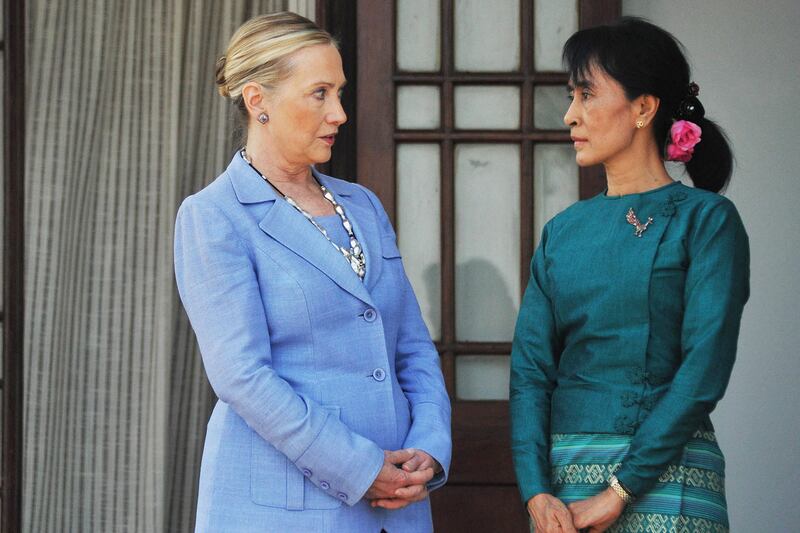
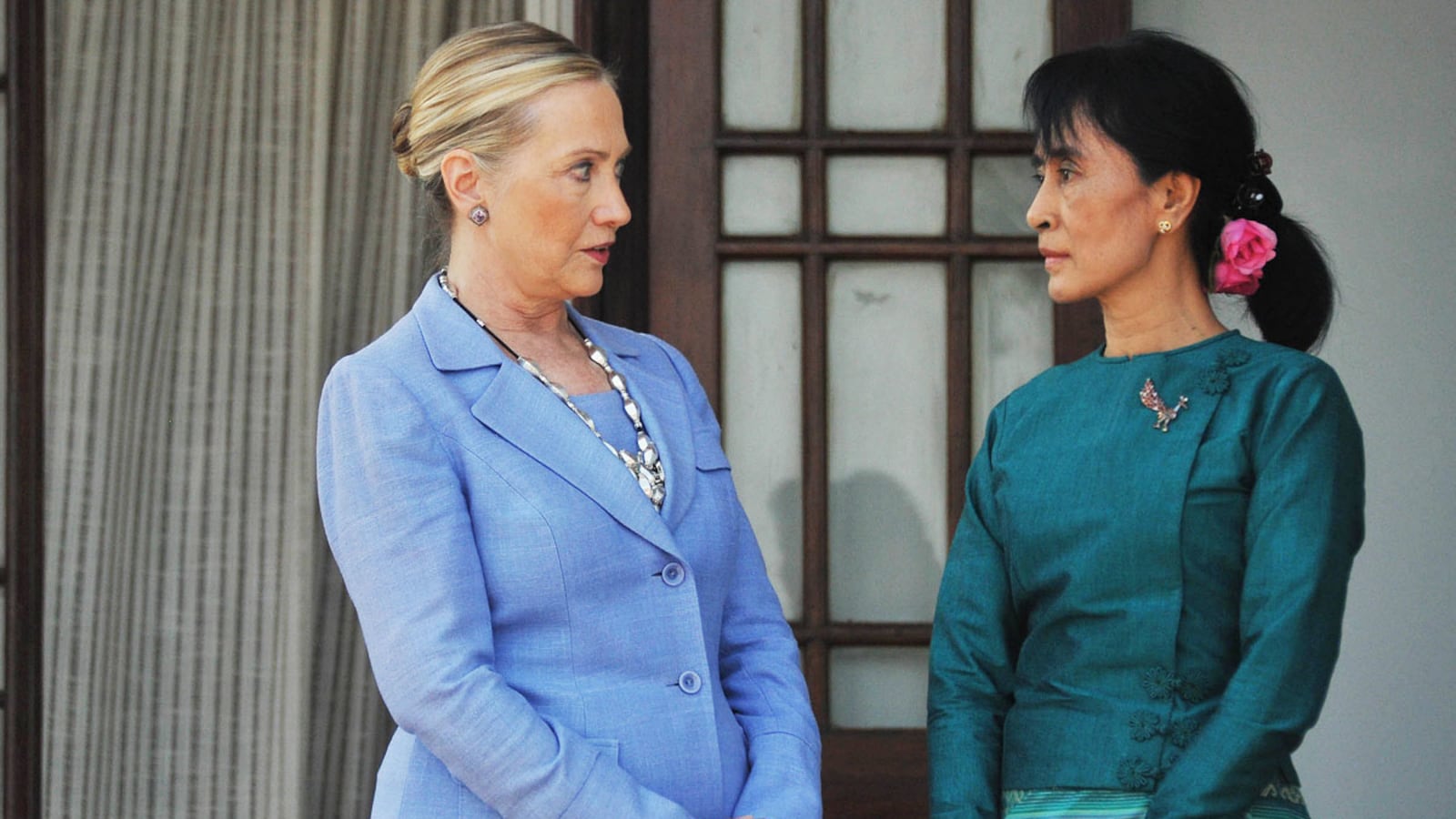
She is likely to bring the same message to the U.S. Suu Kyi bonded with Hillary Clinton when the U.S. Secretary of State visited her in Rangoon last December, but with the Obama administration’s decision this week to lift bans on American investment in Burma, relations may become strained. In particular, Suu Kyi had appealed to foreign businesses not to become partners of the state-owned energy conglomerate Myanmar Oil and Gas Enterprise until it adopted credible measures of transparency and accountability. That has not yet happened, yet the lifting of restrictions by the Obama administration means that there is nothing to stop American companies to work with the unreformed firm.
For the first time, it appears that U.S. policy on Burma is becoming de-linked from Aung San Suu Kyi; senior opposition voices including John McCain and Joe Lieberman argue that Washington is moving too far and too fast in its concessions to a Burmese government that is still firmly under the thumb of the Army. In the process, they say, the U.S. risks losing whatever leverage it still has to persuade Burma to make further, much-needed reforms. Suu Kyi will likely smile graciously in the U.S. as she receives more accolades, but the honeymoon may be over.
Back in Burma, meanwhile, the rehabilitation of her and her father Aung San, the founder of the Burmese Army, continues. Yesterday, for the first time in many years, state television broadcast the memorial ceremony for Aung San, assassinated in 1947 before he could become the first prime minister of independent Burma. Until now Suu Kyi’s great popularity had led the military junta to do everything in its power to downplay her father’s importance.