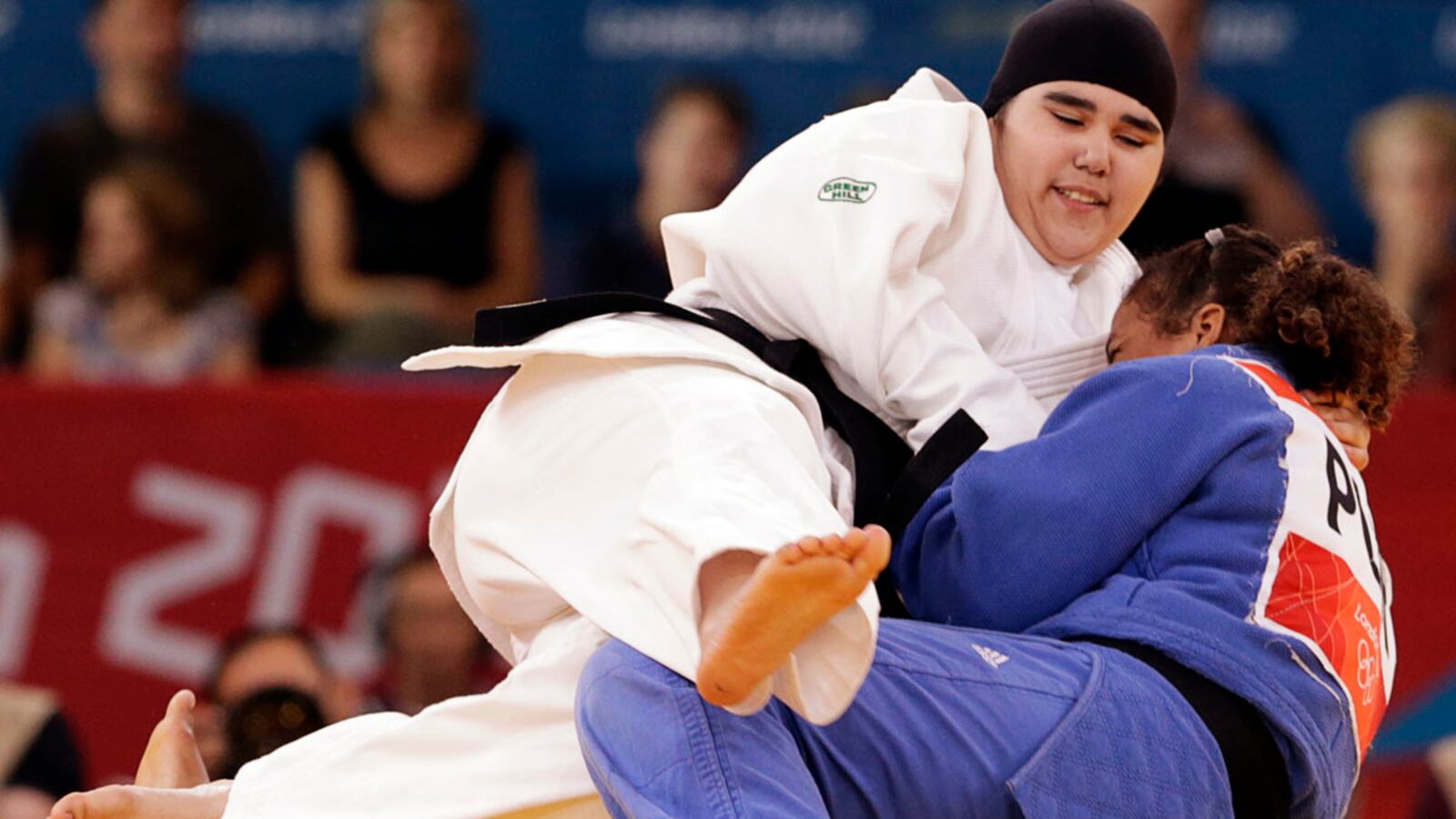
In just over a minute yesterday, Saudi judo player Wojdan Shahrkhani lost in her Olympic debut. But in doing so, she joined the winner’s circle by breaking a Saudi government-imposed barrier that previously prevented women from competing in the Olympics. Perhaps as important, her participation disproved the common assumption in the diplomatic community that the Saudi government does not respond to international pressure when it comes to advancing women's rights.
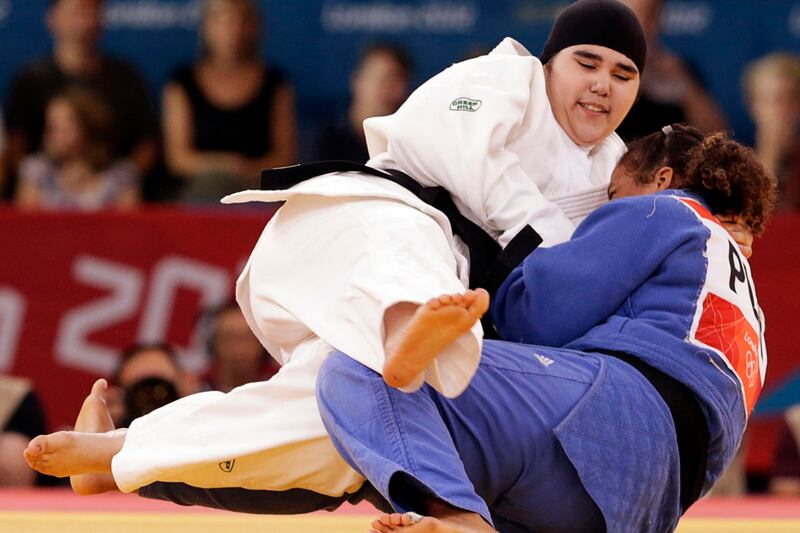
Shahrkhani and the other Saudi female competitor, runner Sarah Attar, were relegated to the rear of the Saudi team at the opening ceremony's parade of nations. But they radiated joy as the first women to represent their nation at the games.
At least since 2008, when Saudi Arabia fielded an all-male team at the Beijing Olympics, the International Olympic Committee has been under pressure to reverse the gulf kingdom's effective ban on women and girls playing sports. The International Olympic Committee devoted significant political capital to get the change made, realizing that Saudi’s systemic gender discrimination would taint the Olympic movement and the London Games.
Saudi Arabia has long dangled the prospect of letting girls play sports in schools---a prospect that has never materialized. So the International Olympic Committee should get credit for keeping the pressure on to ensure women could compete behind the Saudi flag for the first time.
Unfortunately, the marathon-like race for women's rights, including the right to play sports in Saudi Arabia, is far from over. Even as global spectators cheer for the two Saudi women proudly representing the kingdom, they should spare a thought for the millions of Saudi women and girls who remain effectively banned from playing sports in their own country. The world should also make sure the women do not suffer for their participation. There is already backlash from reactionaries, including an online campaign originating from Saudi Arabia calling the two barrier-breaking women competitors the “prostitutes of the Olympics.”
The Human Rights Watch report “Steps of the Devil” outlines how Saudi government restrictions put athletics beyond the reach of almost all women. The title reflects one religious scholar’s judgment that opening sports to women and girls could be a slippery slope to immorality.
Sports clubs in Saudi Arabia are limited to men, confining women to private fitness gyms that rarely feature swimming pools, a running track, or playing fields for team sports. Physical education classes for girls in state schools are non-existent. (Though at least one school has risked official reprimand by putting up a basketball hoop, it certainly doesn’t count as a physical education class). The absence of any official infrastructure for competitive sports for Saudi women made it hard for the government to find two female athletes who could qualify for the Olympics.
These policies are just one part of a deeply entrenched pattern of discrimination against women in Saudi Arabia. This discrimination is exemplified by the notorious male guardianship system a set of rules under which Saudi women are not allowed to study, marry or access certain health procedures without the permission of a male guardian—a father, husband, or even a son.
This is the hard reality that the euphoria in London should not mask. Allowing two women to compete is an important precedent that Saudi hardliners won’t easily roll back. But the fundamental problem in Saudi Arabia remains the legal gender segregation that restricts women's basic rights, freedoms, and space to participate in public life.
Attar, a 17-year-old runner who trains in San Diego, said of her selection by the Saudi Arabian Olympic Committee: “It’s such a huge honor and I hope that it can really make some big strides for women over there to get more involved in sport.”
The International Olympic Committee should help Attar realize her dream by pressing Saudi Arabia to take concrete, achievable steps in line with the Olympic Charter (pdf), which prohibits gender discrimination. Saudi Arabia should introduce sport for girls in school on an equal basis as for boys, open sports clubs to women, and start a women's section in the National Olympic Committee.
“We do not have the power to bring gender equality to all aspects of human interaction," the International Olympic Committee president, Jacques Rogge, said last month. “But we can use sport to help girls and young women gain the confidence to challenge stereotypes that limit their opportunities in other endeavors."
Now is the moment for the International Olympic Committee to leverage its momentum to ensure that Saudi girls do not remain shut out of sports. Prince Nawaf al-Faisal, Saudi Arabia's sports minister and also an Olympic Committee member, has said his ministry is ready to help introduce sports for girls in school, which the Education Ministry maintains is still "under consideration."
Saudi Arabia's two female Olympians don’t have to make it to the medal podium to feel the thrill of victory for women everywhere. Far from the Olympic spotlight, millions of women and girls back in Saudi Arabia are witnessing their country's two women athletes competing on a world stage, and seeing that they too can have Olympic dreams.