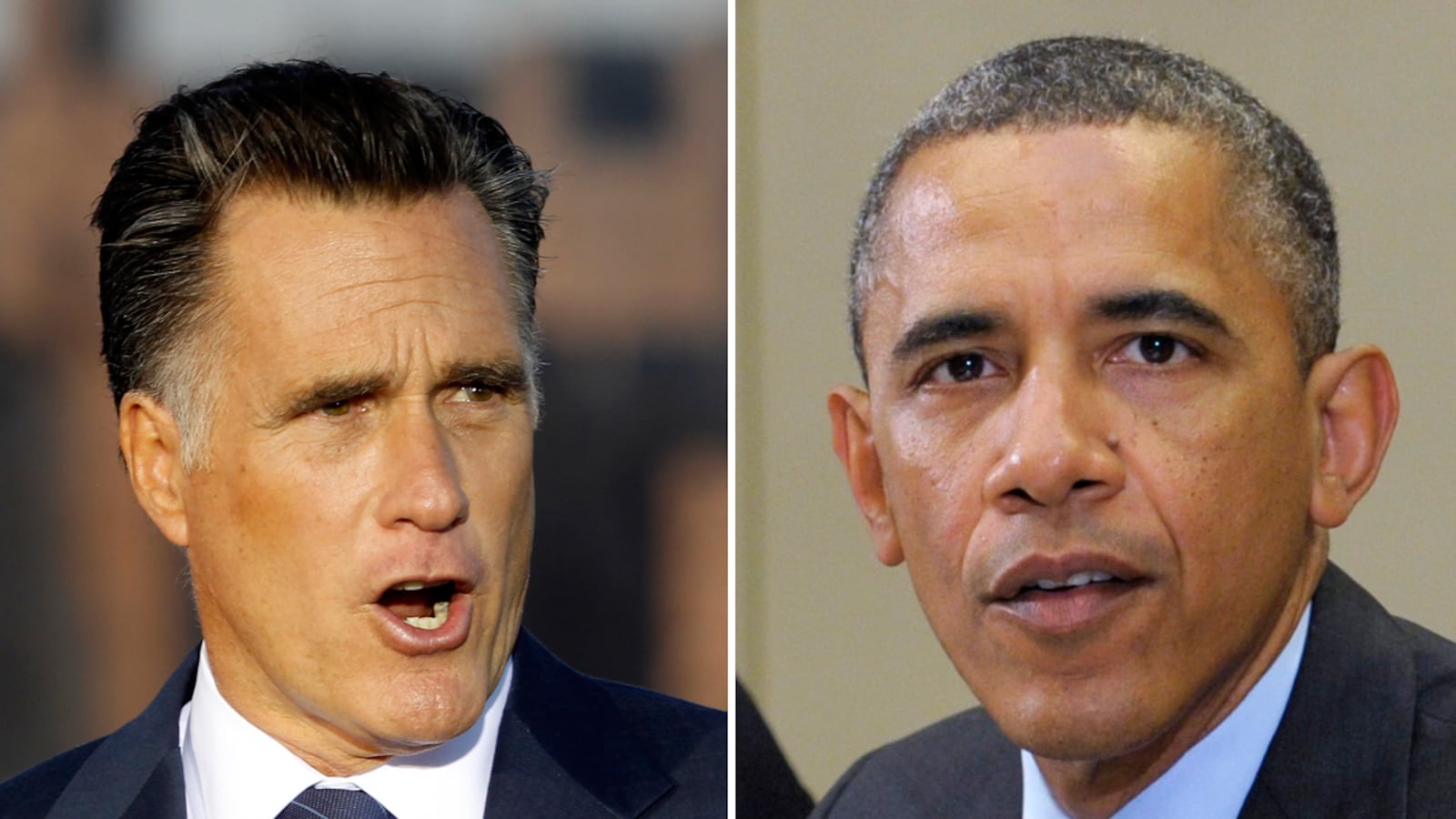
“Romney Hood.” As the president introduced that phrase Monday night, we saw the next step in the Obama campaign’s strategy that began with the Bain attacks and followed with the focus on Mitt’s taxes. The goal is now to paint Mitt Romney as a “Robin Hood in reverse”—giving to the super-rich and taking from the middle class.
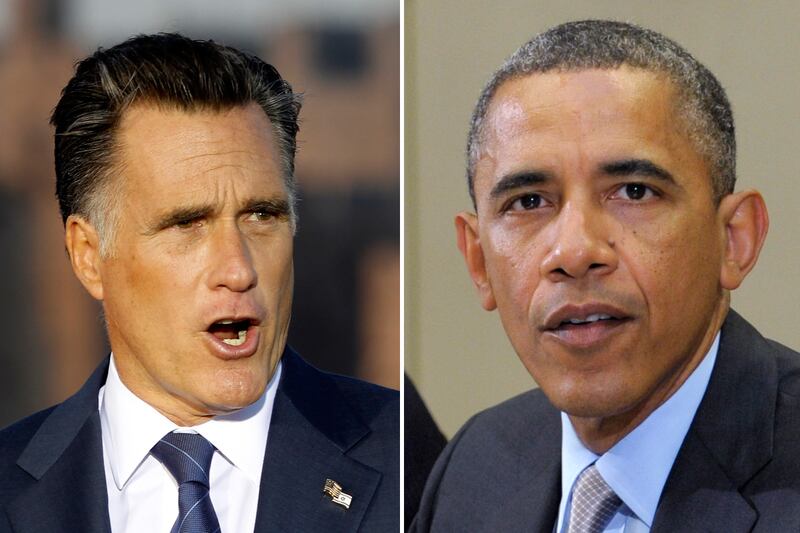
It’s a semi-clever gambit, catchy, with a populist pop-culture overlay. But it unintentionally underscores Obama’s own tax problem—namely that his core rationale for raising taxes on the rich seems rooted in concepts of “fairness” rather than arguments about shared sacrifice or investment in national greatness. It is a social-justice argument rather than an economic one.
In the liberal Democrat playbook, this perspective may be heroic and just. But the rhetoric is also redistributionist, the infamous hit that the Obama camp strenuously resisted in 2008 when their candidate told Toledo, Ohio, plumber Joe Wurzelbacher that “when you spread the wealth around, it’s good for everybody.”
Reality check: arguing that some taxes need to be raised does not make you a socialist. In fact, it can be consistent with the principle of fiscal responsibility—a concept that until recent years was synonymous with fiscal conservatism. No less than the noted capitalist, New York Mayor Michael Bloomberg, has been recently arguing that all the Bush tax cuts should be allowed to expire as part of the effort to balance the national budget.
But reflexive arguments about “class warfare” would have a much harder time gaining traction if Obama’s fixation on fairness—always an elusive goal—didn’t seem like the core purpose of fighting to raise taxes on the top 2 percent when he first framed the argument.
A reasonable goal for raising taxes is to begin reducing the generational theft of deficits and debt. A reasonable goal for raising taxes is to help pay for infrastructure improvements and improve American competitiveness in the 21st century, part of a long-term investment that can help our country outgrow its economic problems.
But when the argument for raising taxes seems like a Robin Hood focus on taking from the rich and giving to the poor and middle class, the plea is emotional rather than economic. And when the president characterizes all households making more than $250,000 a year as being “millionaires and billionaires,” it doesn’t reflect reality.
Romney’s own vulnerability on the reality-based tax front was exposed in an analysis by the nonpartisan Tax Policy Center, which concluded that for his proposed 20 percent across-the-board tax cut to be revenue-neutral—as promised—he would have to eliminate deductions that the middle class disproportionately depends on, such as the mortgage-interest deduction, state and local tax deduction, and the child-care tax credit.
“It is not mathematically possible to design a revenue-neutral plan that preserves current incentives for savings and investment and that does not result in a net tax cut for high-income taxpayers and a net tax increase for lower—and/or middle-income taxpayers,” the study says (PDF). The study was immediately dismissed as reflecting liberal bias, despite the fact that Romney had cited the independent group when he attacked Rick Perry’s tax plan during the Republican primaries. Math doesn’t have a partisan bias.
In our overheated political debates, narratives too often trump facts. It is worth reiterating that the American tax burden is the lowest it has been since Harry Truman. Much of the anti-tax protests have been preemptive. We weren’t teetering on the edge of socialism when the top rate was 39.6 percent under Bill Clinton, and we wouldn’t be if the top rate were there again. But aiming to raise the rate for what seems to be ideological or political reasons makes a tough sell even harder.
No modern American president has run rhetorically to the left for his reelection. Now President Obama is attempting to do that, giving cover for critics who have reflexively characterized his administration as radical. Given that raising taxes is never popular, it is a risky decision. But other risky decisions Obama has made in this campaign, like backing marriage equality, have civil rights imperatives that make the risk a profile in courage. Talk of raising taxes doesn’t rise to that moral level.
One final reality check: guess who said the following: “What we’re trying to move against is institutionalized unfairness. We want to see that everyone pays their fair share, and no one gets a free ride. Our reasons? It’s good for society when we all know that no one is manipulating the system to their advantage because they’re rich and powerful. But it’s also good for society when everyone pays something, that everyone makes a contribution.”
That’s not Barack Obama, but Ronald Reagan back in 1985, making the case for tax reform. Talking about “fairness” is not a sign of socialism nor is it remotely un-American. But fairness is not the core goal of our tax system—the core goal is to raise revenue. A plan and a purpose need to be in place to make the case for raising or lowering rates.
One constructive result of the Obama-Romney tax wars should be to make it clear to everyone that our nation is in need of fundamental tax reform—and that’s a goal that should move forward no matter who wins the White House. It is worth remembering that even on the contentious Bush tax cuts, Democrats and Republicans agree on 98 percent of the people impacted. There is some common ground to be found even here. But the Robin Hood redistributionist rhetoric only divides and distracts from the serious business ahead.