David's Book Club: Cosa Nostra (Part 1)
Get the Beast Digest newsletter delivered straight to your inbox
By clicking “SIGN UP” you agree to our Terms of Use and Privacy Policy.
Blog readers know I've been obsessing this summer over the causes of southern Italian underdevelopment. One obvious hypothesis blames the relative poverty of southern Italy on organized crime, a problem so associated with Italy that "mafia" ranks along with "pizza" as one of the planet's most universally used Italian words.
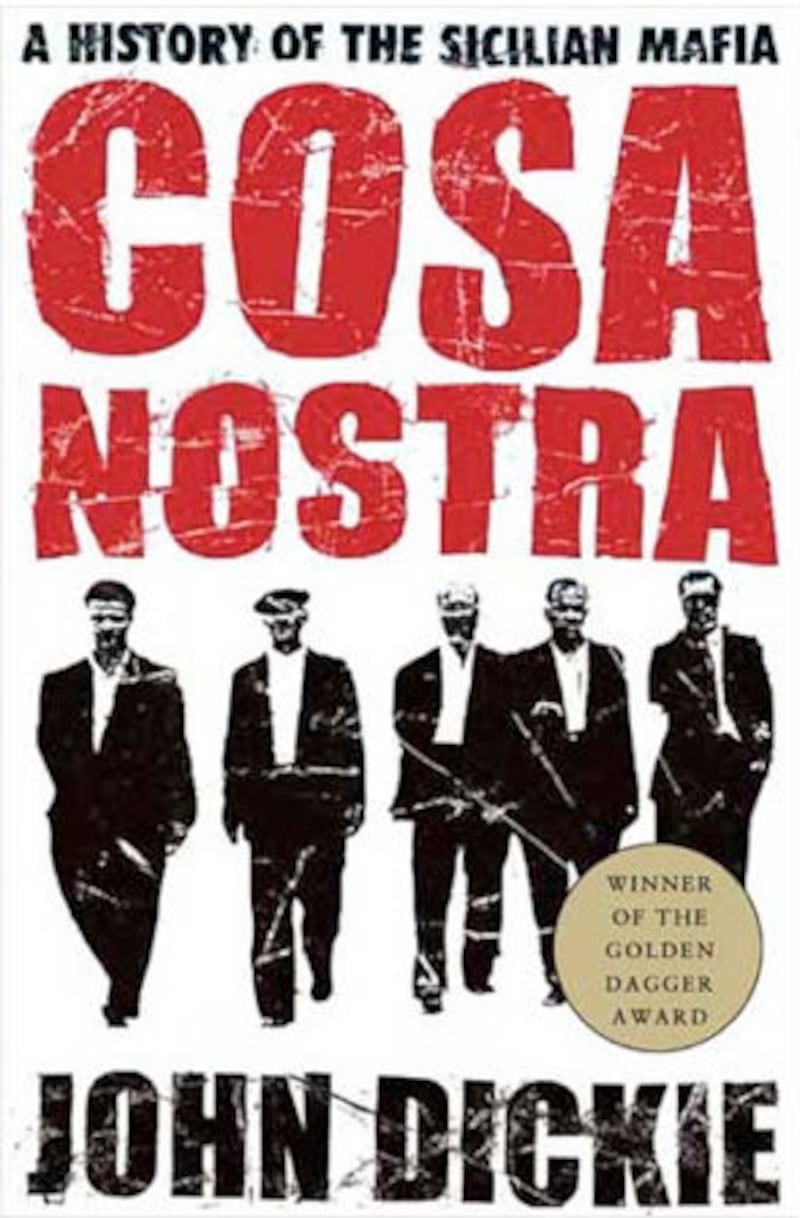
Wanting to learn more, I turned to John Dickie's Cosa Nostra, the most acclaimed of all English-language Mafia studies. Dickie convincingly argues that the answer to my core question is: No. Dickie shows that organized crime generally, and the Sicilian Mafia in particular, has certainly battened on Sicily, stealing wealth and discouraging legitimate business. But he argues—and I think very convincingly—that organized crime should be seen as a consequence of Southern Italy's (relative) under-development, not a cause.
Cosa Nostra is a history, not a treatise, and a gripping history at that. One of the back-cover blurbs promises that the book contains enough lurid stories for a dozen movies. That is a modest count. The Mafia stories Dickie tells are not only horrifying in their audacious violence, but deeply disturbing in their revelations of complicity between the Mafia and other Italian institutions, reaching to the highest levels of the state.
Yet in this history is an argument, and an important one. Organized crime exists always and everywhere. But the particular form of organized crime that is the Mafia arose in specific conditions and to seize certain opportunities in one particular place. The Mafia is an alternative state, one capable of executing functions of government. It does not merely traffic in narcotics, or bootleg liquor, or fence stolen goods, although of course individual Mafiosi have done all those things. The Mafia's core business has always been to sell protection. It finances itself by extracting taxes. It enforces its decisions by the exercise of violence, and until very recently, agents who used violence on its behalf could expect impunity. Most gangsters compete with other gangsters. The Mafia competes with Italy itself.
Dickie is determined to refute the theory that the Mafia grows out of some primitive Sicilian culture of vendetta, that is a survival from a more primitive order of society, more a habit of mind than an institution. His key claim is that the Mafia is not an unconscious expression of culture. It is a conscious creation of human beings. It is a thing. It had a beginning and—he insists—therefore must have an end. In fact, at many moments, it seemed that its end was imminent. It was saved in every case by the same fact that enabled its creation: the weakness of the Italian state.
—MORE TO COME—
See more of our coverage in your search results.

Got a tip? Send it to The Daily Beast here.
Unlock a year of full access to The Daily Beast for $35.
Monthly
$1
First month then $5.99/month
Annual
$35
First year then $59.99/year
Premium
$79
First year then $119.99/year
*Substack access provided by the next business day, using your subscription email. Choosing the Premium plan constitutes your permission to share your subscription email with Substack and your agreement to Substack’s Privacy Policy.
Looks like you already have a subscription!
- Account (completed)
- Payment (completed)
- Confirmation (completed)
You're all set!
Thanks for subscribing.
- 1Account
- 2Payment
- 3Confirmation
Sign in or create an account
Register below to read this article for free or subscribe
to unlock unlimited access to The Daily Beast.
Monthly
$1
First month then $5.99/month
Annual
$35
First year then $59.99/year
Premium
$79
First year then $119.99/year
*Substack access provided by the next business day, using your subscription email. Choosing the Premium plan constitutes your permission to share your subscription email with Substack and your agreement to Substack’s Privacy Policy.
Already have an account? Sign In
Looks like you already have a subscription!
- Account (completed)
- Payment (completed)
- Confirmation (completed)
You're all set!
Thanks for subscribing.
- 1Account
- 2Payment
- 3Confirmation