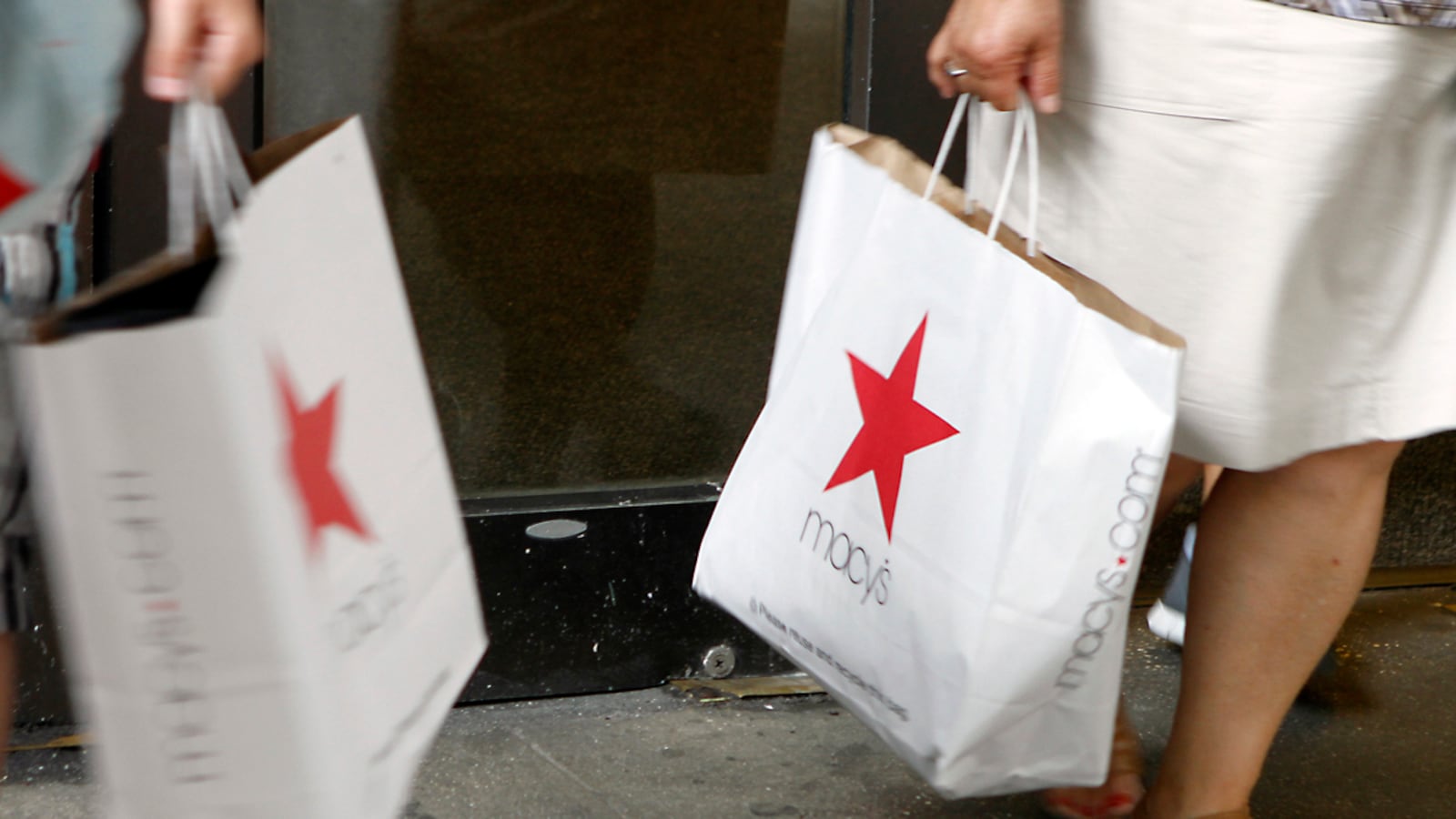
For all fears that the financial sector runs the economy, consumers are still the backbone of American capitalism. Day-to-day spending accounts for two thirds of U.S. gross domestic product. And that’s why the July retail-sales figures, released Tuesday morning by the Department of Commerce, are such very good news.
First and foremost, spending went up—for the first time in four months. After declining numbers in the spring, the strong July sales may mark a turning point. Retail sales came to $403.9 billion, an increase of 0.8 percent from the previous month—and a 4.1 percent increase from this time last year.
Second, there were big increases in durable goods: products that bode well for consumer confidence. Though we bought a lot more of all types of goods, from groceries to clothes, the Department of Commerce survey saw healthy gains in car and furniture purchases: 0.8 percent and 1.1 percent, respectively. Chryslers and couches are products with heavy price tags, designed to stand the test of time. If you’re living paycheck to paycheck, you don’t tend to drop a lot of money on durable goods. The increase suggests that consumers are taking advantage of low interest rates to finance these purchases. Bloomberg and the University of Michigan are expected to release consumer sentiment indexes that will help explain the mood later this week.
Third, retail sales beat their July forecasts, and that pleasant surprise is already rallying the markets. The S&P 500 was up 0.2 percent by midday Tuesday, and the Dow Jones Industrial Average was up 0.21 percent. It’s none too soon for President Obama, after a dreary June unemployment report—especially as voters tend to use their purchases as a benchmark for gauging financial well- being.
Fourth, this increase in retail spending isn’t attributable to inflation, which can sometimes artificially jack up the numbers. While corn and other food prices have risen amid the drought, core food prices rose just 0.4 percent, a smaller increase than the same period last year. Mild inflation keeps prices low, which makes the average American feel richer.
Fifth, the survey gives the Federal Reserve a bit of breathing room. With low interest rates, Fed chairman Ben Bernanke has heard calls to try out exotic monetary policy, or even pump more money into the economy. But the recovering sales and jobs figures confirm that America is getting its legs back, and that the low-rate strategy might be working.
Since 2009 the American customer has been far from king. But despite the talk of decline, the July sales figures show that Americans still like to buy—and that any nascent recovery will stand on consumer shoulders.