
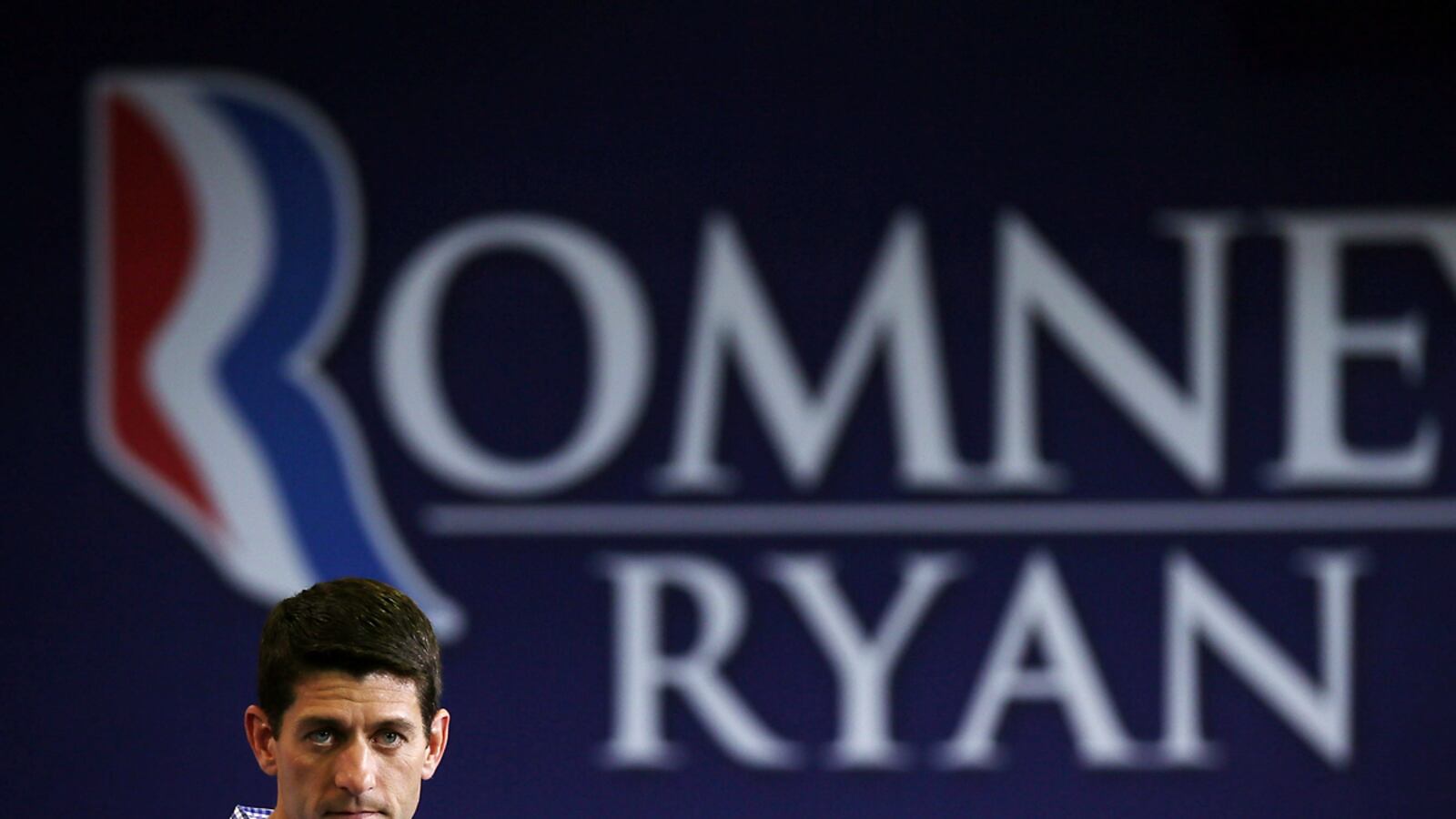
Paul Ryan’s elevation to the national stage has triggered heightened interest in the critical debate on the future of Medicare. We should welcome and engage it. The outcome will affect the health and quality of life of every American, either immediately or at some point in the future.

Thus far, candidates Romney and Ryan have focused exclusively on the size and sustainability of the Medicare budget. But that misses the most important factor in this debate: one can’t address rising Medicare costs without also addressing our nation’s health-care costs in total.
When I was born 64 years ago, health spending was 4 percent of the gross domestic product. When my children were born 40 years ago, it had climbed to 8 percent. When my grandchildren were born about 10 years ago, it had reached 16 percent. And if I am lucky enough to have great-grandchildren someday, we are told the figure could be 32 percent of GDP.
That is an unsustainable path. Everyone knows it. Neither Medicare nor any other health-related program in the country can survive unless we contain health costs sectorwide. But to do that successfully policymakers must take three fundamental realities into account.
First, if one defines a medical system as having coordinated and unified oversight, the United States is the only industrialized country without one. Rather, we have a medical marketplace made up of a collage of subsystems, both public and private. Therein lie our strengths, such as extraordinary innovation, and some critical weaknesses, including great inefficiency and the highest health costs in the world.
Medicare is one of those subsystems. As part of the collage, it is impossible to address its cost and quality problems in isolation. There are far too many intricate interrelationships within the collage affecting every facet of health care to allow for any solutions within Medicare alone. There is no such thing as a Medicare doctor, hospital, or pharmacist. Each is part of the health collage and reimbursed by countless insurance plans, both public and private.
Therefore, the solutions to the nation’s unsustainable cost escalation must be applied to all of the subsystems. That is why the enactment of the Affordable Care Act was so critical. It begins to construct a new health paradigm in the country with improvements to cost, access, and quality for both public and private subsystems alike.
Second, as policymakers consider meaningful budget reductions for the Medicare program, they have only two real choices.
The first approach could be called “cut and shift.” It merely cuts the budget for Medicare and shifts the costs onto others in the health sector, including beneficiaries. Unfortunately, it is a common technique that has been used in Congress and by past administrations all too frequently. It is a faster and easier path to budget savings, but it only shifts the problems. It doesn’t solve them. And it is now what candidates Romney and Ryan propose we do again.
Independent experts have calculated that the plan authored by Ryan would cut and shift onto seniors especially, increasing their costs by $6,350 a year. By repealing the Affordable Care Act, as they have proposed, seniors would also be faced with additional cut-and-shift effects, substantially increasing costs for prescription drugs, for instance. And the repeal of savings from Medicare reforms that decrease, rather than shift, costs by eliminating overpayments and fraud would actually reduce the insolvency date by eight years—from 2024 to 2016.
In addition, by offering a voucher to seniors to purchase private health insurance and by increasing the age of eligibility for Medicare to 67, the Romney-Ryan plan forces them into the old and severely flawed individual marketplace, where, because they have far less leverage and consumer protections, overall costs actually increase as access to coverage decreases.
I label the alternative approach “redesign and improve.” Instead of shifting costs onto others, this option involves addressing the health-care problems at the heart of our escalating costs. This could include far greater transparency; meaningful payment reform with an emphasis on value rather than volume; eliminating unnecessary care; incorporating health-information technology; and emphasizing substantive delivery reform using evidence-based approaches to improved care.
Successful cost containment involves a nationwide commitment to redesigning and improving not just Medicare, but our entire health-care marketplace, with its collage of public and private subsystems.
The third reality is that with all the talk of vouchers and Medicare privatization, it is important to remember why Medicare was created in the first place. Prior to 1965, the majority of seniors had no health insurance. And because few insurance companies used a community rating, for most seniors premiums were financially out of reach.
Demographically, seniors are the sickest and experience the highest health costs. History and experience have shown that the private market alone cannot create actuarial models to accommodate this segment of the population.
Today, Medicare insures 97 percent of all seniors with lower administrative costs and a lower enrollee cost growth rate than anything to be found in the private sector. Even with the new health-insurance model adopted in the Affordable Care Act, vouchers alone will force seniors back into the individual marketplace and far greater financial stress.
The presidential debate on Medicare will obfuscate the facts. But no one should ignore it. The future cost and quality of health care in America will depend on whether both Republican and Democratic policymakers get this one right.