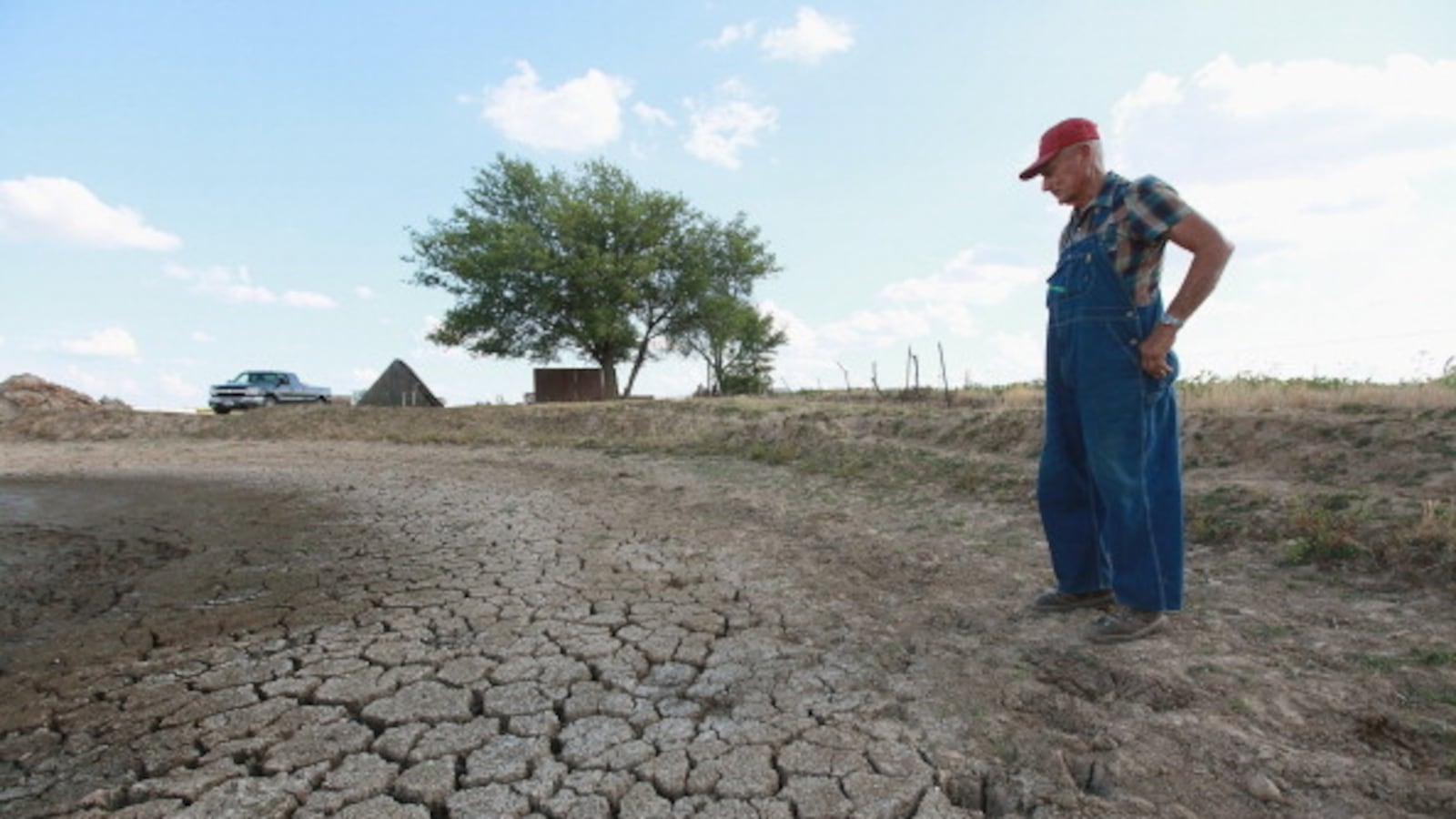
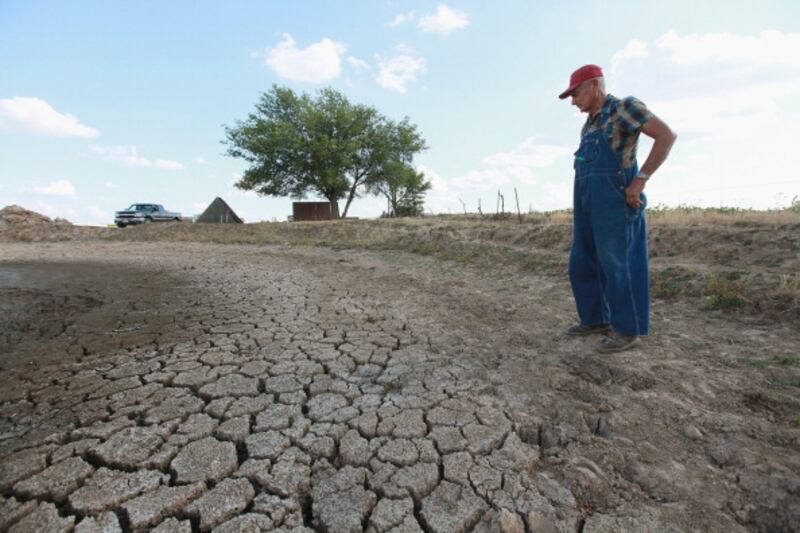
Crop insurance is a key way for farmers to prevent the financial disaster that once resulted from bad harvests caused by drought and unseasonal weather. This year, an epic drought in the Midwest has the potential to trigger an usually high number of those policies. In the process, insurance companies stand to incur billions in losses:
Hot, dry weather across much of the Midwest has damaged crops, led to a rally in corn and soybean futures, and boosted insurance loss estimates. The federal government subsidizes farmers' premiums for so-called multiperil coverage, which protects against a loss of revenue or production as a result of drought, hail, wind, frost or other natural causes.
Private insurers sell and administer the coverage in the U.S. In return, the federal government backstops the firms with payments and reinsurance.
"Insurers with higher concentrations of premiums in the most-affected states, such as Kansas, Illinois, Kentucky, Indiana, Missouri and Tennessee, will see a larger share of the losses," S&P analysts led by Jason Porter said Tuesday in a report.
"Farmers in the most affected states are expecting one of their worst harvests since the drought in 1988."