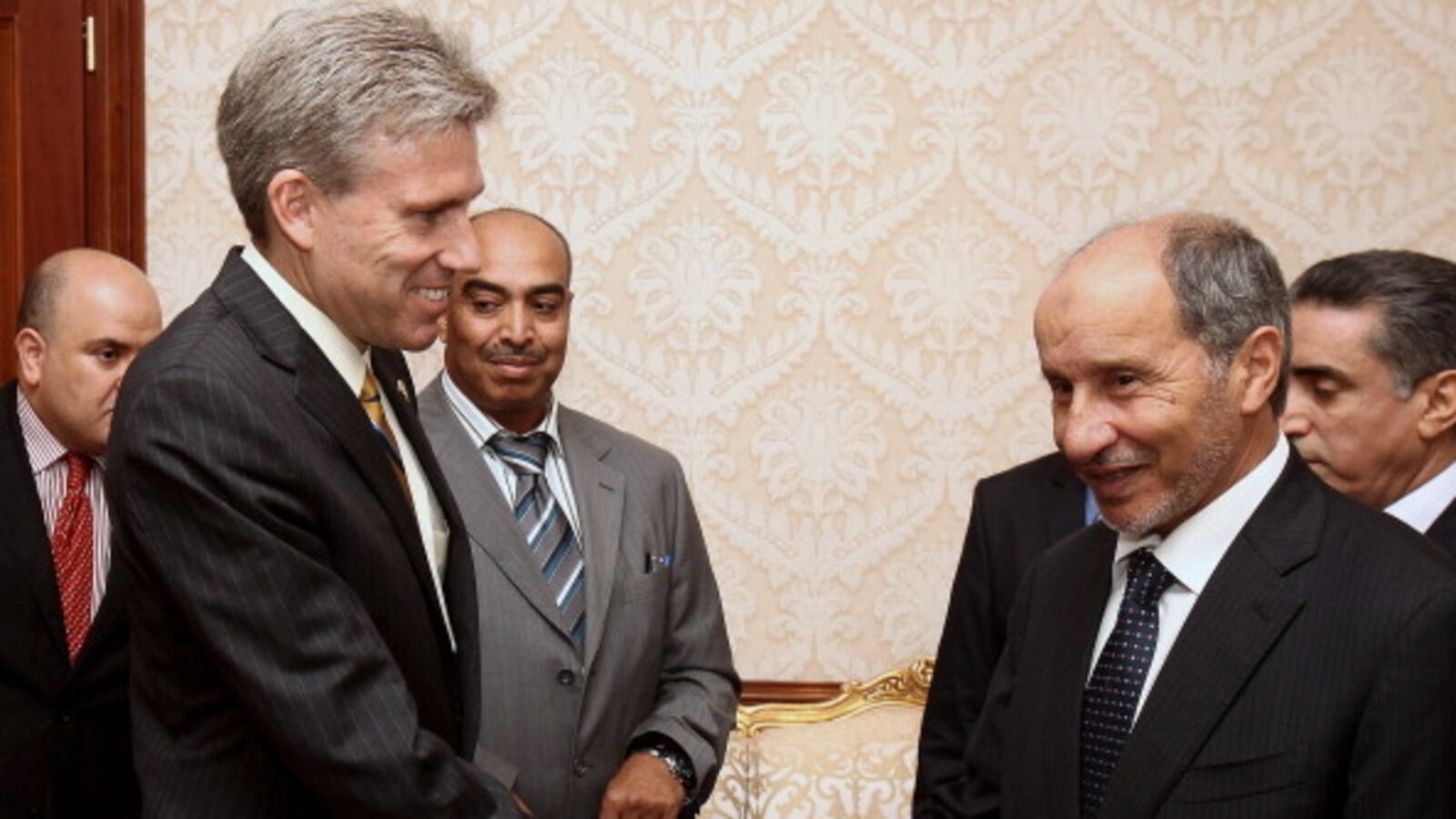
U.S. Ambassador to Libya Chris Stevens died today in the aftermath of an overnight attack on the consulate in the city of Benghazi, along with three of his colleagues. Today, President Obama, with Hillary Clinton by his side, addressed the death of the first U.S. envoy abroad in decades. "These four Americans stood up for freedom and human dignity," he said. "Make no mistake: we will work with the Libyan government to bring to justice the killers who attacked our people."
Open Zion contributor Lara Friedman, a friend of Stevens's from her time in the Foreign Service who subsequently worked with him, called his death "an unmitigated tragedy for everybody." She added, "The loss that this is for Libyans and for the American-Libyan relationship, it was just— I'm sure there were people all over Libya who woke up today and were devastated by the loss."
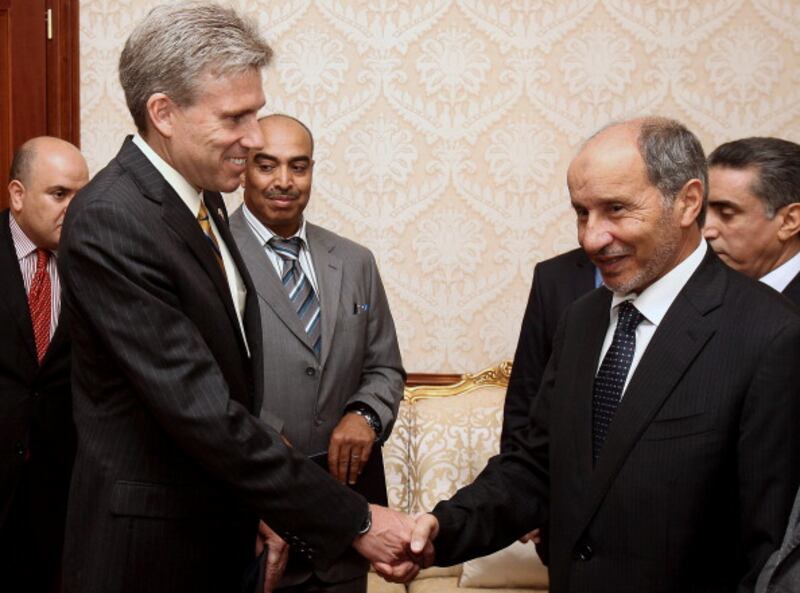
Stevens, who spoke Arabic, took up his appointment as Ambassador to Libya in the Spring of this year. Last year, the U.S. was part of an international coalition that provided air support to rebels who eventually upended dictator Col. Muammar Qaddafi. Stevens served in Rome as what the New York Times described as "the administration’s point man during the Libyan revolution," then as a special representative to the former rebel council that ruled over Libya's transition. (The Daily Beast has more on Stevens's professional background.)
"He really believed as an American and Foreign Service Officer that it was possible to do good things in the world," Friedman told me. "He was deeply excited about what was happening in Libya and excited to be there. I think he felt privileged to be there."
The U.S. suspects the attacks on the consulate in Benghazi were planned. It's not clear that the protest that erupted in Cairo, Egypt, yesterday was, but angry demonstrators scaled the wall and pulled down the American flag—at half mast for the anniversary of 9/11—and replaced it with an Islamist banner. Reuters reported that a small protest also broke out today outside the U.S. Embassy to Tunisia, but the New York Times noted that only about 40 people were spotted outside the compound there.
Last night, Libyan authorities reportedly commenced a manhunt for the militants responsible for the attack on the car Stevens and three colleagues were riding in. A doctor in Benghazi said Stevens died of "severe asphyxia" from smoke inhalation that had caused bleeding in his lungs.
Friedman recounted a call from Stevens about Bar Mitzvah etiquette and what sort of gift to bring. "He wasn't the Ambassador," she said. "He was just a guy."
"If you'd told me you were going to Libya," Friedman said, addressing me, "I would've said, 'You have to meet my friend Chris and have a beer with him.' And he would've. And you would've had a beer with him and you would've walked away thinking you'd made a friend."