Last Wednesday, just before noon on a crisp, sunny day in New York City, an act of unthinkable violence occurred: A 73-year-old woman was robbed, pummeled, and raped while bird-watching near the Strawberry Fields area of Central Park. It wasn’t the first time she’d seen the suspect: nine days earlier, she had witnessed him publicly masturbating. A dedicated photographer who often documented wrongdoing in the park, she snapped a photo of the incident, then reportedly told a park ranger. The subsequent attack may have been an act of revenge. Before commencing his rape, the man reportedly asked, “Do you remember me?”

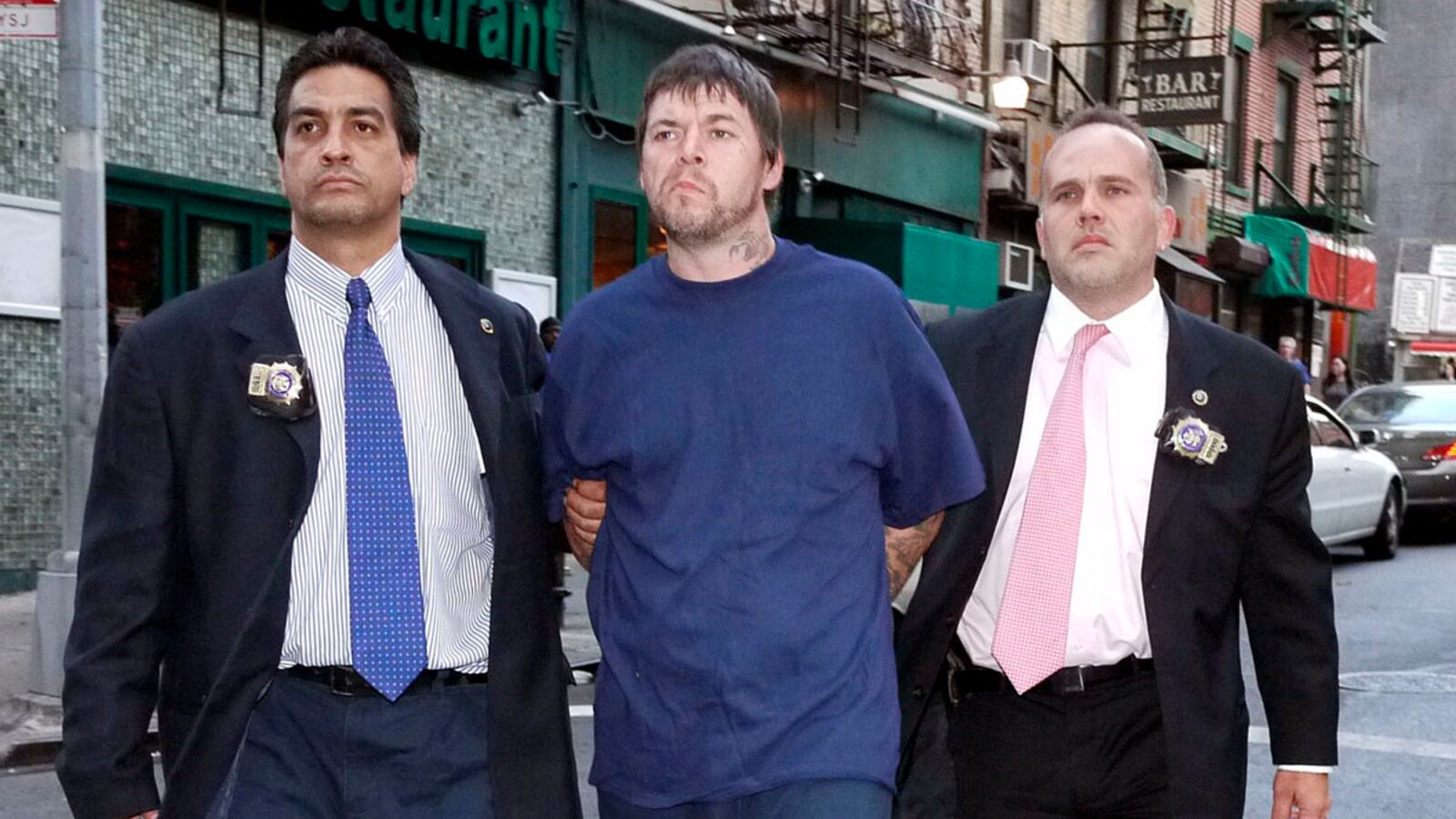
The suspect, 42-year-old David Albert Mitchell, was arrested Thursday on charges including rape, predatory sexual assault, and robbery. He has a long rap sheet, largely involving violence against elderly women.
The case has inspired outrage around the globe, largely for two reasons: the unlikely time and location—associated more with John Lennon–loving tourists and picnicking families—and the advanced age of the victim. As New York University lecturer Eric Ozawa, who found the battered woman shortly after the attack, told the Associated Press, “It’s shocking that it could happen in the park in broad daylight—that someone could rape somebody in her 70s.”
Ozawa’s horror that an elderly woman would be targeted for sexual assault was echoed in countless online comments and water-cooler conversations (and implicit in the newspaper headlines—virtually all of which highlighted the victim’s age). But unfortunately, elder rape is not unheard of. In August, John Anthony Vega was found guilty of sexually assaulting a 77-year-old woman in Pennsylvania. Last November, a Delaware man was charged with the rape and murder of a 70-year-old woman. In June 2011, a 53-year-old man died while in the act of sexually assaulting a 77-year-old Texas woman. And most disturbingly, in England, Delroy Grant was convicted last year on three counts of rape (among numerous other charges), but police think he may be responsible for more than 200 assaults on women ages 68 through 89 over several decades. These cases all made news. So why has the phenomenon remained invisible?
Even after decades of rape-awareness campaigns, many people still do not understand what motivates someone to commit an assault. “Society still implicitly believes that rape is about sex,” says Benje Douglas, project manager for the Lifespan Project at the National Sexual Violence Resource Center. “That’s because for most of us, sex is something you do for pleasure. But a rapist doesn’t think like that. It’s about controlling someone sexually.” Certainly, he points out, that’s the case with the Central Park victim, who appeared to be attacked out of a desire for revenge.
When younger women are raped, it’s (still, alas) often believed that they invited the violence by dressing or acting provocatively—or just by being irresistibly attractive to the attacker. Chances are, no one is going to victim-blame or slut-shame an 80-year-old grandmother. But on the other hand, Douglas points out, there’s a cultural stereotype that “someone 60 and up is not attractive or desirable.” And therefore, explains Holly Ramsey-Klawsnik, Ph.D., a Massachusetts-based mental-health clinician and sociologist who researches sexual violence, people unaccustomed to thinking of older women as sexual beings might think: why would someone want to rape them?
But that’s not the only reason for discomfort on this topic. Like children or the disabled, the elderly tend to be physically weaker. “People are uncomfortable that such a vulnerable population would get hurt,” says Jennifer Marsh, vice president of victim services for the Rape, Abuse, and Incest National Network, or RAINN. “[We] think: that could be my parent. Or my grandparent.” What’s more, perhaps we’d all like to believe (women especially) that there is a time in which the issue of sexual violence is no longer relevant to our safety. “You want to think that when you reach a certain age, you’re done with this. You’re free of this particular worry,” says Douglas.
That head-in-the-sand mentality may be why statistics on elder rape and assault are so hard to come by. One of the only figures available comes from a 2009 study funded by the National Institute of Justice (NIJ), which found that just over half of 1 percent of Americans over 60 reported forcible sexual intercourse or molestation within the previous year (PDF). That’s fairly low, although it would still amount to thousands of cases nationwide. But experts agree that, in the words of Ramsey-Klawsnik, “there are just no good incidence studies.” Why? According to Joan Cook, Ph.D., an associate professor of psychiatry at Yale School of Medicine who studies violence in elderly populations, until about 10 years ago, no one was even asking whether older women were victims of these crimes. “It’s crazy: Women over 65 weren’t even included in these studies.” And even now, she adds, there is little data on this subject that has been analyzed.
Cook and other experts also strongly suspect that sexual violence is more highly underreported in this age group than any other. For example, the NIJ report states that only 16 percent of sexual assaults on the elderly were reported to the police. Moreover, a report released last month by the U.S. Department of Justice found that one third of all victims of violent crimes over 65 were not reported—a rate 40 percent higher than younger people. The reason: victims thought the police could not or would not help them.
Although the feisty bird-watcher in Central Park had no problem coming forward and speaking up about what happened to her, many other elderly people have a harder time doing so. For one thing, they fear being disbelieved or dismissed. “People don’t want to believe that this happens,” says Ramsey-Klawsnik. “So if an 89-year-old says it did, she must have misunderstood.” The victim’s eyesight, hearing, mental health, and memory may be questioned—a frightening prospect for assault survivors.
Even when there are clear signs of sexual abuse, doctors and law enforcement tend to be less aggressive about investigating that possibility. In a 2008 study by Ramsey-Klawsnik, which examined 284 cases of elder sexual assault nationwide, fewer than half of the victims were taken for a rape examination. Worse, in 20 of the cases, the evidence was destroyed. “If someone unexpectedly finds blood in the underwear of a 7-year-old girl, they would think, ’Oh my God, get this child to a doctor,’” says Ramsey-Klawsnik. “With an 80-year-old, they think: ‘Oh, she must have scratched herself.’”
Even now, some clinicians are unforgivably timid around the topic with their geriatric patients. “Some clinicians don’t even ask about it because they fear it’s a Pandora’s box,” says Cook. “They don’t want to offend patients. They worry the person is going to start crying and never stop.”
And let’s face it, many elderly women are simply not willing to come forward about such a personal and stigmatized subject. “Elderly women grew up with much stricter gender roles,” points out Cook. “They don’t see themselves in the descriptions of sexual assault. Older women view the subject as improper. Their sense of shame is just enormous.”
That shame is even greater and more debilitating if the perpetrator is a family member. Once, Cook says, she interviewed an older woman about sexual assault, asking very detailed questions about specific acts. “And she just kept saying, ‘Oh, no, no, nothing like that had ever happened to me.’ Then I packed up my paperwork and started to walk away. And then she said, ‘Well, my husband did do this…’ Turns out she had experienced extensive marital rape—she just didn’t identify it as such.”
So what can be done to bring these stories to light (and ideally, to prosecution)? “We need more advocacy and awareness among those who assist the elderly,” says Marsh. “People need to know that sexual violence can occur at any point throughout the lifespan.” And elderly women survivors need to be acknowledged more frequently, says Ramsey-Klawsnik. “Who’s generally on the poster for sexual-assault centers? Young women. We need more posters with older people on them, saying, ‘If you need help, call us.’”