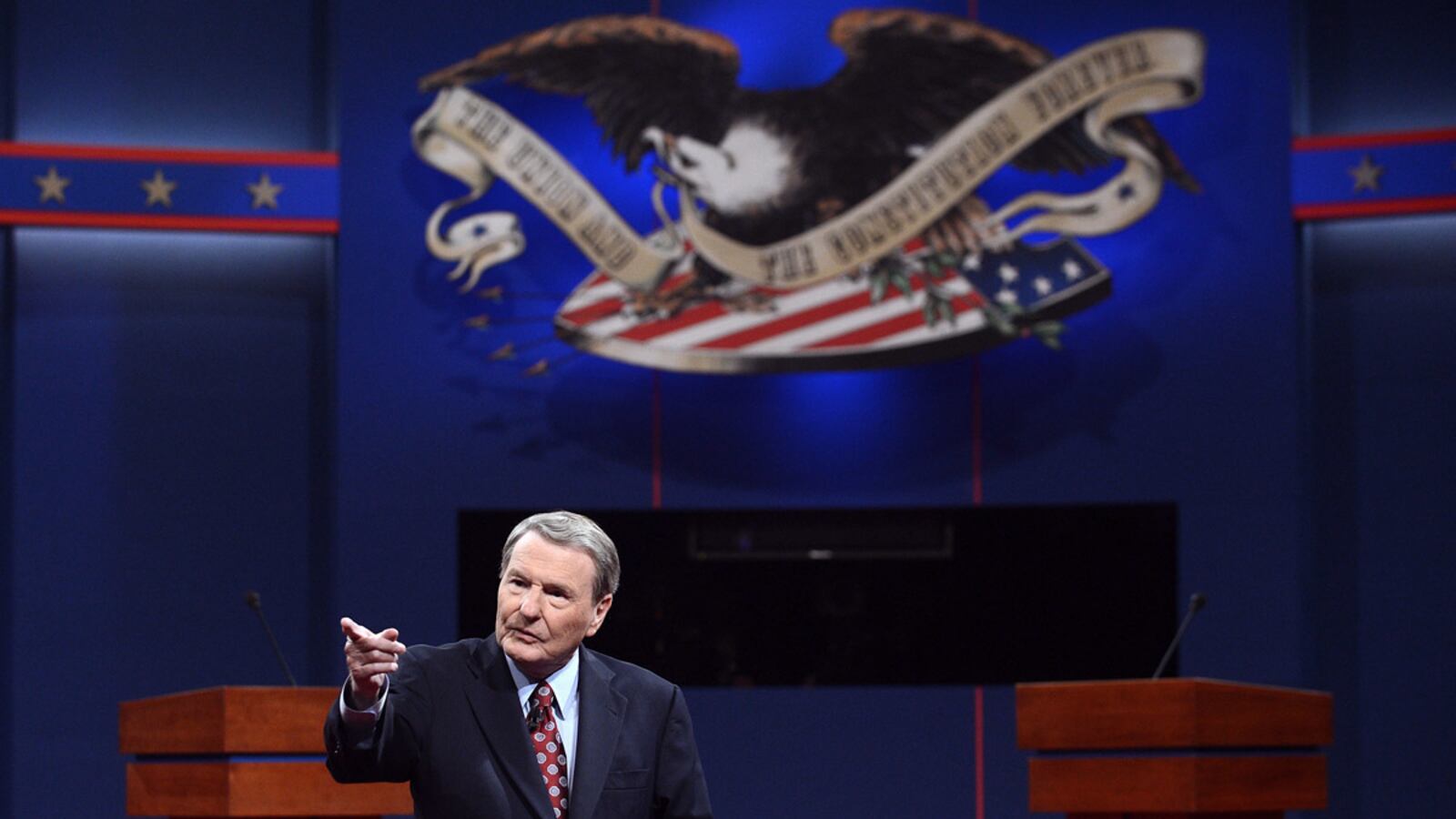
Jim Lehrer has heard the critics of his performance at the presidential debate, and he dismisses them—politely, of course—as just plain wrong.
“I have no apologies,” he told me after returning from Denver. “I have some regrets about how some of the things went. But I was very pleased that we accomplished what we set out to do.”
Lehrer has gotten pummeled over the debate, with detractors saying he lost control of the proceedings and some unkind souls comparing him to an NFL replacement ref—even though he has moderated 12 such events, more than anyone else. The underlying assumption is that he should have reined in President Obama and Mitt Romney and imposed his agenda on the 90-minute face-off.
“I tried to expand the whole idea of a presidential debate to include an open discussion between the candidates on things that matter,” the veteran PBS anchor says. “People can dispute whether I did it well or not. What they saw was what we had intended—to stay out of the way.”
Addressing the catcalls, Lehrer tells me: “I can understand people saying, ‘What the hell is this, he let them talk too long, oh my God.’ This was a new thing. Everyone had a little adjusting to do, including the candidates.”
One of the few instances in which Lehrer tried to crack the whip became the most-tweeted-about moment of a debate that drew more Twitter messages, 10.3 million, more than any other political event in the social network’s history. As Romney gave a lengthy answer and said he wanted to make one more point, Lehrer shot back, “Let’s not.”
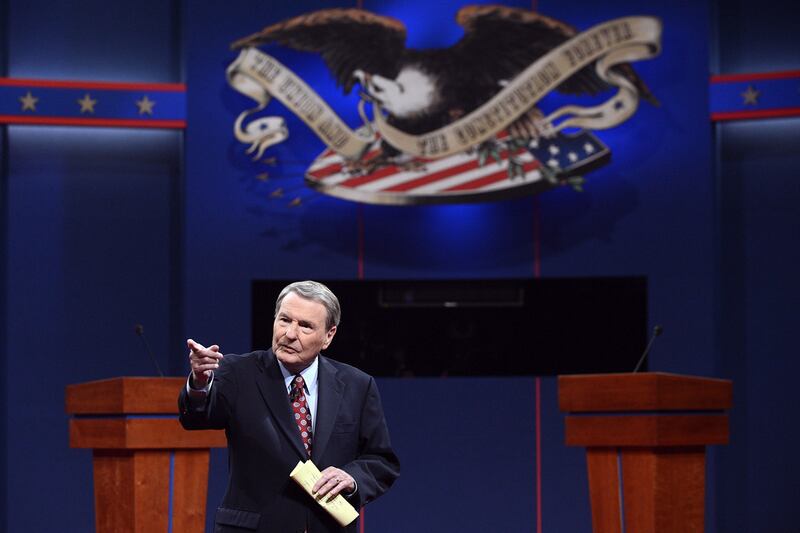
Says Lehrer: “It was just a spontaneous reaction. It was the quickest 90 minutes of my life.” He noted that he had pressed the president about time as well.
But for the most part Lehrer hung back while Obama and Romney went at it, asking follow-up questions but not pressing them on the facts. There were instances in which he let Obama and Romney fudge facts and, in the former governor’s case, back away from previous positions. Why not jump in?
“My view of the moderator’s role is that it’s different than being an interviewer,” he says. “My job as an interviewer would have been to follow up. My God, I’ve been doing that for 37 years. But this is a separate function—to put it on the candidates. I didn’t come loaded to make a bunch of follow-ups. I wanted the burden of the heat and the follow-ups to be on the candidates. Voters could see how the candidates reacted to each other.”
Still, it can’t be fun to be kicked around by so many pundits and armchair analysts.
“I don’t like criticism any better than anyone else does,” Lehrer admits. “But I am just delighted the country got to see and get a feel for what an open debate can be.”
Lehrer is the first to say that there is room for improvement and that the format should be “tweaked.”
“I didn’t get to a lot of the subjects I wanted to. Sure, there were some frustrations when things ran long and I couldn’t move it along.”
Skeptics have long grumbled that presidential debates are too constrained and stilted, with candidates serving up prepackaged sound bites in brief bursts before a light or buzzer goes off. Instead, aided by new rules, Lehrer allowed the contenders to answer at length and challenge each other. What is wrong with that?