Last week, I was training the U.S. military on traditional Muslim culture, so soldiers know what to expect when they’re abroad. I mentioned a young girl fighting to change the future of Pakistan—she’s literally the ace of diamonds in a deck of cards I created to introduce students to personalities in the region. My ace: Malala Yousafzai, a girl in the Swat valley of Pakistan, battling the Taliban for the right for girls to go to school.
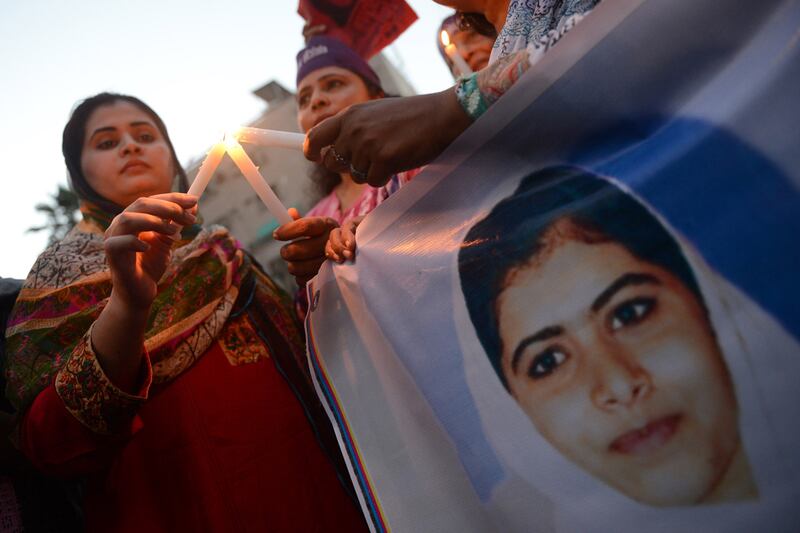
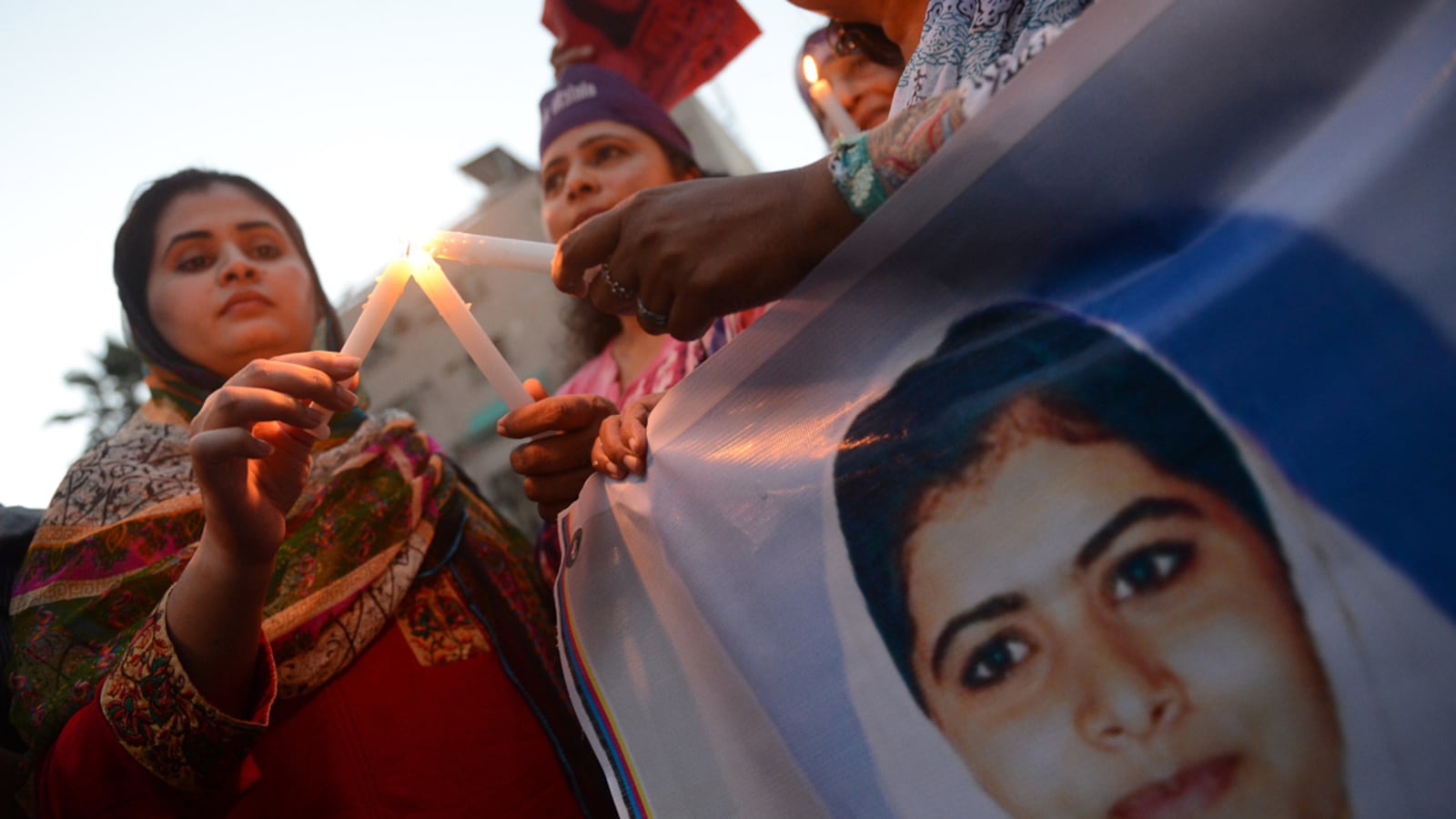
I posed this question to the class: would young Malala's spirit of enlightened Islamic interpretation prevail over the spades—the hardcore Pakistani militants and ideologues fueled by an extremist, dogmatic interpretation of Islam? I will admit I was hopeful. And then, this week, the very same 14-year-old girl was targeted by the forces of violence. She was shot in the head by members of the Pakistani Taliban, on a school bus. Her crime: pursuing an education for herself, and for others. The Taliban proudly defended their assault, with verses from the Quran.
The assassination attempt is disturbing beyond words, and deeply personal to me. I have relatives in Pakistan; the country has been inextricably woven into my life. I was born in India to a Muslim family, but many of my relatives moved to Pakistan after the nation was created in 1947 from the split of British India into two countries. My friend Wall Street Journal reporter Daniel Pearl was murdered in Pakistan in 2002 when he was staying at a house I’d rented. I conceived a child in Pakistan while unmarried, making me a criminal according to that country’s religious laws. In the U.S., I put my son, now 9, on a school bus every morning, and I wonder how the secular dreams of Pakistan’s founder, Muhammad Ali Jinnah, have devolved into the targeted shooting of children on school buses.
Today, 65 years after Pakistan's birth, the shots fired by Pakistani militants against Malala reveal a very clear truth: Pakistan is in a civil war. The nation has to make a choice whether it is going to crush the militants and ideologues that justify the shooting of a schoolgirl—or allow them to destroy its future, symbolized by Malala.
In the hours and days after the shooting, the nation's leaders, pundits, and ordinary citizens—its diamonds—are doing the honorable thing, rallying behind young Malala as a daughter of the nation. On Facebook, Kamran Rehmat, an editor in Pakistan, wrote, "Malala on deathbed is really Pakistan's soul on a ventilator." But the challenge to the nation's collective culture of denial is a deeper one that requires intense soul searching: can the nation accept that the men who stepped onto the school bus, intent on killing Malala, are the sons of Pakistan? What's more, these men are the Muslim sons of Pakistan, practicing, yes, an interpretation of Islam that many of us reject but that exists and thrives.
A few years ago, Pakistani pop stars released a music video "Ye Hum Nahee Hai," or "This Is Not Us," meant to disown the extremists in the country. The sentiment was well intentioned, but at the same time, it deflects responsibility. In a culture such as Pakistan's, based on deeply rooted notions of honor and shame, the tendency is to save face. A "ghairat brigade," or "honor brigade," of talking heads has sprung up in the Pakistani blogosphere and beyond, defending the country’s honor at every turn. But the most honorable path for the nation to take is to own up to its extremism problem. To that end there’s an emerging "beghairat brigade," or "shameless brigade," of critical thinkers who reject the extremist elements that use honor to justify insane acts such as the shooting of a young girl. We need more of this brigade.
Among the new brigade is columnist Nadeem Paracha, who wrote in a leading English-language paper in Pakistan called Dawn: "Those who really deserve condemnation are us Pakistanis as a people," noting that Pakistan's homegrown extremism problem is blamed on everything from drone attacks to propaganda. Another Dawn columnist, Murtaza Haider, a Pakistani native and associate dean at Ryerson University in Toronto, dared to say that “had the State and the society acted with resolve against sectarian violence in the past, the extremists would not have felt so invincible as to target an unarmed 14-year-old in broad daylight."
Malala is only the latest in a sad legacy of the damage done by the country's inability to look its homegrown-extremism problem in the face and deem it unacceptable. A man of Pakistani heritage, Khalid Sheikh Mohammad, orchestrated the 9/11 attacks from Karachi. The governor of the province of Punjab was assassinated by a member of his security detail for supporting a Christian in a blasphemy case, and Pakistani lawyers put rose-and-jasmine garlands on the assassin to celebrate him. A woman of Pakistan, Aafia Siddiqui, attempted to kill a U.S. soldier, earning a sentence in the U.S., but Pakistani street marchers rally around her as a "daughter of Pakistan." Osama bin Laden had found safe haven in Abbottabad, Pakistan, but when the U.S. killed him, Pakistani government officials complained the "nation's sovereignty" had been violated, without taking responsibility for the fact that bin Laden lived freely in Pakistan for years. All the while, thousands of Pakistanis have died in attacks on mosques, police stations, cricket teams, and schools.
In an online survey, Dawn asks its readers: "Will the attack on an innocent teenager be the tipping point to declare the Taliban as the country's biggest enemy?" The tally, based on 2,978 votes cast by Thursday morning in Pakistan: 75 percent, yes; 25 percent, no. I hope Pakistan has reached its tipping point. How much more blood has to spill before the nation and its people move to unequivocally crush their extremists? The nation needs to choose Malala as its ace over all else.