The toughest foreign-policy issue our next president will face is Pakistan, the most dangerous country in the world. The battle for the soul of this critical nation is underway; we need to hear at Monday’s debate how President Obama and Governor Romney intend to get the right outcome.

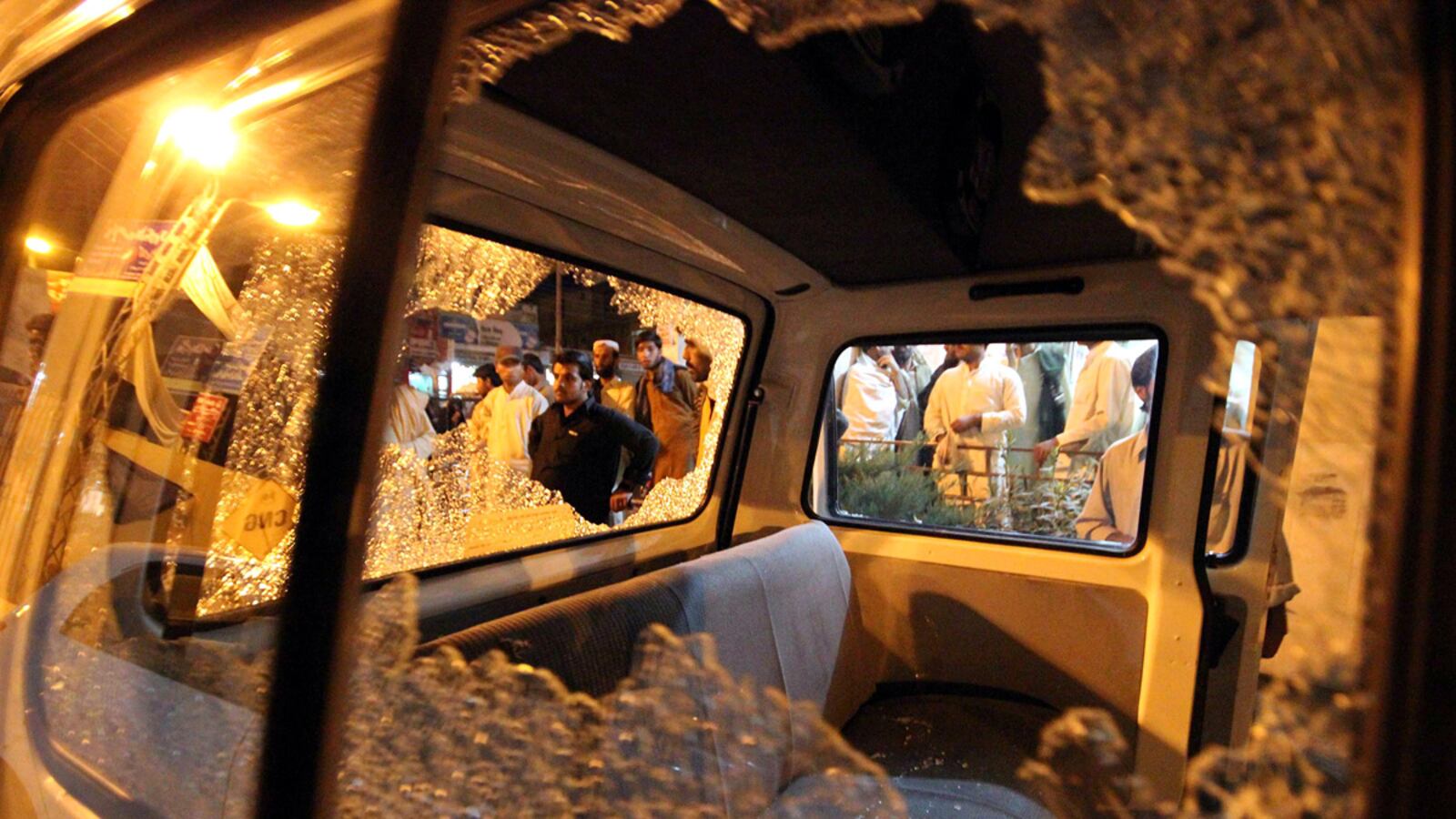
Malala Yousafzai, a 14-year-old girl, is fighting for her life in a hospital in Birmingham, England, because she believes girls should get an education. She was shot in the head by the Pakistani Taliban for her beliefs. Her story epitomizes her country’s story. It is a battlefield between extremists, often linked to al Qaeda, and those who want a progressive and modern Pakistan. The sixth-largest country in the world—and soon to be the world’s largest Muslim country—it already has the fastest-growing nuclear arsenal on the planet. And it is home to al Qaeda’s leadership.
It is the epicenter of the global jihad. From 9/11 to the 2008 attack on Mumbai, al Qaeda and its allies like Lashkar-e-Taiba have plotted their schemes in Karachi, Lahore, and Abbottabad. Since our last election in 2008, Pakistan has been the launch platform for plots to attack the New York City subway and Times Square. Three of the five terrorists on our most-wanted list are in Pakistan today.
America’s relationship with Pakistan is tortured and complex. On the one hand, Washington has been very generous to Pakistan this century. Since 9/11 the U.S. has disbursed more than $25 billion in military and economic aid to Islamabad. The military aid includes 18 F-16 jet fighters, 500 AMRAAM air-to-air missiles, 6 C-130 transport aircraft, 20 Cobra attack helicopters, and a Perry class frigate. According to the Congressional Research Service, about half the aid was delivered during George Bush’s presidency and about half by Barack Obama. No other country except Israel has received so much American aid since 2001.
On the other hand, Pakistan and America are adversaries in Afghanistan. In many ways we are fighting a proxy war in Afghanistan. The United States, the U.N., NATO, and troops from more than 40 countries back the legitimately elected Kabul government led by Hamid Karzai. Pakistan pays lip service to the Karzai government but provides key assistance to its enemy, the Afghan Taliban. The Pakistani intelligence service, ISI, shelters the Taliban leadership in Quetta, Karachi, and Waziristan, trains its fighters, and helps it plan attacks on Afghan government and NATO targets. Interrogations of thousands of captured Taliban fighters by NATO show that Pakistan’s support is essential to the success of the insurgency. Senior American officials have characterized the insurgents as taking direction from the ISI.
America is also fighting a drone war against al Qaeda targets and associated movement inside Pakistani territory despite the explicit request of the Pakistani Parliament and Foreign Ministry that they cease flying. A drone strike in Pakistan this month apparently killed the Belgian-Tunisian terrorist who mentored and trained the French-Algerian man who murdered six people in Toulouse, France this spring. Moez Garsallaoui was an al Qaeda operative who trained Mohamed Merah during a visit to Pakistan in 2010.
Every day American drones monitor potential targets inside Pakistan. Now we learn Washington is expanding the drone fleet so we can stay over Pakistan indefinitely while taking on new missions in other danger zones. From 2004 to Sept. 30, 2012, the drones carried out 346 lethal attacks in Pakistan, almost 300 on Obama’s watch, according to one credible count. The drones have decimated al Qaeda’s leadership, but they have also angered Pakistanis and become an anti-American rallying cry for Lashkar-e-Taiba and Pakistani politicians, including Imran Khan.
Finally, there is the shadow of Abbottabad haunting American-Pakistani relations. How did Osama bin Laden, high-value target No. 1, hide for five-plus years less than 800 yards from Pakistan’s premier military academy? One senior Pakistani official told me it was just a “freak coincidence,” but is that credible? A Pakistani journalist wrote just days after the SEAL raid that killed the al Qaeda amir that “of course the army generals knew and they knew they could get away with it.” It was either ISI incompetence or complicity—neither is comforting.
President Obama rightly takes credit for putting intense pressure on the terror sanctuary in Pakistan. He ordered the drone strikes into Pakistan and the SEAL raid that killed bin Laden. Every mission came from bases in Afghanistan; almost all were done without Pakistan’s support or approval.
The coming transition in Afghanistan from NATO to Afghan leadership in the war in 2014 will be a major challenge for American-Pakistani relations. Both Obama and Romney rightly agree we should transition our troops out of Afghanistan by 2014. But what we need to hear from them Monday night is how they will keep the pressure on the terrorists in Pakistan when we bring our troops home from Afghanistan. How will we continue to undertake the necessary counterterror missions from Afghan bases? Will we keep some troops behind to ensure security for our drones and other counterterror assets? How many? How will we persuade Afghans to let us use their bases to help us fight terror? How do we persuade Pakistanis the drones are not their enemy? Should we continue our aid programs? Do we have a plan B if the Afghan Army starts to disintegrate? Do we have a plan to protect the more than 3 million young Afghan girls now going to school in their country who would be treated just like Malala if the Taliban regains power? How do we fight terror and help Malala? These are the really tough questions.