
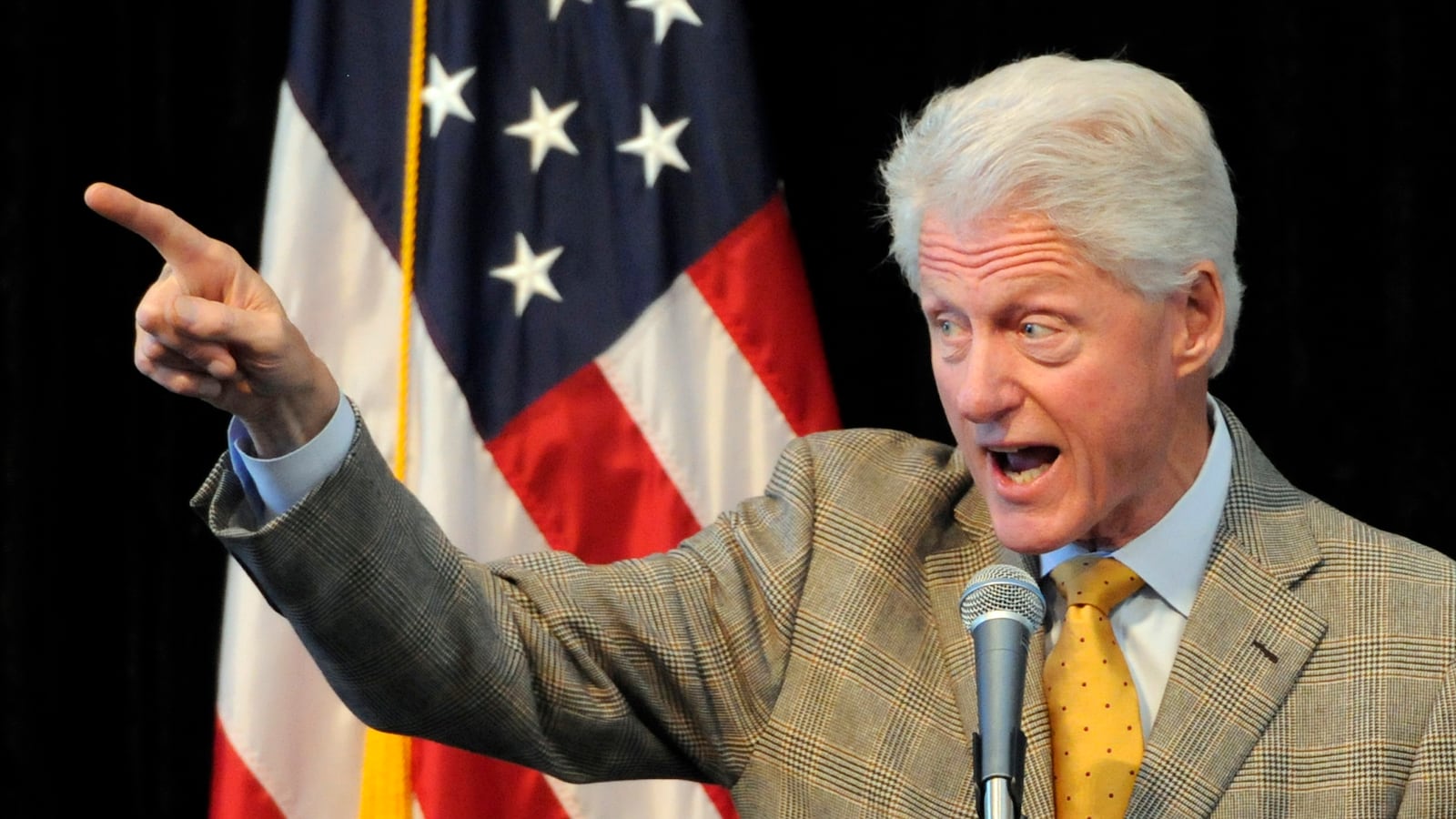
Fresh off a crusade to get President Obama reelected, Bill Clinton is turning to a new campaign—breast cancer.
The former president is joining the National Breast Cancer Coalition, a group of hundreds of cancer-fighting organizations, as honorary chairman of its campaign to end the disease by 2020, the group said Tuesday. The coalition has successfully lobbied for nearly $3 billion in federal funds since its start two decades ago. Its president, Fran Visco, is known for focusing heavily on research, saying mammograms and pink ribbons won’t get the job done.

“The stakes are too high, the losses have been too great to let another decade go by without ending breast cancer,” Clinton said in announcing the partnership. He has worked with the coalition on past initiatives, including the 2005 launch of a fund in honor of his mother, Virginia Clinton Kelley, who died of complications from breast cancer.
Progress has been slow and public perception skewed, the National Breast Cancer Coalition said in its annual report on the disease this fall. “Given the attention and resources directed to breast cancer, the public understandably believes that we have made significant progress,” the report said. But “we know little about how to prevent breast cancer or how to prevent deaths from the disease.”
The perception problem, the report said, is due in part to media coverage, which does not always “reflect the realities of the disease.” During Breast Cancer Awareness Month in October 2011, for example, most coverage focused on young women’s triumphs and effective treatments. “Often times, a picture was painted of survivors who are disease-free and overcame the disease,” the report said. “Only about 1 in 9 articles portrayed women battling metastatic disease.”
The mortality rate for breast cancer has declined over the years, but not sharply enough, especially given the amount of money invested, says Visco. In 1975 there were 31 deaths for every 100,000 women diagnosed in the U.S., according to the National Cancer Institute. In recent years, that number has fallen to 23 deaths. In contrast, the cervical-cancer death rate fell by a dramatic 70 percent between 1955 and 1992, according to the American Cancer Society, although the comparison is not apples to apples. That drop was due mostly to the increased use of the Pap test.
Visco says she believes the way to vanquish the disease is through science. “We get sidetracked by efforts to focus on getting every woman a mammogram. We could screen every woman in the world and we would not have stopped breast cancer,” she recently told The Daily Beast. “I am not saying to stop funding for screening; however, we cannot afford to make it a main focus.”
That stance isn’t always popular, especially among women whose lives have been saved by mammograms. Experts and doctors themselves differ on how best to spend the bulk of funds—on mammograms or research. Visco thinks the solution lies in studying how the cancer develops and metastasizes. To that end, a key mission for her coalition has been raising funds for a Department of Defense initiative called the Breast Cancer Research Program. Her group has lobbied for some $2.8 billion in federal funds for the research program since its start in 1992.
Visco is a breast-cancer survivor herself. Diagnosed at age 39 when she was a partner at a law firm in Philadelphia, she left her law career to help launch the National Breast Cancer Coalition in 1991. The grassroots effort has since grown to include hundreds of cancer organizations and thousands of individual activists.
With women’s health issues embroiled in controversy this year—including the Susan G. Komen flap over funding for Planned Parenthood—Visco says she hopes the year ahead will see people come together. “This election again showed the power and importance of women as voters and political leaders,” she says. “Now we will look to see if both parties learned from that fact and will pay attention to issues important to us, like breast cancer and women’s health overall.”