There are certain historical figures of such importance that we need to know everything about them, which is why books about Napoleon, Lincoln, Julius Caesar, Joan of Arc, Queen Elizabeth I, and the great religious founders continue to proliferate; these lives require constant reevaluation and interpretation. It’s a little different in the literary world. Too little is known about certain of the greatest figures—Shakespeare, Austen—to justify constant retelling of the life, although biographers go on trying. Other extraordinary writers didn’t lead extraordinary lives—one thorough recounting of the story is enough to satisfy our need to know. And then there are those men and women who never cease to fascinate, whose lives we can follow again and again in various reiterations.
And then there are those about whom there is no such thing as a dull book. Among these figures:
The Brontës
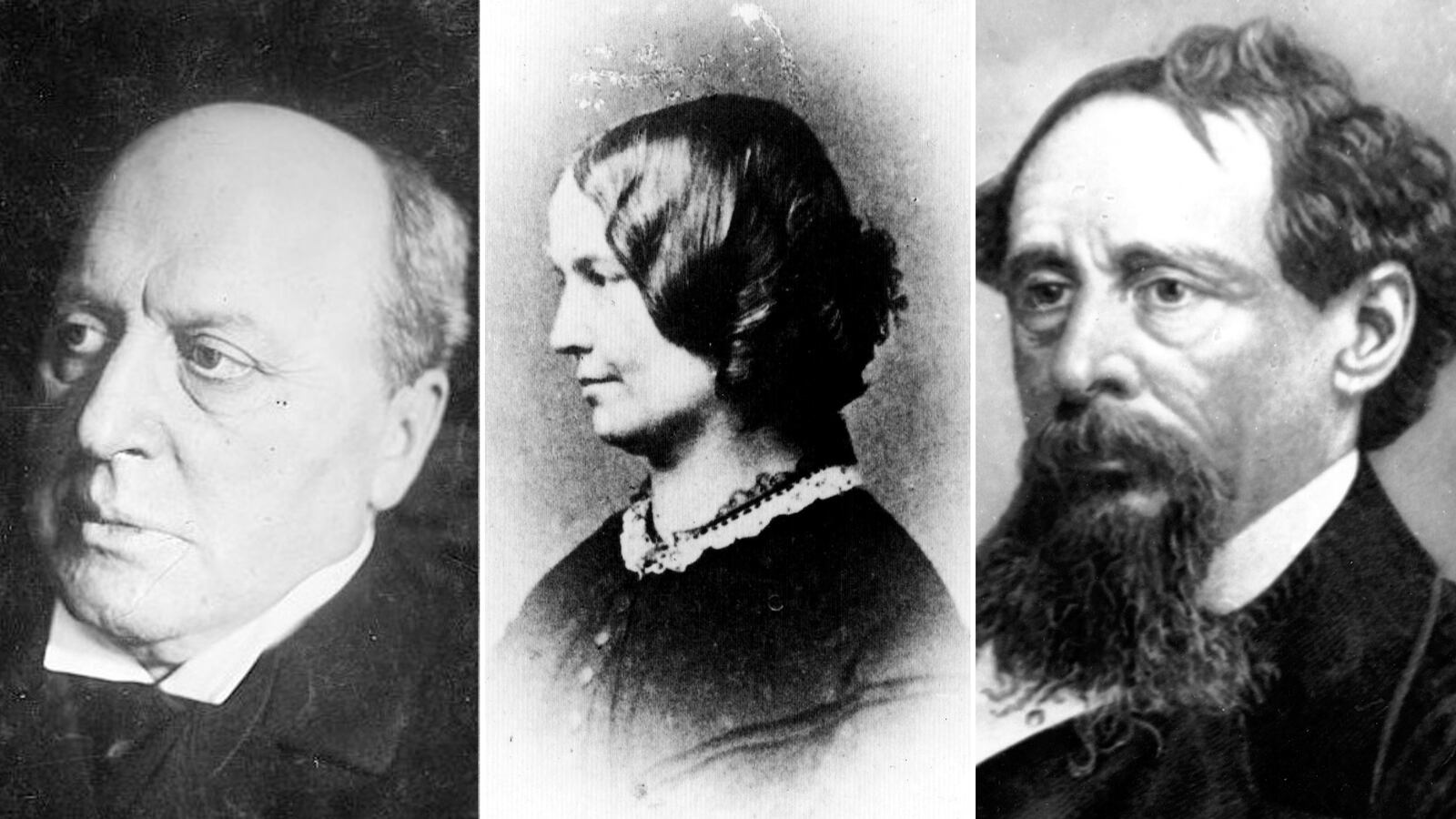
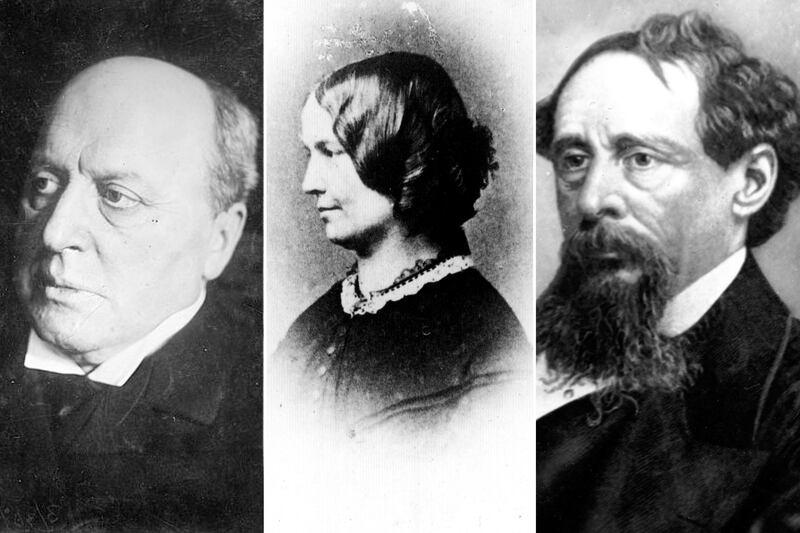
The six children of the Reverend Patrick Brontë, all of whom predeceased him, two of them writers of genius. Their isolated life on the moors; the painful attempts at teaching and governessing; the disaster of the one boy, Branwell, brilliant and dissolute; the amazing success of Jane Eyre; the relentless loss of life to tuberculosis (although Charlotte died of complications connected to childbirth)—it’s so painful and moving a saga that no respectable biographer has failed it. The classic is the life of Charlotte by her close friend the brilliant novelist Elizabeth Gaskell; the most complete version is the series of individual volumes by the scholar Winifred Gérin. But don’t worry—you really can't go wrong.
Samuel Johnson
Of course the classic book is Boswell’s The Life of Samuel Johnson, the most famous literary biography every written, and probably the most engaging. Since the discovery of Boswell’s journals, he himself has almost displaced his subject as a focus for biographical interest, but Dr. Johnson, the supreme literary figure of his age, remains a total fascination. This self-made man, with his penetrating and discriminating mind and magnificent style, dominated the intellectual life of his time, while his peculiar personal life and his quirks and eccentricities are perpetually intriguing. Every serious book about him is gripping.
Charles Dickens
Not only one of the world’s greatest and best-loved novelists, but the most famous Englishman of his time, he was a man of charm, magnetism, inner turbulence, and self-destructive contradictions. You can safely choose among the five major biographies of the last half-century or so—Edgar Johnson, Fred Kaplan, Peter Ackroyd, Michael Slater, and Claire Tomalin; each has its large virtues. Or you can go back to the basic book, written within three years of his death by his closest friend John Forster. “The inimitable” bursts through all of them.
Henry James
There is of course the five-volume Leon Edel biography, less admired now than when it was appearing, but still an estimable and probably essential work. There is the one-volume book by Fred Kaplan and the two-volume book by Sheldon Novick. There are literally dozens of books on specific aspects of James’s life. And there is Colm Tóibin’s re-imagining of James in his beautiful novel The Master. (Avoid another novel, David Lodge’s disagreeable Author, Author.) Every biography enthralls by placing us within the intellectual, emotional, and moral reach of this great American writer and complicated and endearing man.
Lord Byron
Who more enthralling than this rakish aristocratic figure who thrilled England and Europe with his romantic poems and romantic escapades, his dark, handsome looks and his club foot, the scandals of his relationships and the waste of his young death? You get your best sense of him from his brilliant letters, but the biographies don’t let you down, from the multivolume work by Leslie Marchand to the slight but piquant Byron in Love by Edna O’Brien. Byron’s stormy life can serve as the epitome of the Romantic movement, but even more exciting is his witty, stimulating mind.
Runner-up: Keats.Cross-channel: Georges Sand, Hugo, Proust. Tolstoy.