What’s your big idea?
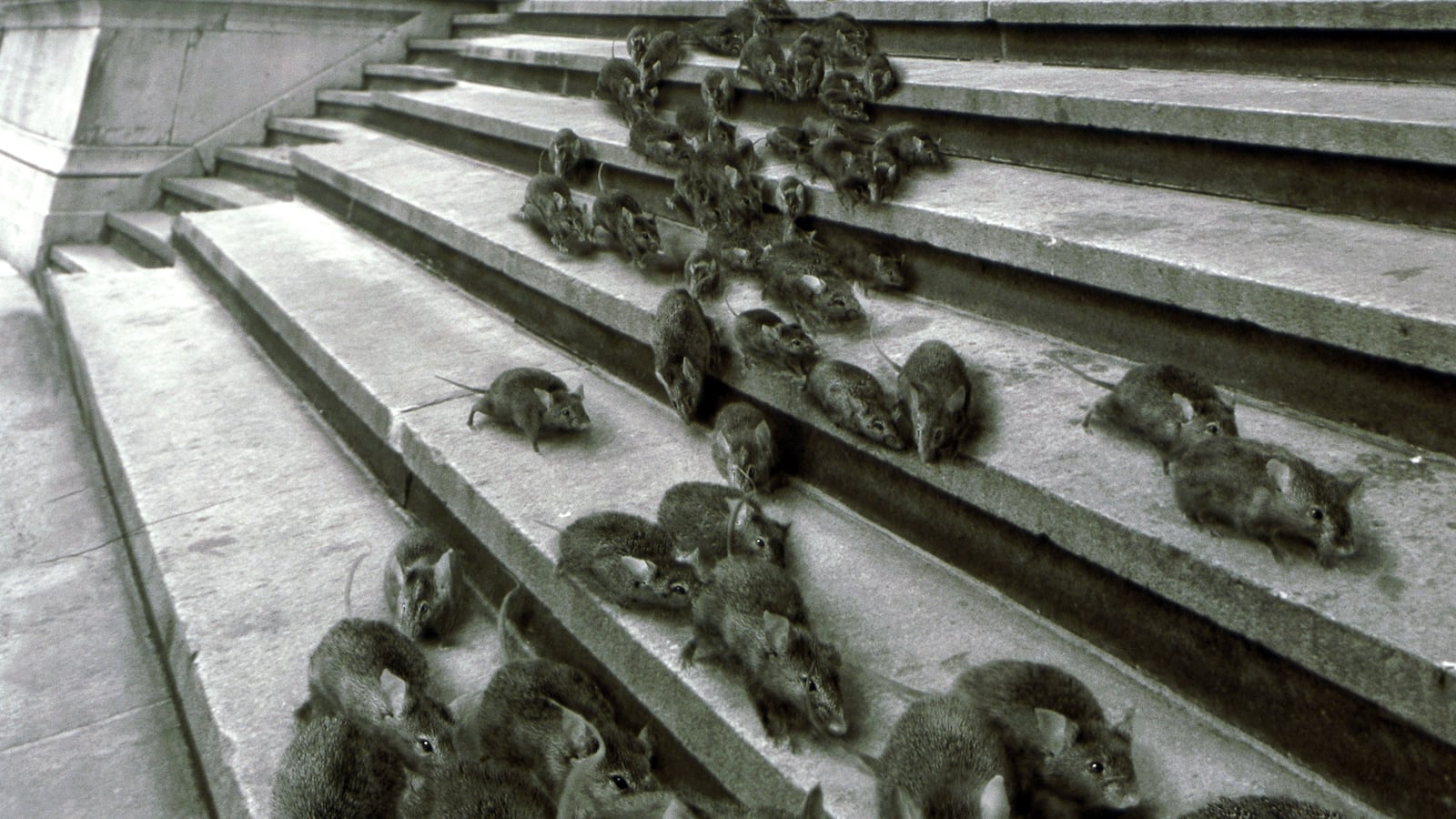
There can be little doubt that trade has contributed massively to human civilization, but we have often paid dearly for the goods and services it provides. That is as true today as it was at the time of Black Death, when the links between disease and commerce first became apparent. While the specter of plague no longer looms over us, we still rely heavily on the methods designed to prevent it. Renaissance city-states produced a template for dealing with trade-borne disease, which has proved enduring but also, in many cases, ineffective. By the late 19th century, it was clear to most governments that old-style methods like quarantine and sanitary embargoes had failed to prevent the movement of disease along the pathways of the new global market. They realized that quarantine needed to be combined with sanitary reform and that nation-states needed to come together to pool epidemiological information and agree on measures to prevent the spread of disease.

Up to this point in time, states had engaged in a form of sanitary diplomacy which had more to do with furthering imperial interests than protecting public health. Quarantine had become a form of war by other means. The result was commercial chaos and sanitary disaster. Somewhere along the way, we have forgotten the lessons learned by our Victorian forebears. Like them, we need to pay more attention to the factors which give rise to diseases and to seek greater cooperation in controlling them. That means shaking off some of the bad habits we’ve acquired over the years, especially our overreliance on measures of containment and our readiness to abuse sanitary controls for the purposes of economic protection. My book argues that we need to find a better balance between environmental reforms—especially regulation of agricultural production—and such tried-and-not-always-trusted methods as quarantine.Are there mathematical models that study the ways diseases and commerce spread that can be applicable in, say, preventing pandemics or facilitating free trade? Can we even see commerce as a variation of a virus?Computerized modeling has been used for decades to help governments assess the likelihood of pandemics and the ways in which they may spread. Some of these are now very sophisticated and incorporate studies of human interaction in real-life situations to gain an insight not only into the likely pattern of spread but also of how best to control pandemics should they break out. But sophisticated modeling isn’t necessary to prevent the spread of some trade-borne diseases. In the case of some foodborne diseases like E. coli we can often track and predict the movement of the disease by tracing suppliers and looking at logs and networks of distribution. In the case of diseases like influenza, sophisticated surveillance and modeling systems may enable us to pinpoint outbreaks and predict the rapidity of spread, but they are so protean in nature that they invariably defy expectations. Mathematical modeling, hypersurveillance and screening didn’t stop swine flu (H1N1) from spreading around the world. Nor did it prevent some countries from flying in the face of scientific knowledge and imposing quarantines and trade embargoes, even when the disease had already spread across their borders. Nor should we forget that a lot of trade in potentially dangerous products is illegal and therefore conducted with no sanitary scrutiny at all.

Is commerce a virus? I think this analogy isn’t very helpful. Historically there have been many people who have regarded commerce as a form of infection, bringing not only germs but unwelcome cultural influences. That is still true today. But it’s just one easy step from stigmatizing commerce to stigmatizing people, cultures, and countries.
You’re certainly not saying that commerce ought to stop because it spreads diseases—protectionism is not the answer. In fact, the paranoia of more “advanced” countries often had responses that were damaging. How are some ways we can improve our public-health regulations?
I’m definitely not saying that commerce ought to stop. Apart from anything else, protectionism would be ruinous to developing countries. Inevitably, however, the effects of trade are not wholly good. Damage can be done to traditional industries and communities which we may value for cultural reasons. Governments ought to take such matters seriously and provide safeguards where these are compatible with international treaties. The same goes for public health. Public health is, and always has been, political. Decisions about how best to safeguard health usually involve a compromise: between commerce and protection, between the public good and individual liberties, between domestic priorities and international expectations. But sometimes the balance is struck in such a way as to benefit a particular country, or more accurately producing interests in that country. Although international regulations exist to prevent these unfair practices, it can often take a long time to resolve trade disputes, and this has a disproportionately detrimental effect on small producers and poorer countries.
Can public health protection and free trade go hand in hand?
I believe that they can but there will always be a risk of infection. Essentially, two things are necessary to improve the safeguards we have now. The first is to rebalance preventive measures so that we pay as much attention to how diseases arise as to how they are transmitted. At present, we tend to focus too much on surveillance and quarantine and not enough, for example, on the methods used to rear animals. Poor hygiene and overcrowding in some farms requires serious attention; so too does the problem of antibiotic resistance, as highlighted recently by the director of the World Health Organization. The second thing which is necessary is tighter international regulation. The World Trade Organization does its best to enforce regulations like the sanitary and phytosanitatry agreement, but there are loopholes which are used to justify unnecessarily restrictive measures. The dispute-resolution process is also too protracted, and the sanctions against offending parties too lenient. However, there is no such thing as an infallible system. All we can do is reduce the likelihood that regulations will be abused by those who want curtail freedom of trade.