The Antagonist By Lynn Coady An intelligent and witty epistolary investigation of destiny and loyalty.
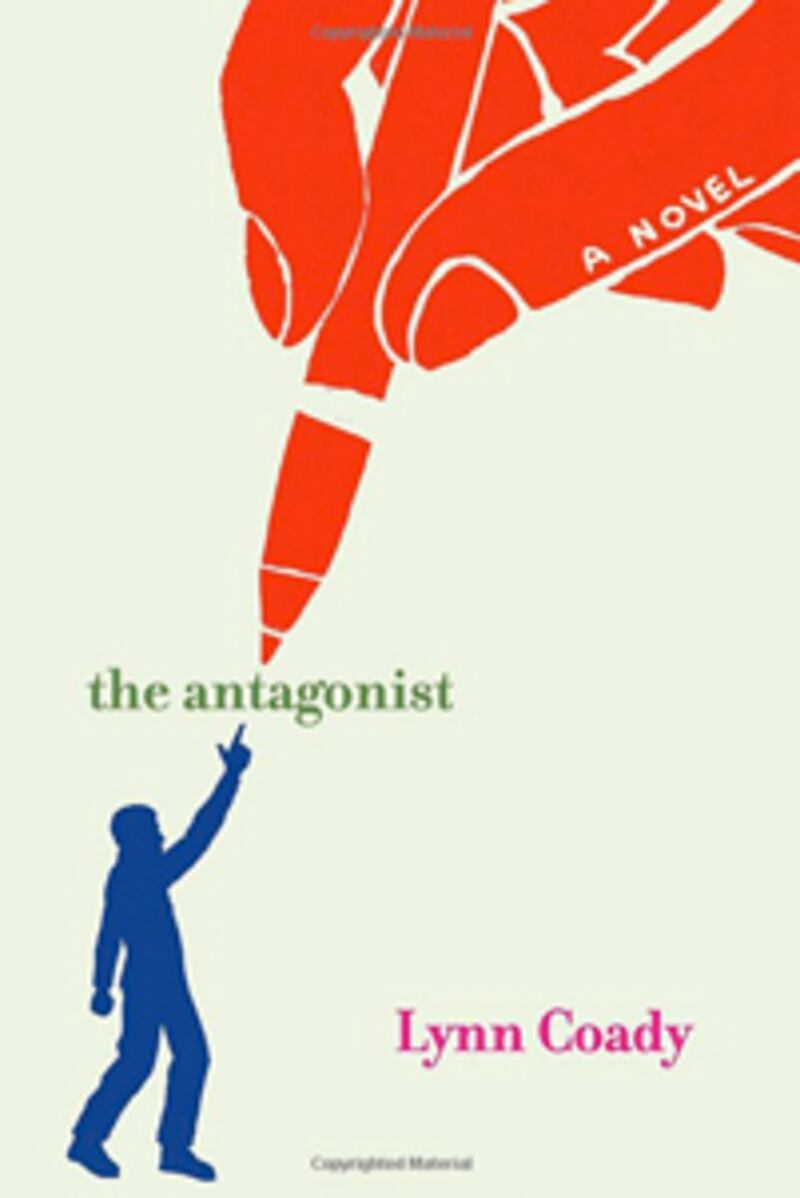
Epistolary novels often function best as exercises in pacing. All is well with the correspondents in the beginning, before catastrophes begin to loom in small hints that they drop to each other, the danger revealing itself to the reader long before the characters. Not so in The Antagonist, a stunning new novel from Canadian Lynn Coady. The book opens with a drunken, vengeful email from a former hockey goon named Rank to his estranged friend from college, Adam, who has recently published a novel that poached details from Rank’s life, which he takes as a grave violation. His tone drips with the kind of venom that can only be produced when old offenses are allowed to ferment for decades, and things get worse from there. As he fires off email after email, he pleads the case for the dignity of his story to himself as much as to Adam. Was his destiny genetically preordained? (He has a massive frame.) Or forced on him by the double whammy of tyrannical father and angelic, but deceased, mother? Coady’s writing is witty and sensitive; as she spins out the stream of Rank’s missive, she follows him skillfully along on curlicues of thought and self-hating recursion. With a voice like Dostoyevsky’s Notes From the Underground in hockey pads, this a fantastic book that shouldn’t be missed.
Calling Dr. Laura By Nicole J. Georges A bracing debut from a promising graphic novelist that deals with abuse, forgiveness, and family secrets.
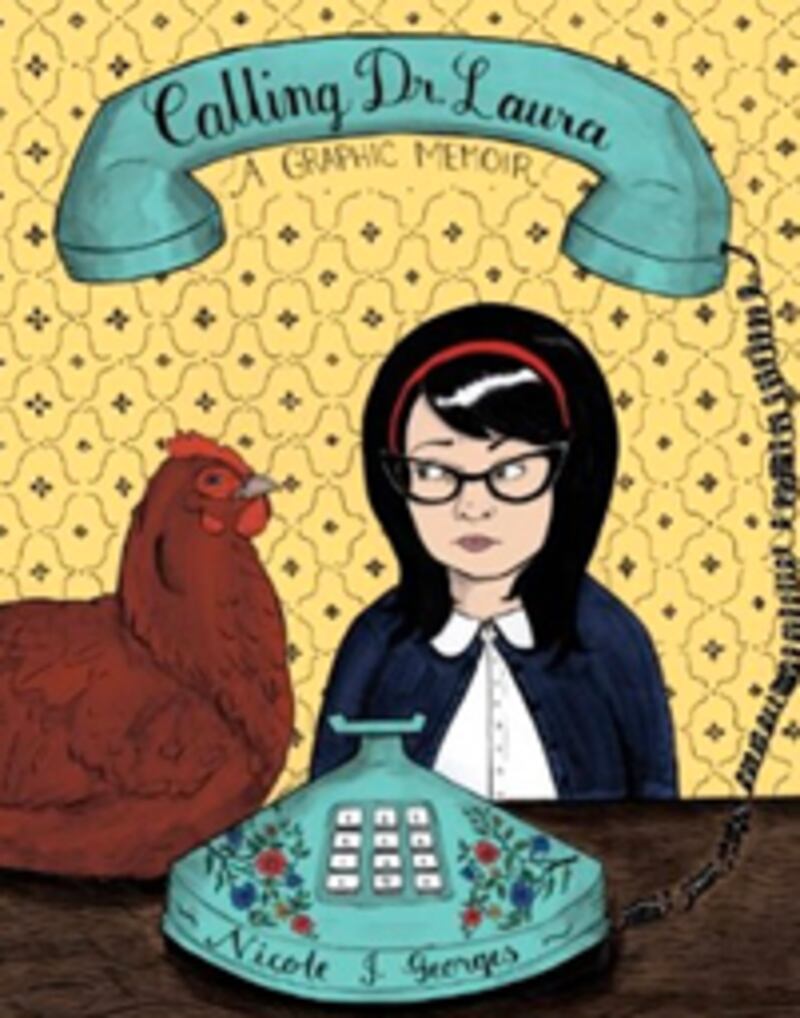
Calling Dr. Laura, a “graphic memoir” marking the debut of Nicole J. Georges, is reminiscent of Alison Bechdel’s Fun Home in its honest self-analysis, but displays a damaged kind of humor all its own. The story bounces back and forth between the female narrator’s own misadventures in love (with women), and those of her mother’s years before (with men), seen from the eyes of the narrator in her childhood. As she finds herself more and more adrift in her life, she revisits episodes of dysfunction to find the root cause of her trouble so that she may escape from them as well. The most sundering of these episodes, and the one that drives the narrative of her adult life, is her discovery that her mother had been lying for years about the death of her father. In her quest for the truth, her mother’s lies show themselves to be even more monstrous. Georges might have a blindness that is so often frustratingly exhibited in the choices of the abused, and it appears she might be incapable of doing what she knows needs to be done. This kind of familial strife is sometimes the stuff of over-drama, but the reader is made to care so much for the narrator that they will be borne along effortlessly. Be prepared to read it in one sitting.
Alone on the Ice By David Roberts A riveting account of Australian Douglas Mawson’s exploration of Antarctica and his indomitable will to survive.
Surely the first name that will come to mind when discussing doomed expeditions during the “Heroic Age of Antarctic Exploration” is Ernest Shackleton, but in Alone on the Ice, historian David Roberts recounts the overlooked story of Australian explorer Douglas Mawson and his 1913 scientific mission to Antarctica. It was an odyssey of human trial and triumph every bit as incredible as that of Shackleton’s. The story is as much horror as adventure, with Mawson’s companions one by one falling away, including the sled dogs (which turn into rations), until he alone is left to battle the elements and the despair of his own soul. Roberts, drawing skillfully on the journals of the explorers, does an excellent job of placing the reader inside the head of the men and showing what towering resolve it must have taken to push onward, especially during the incredible climax: Mawson, his friends dead and his body on the brink of defeat, dangles on his harness line in the air of a yawning crevasse, 14 feet below the surface. Here, twisting on the line, he is brought to the absolute brink of his own mortality. With this riveting account, Roberts has done a service to the histories of exploration and human resilience.
Granta 122 By John Freeman (editor) A collection of fiction from proven masters and exciting newcomers.

A literary magazine achieves its most effective expression when the stories within are curated rather than simply collected. In Granta 122, the theme is treachery; not only the way that events in the world can conspire against us but also how easy it is for us to betray ourselves. Karen Russell (Swamplandia!) contributes “The New Veterans,” a story of a massage therapist who, while working with an Iraq War veteran covered in tattoos depicting the death of a squad mate, discovers that her ability to heal may be more profound than even she knew. Ben Marcus’s (The Flame Alphabet) story “The Loyalty Protocol” echoes both Don Delillo and George Saunders: while a town runs fascistic evacuation drills in expectation of some kind of apocalypse reminiscent of the Airborne Toxic Event of White Noise, a man wonders what exactly he has to evacuate from, as the lights go off around him. And a dazzling debut entitled “Safety Catch” from newcomer Lauren Wilkinson sweeps over years and continents, following a young woman who dreams of entering the shadow world of espionage only to find that, once initiated, she may never be able to leave. These stories and others, stitched together between well-chosen art and a brilliant and heartbreaking photo essay by Darcy Padilla, offer a package that’s as aesthetically pleasing as intellectually exciting.
Jujitsu Rabbi and the Godless Blonde By Rebecca Dana A journalist’s glamorous life hits a snag, setting off a trying year in with a rabbinical roommate.
If you move to New York with any kind of preconceived notions of what your new life will consist of, be prepared to bid them farewell as soon as you arrive. That is one of the lessons of Jujitsu Rabbi and the Godless Blonde, a new memoir from journalist Rebecca Dana (Editor’s note: Rebecca Dana is a former editor and writer at Newsweek and The Daily Beast). Actually, she was able to live one of the archetypal New York Dreams for a fair while, after getting off the bus from Pittsburgh: a fulfilling writing job, a nice apartment (an especial treasure in New York), and a stable relationship. But it wouldn’t be a good memoir if her life didn’t run off the rails at some point, and it wasn’t long before she found herself sharing a Crown Heights apartment with an increasingly agnostic rabbi who demands that she put him in a headlock so he can practice his jujitsu on her. Dana is able to write hilariously about her temporary ignominy and the vicissitudes of her job as a fashion journalist because through it all she maintains an acute sensitivity for the absurd. About the runway: “If God to you is youth and beauty, well—here He is: … sixteen-year-old girls in stilettos and fetal lamb fur (or combat boots and silk chiffon, or a large feather headpiece and flesh-toned underwear, or absolutely anything at all), floating down a white strip toward a wall of flashing bulbs.” This darker sensibility keeps the book, to its great credit, from veering toward The Devil Wears Prada territory. And there are larger issues, such as which kinds of lives are worth pursuing, packed in along with the ground-level concerns of getting along with a crazy roommate.