
For the first time since the war in Georgia in 2008, a top Georgian official has spoken to the enemy: Russia. Georgian Prime Minister Bidzina Ivanishvili approached Russian Prime Minister Dmitry Medvedev at a reception during the economic forum in Davos on Thursday. They spoke for a few minutes, though what about was not revealed. Experts immediately speculated that Georgia was on the way to joining the Russian camp. “No way,” Ivanishvili said later, “I will always stay in Georgia’s camp.”
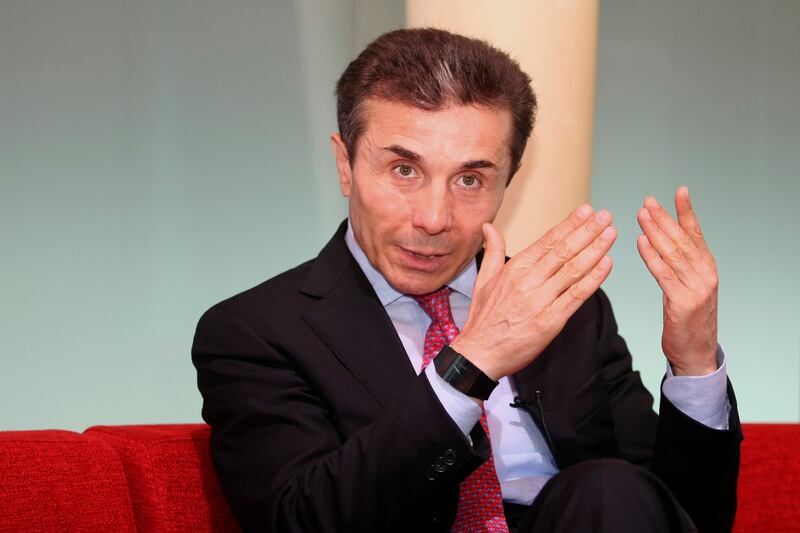
For a long time, it looked like Ivanishvili, whose fortune of more than $6 billion is larger than his country’s budget, was on nobody’s side but his own. In his extravagant glass fortress of a house, Georgia’s richest and most influential man talked to The Daily Beast recently about his priority to “untangle the most complicated political knots left by the previous power.” The new Georgian leader is famous for being a recluse and making unpredictable statements and strange decisions; he gave out cars for free to men from his home village and has doled out more than $100 million in annual charitable contributions for a decade, as a one-man welfare state. All his life, Ivanishvili admitted, he “deeply disliked politics.” It was his wife and his oldest son who convinced him to stay in Georgia when he was about to move to France, a year ago. Shortly after that, he announced that he would lead an opposition party, called Georgian Dream. Today, 80 percent of Georgians say they like the billionaire and 55 percent of the population voted for his party, just as Georgia shifted to a parliamentary system where the prime minister will govern. Suddenly he was Georgia’s leader.
“I did not leave Georgia only because I could not allow one man, who did not love it, to run this country,” Ivanishvili said of President Mikheil Saakashvili, whom he disparages openly as “a talented liar” for spoiling relations with Russia, once the biggest importer of Georgian goods. Ivanishvili’s stated strategic priorities remain joining the North Atlantic Treaty Organization and European Union—both mostly theoretical prospects today—as well as making peace with Russia.
Ivanishvili begins his days with yoga at 5 a.m., which is extraordinarily early for late-sleeping Georgians. Similar to Russia’s Prime Minister Medvedev (who recently promoted strict anti-smoking legislation), Ivanishvili is a fan of a healthy, tobacco- and drug-free life, he says. The billionaire runs the country from his glass palace designed by Japanese architect Shin Takamatsu; it’s decorated with more than $1 billion worth of art that includes paintings by Lucian Freud and Roy Lichtenstein. The private complex is located in the heart of Tbilisi's botanical garden, where the sporty prime minister likes to take long walks. “Though I can see how it annoys and scares Saakashvili and his friends, I will constantly make steps to improve our relations with Russia,” Ivanishvili promised. “Restoration of friendship with Russia, our biggest neighbor, is necessary for our peace and economy.”
Georgia’s top two politicians are at odds these days. The winners from Georgian Dream blame the defeated president (who will remain in office until next fall) and his closest circle for stealing millions of state dollars and for locking hundreds of political opponents in prisons. Thousands of protesters come out every day to Saakashvili’s residence and city squares to demand the president’s resignation. In the meantime, Saakashvili addressed the Parliamentary Assembly of the Council of Europe to accuse Ivanishvili’s government of “selective justice” and efforts to “silence political opposition.”
Last October, Ivanishvili and his party won in fair and transparent democratic elections. But to succeed, the new government has to solve the country’s looming challenge of unemployment, which in many regions reaches a staggering 70 percent. “The economic situation in many rural areas is acute, with many villages half-empty, and many locals engaged mostly in subsistence or small-scale farming,” said Lawrence Sheets of the International Crisis Group.
Even Ivanishvili’s home village Chorvila, where the billionaire renovated every house and for years supported the sick and large families, looks sad these days. A few pedestrians gathered outside a small bakery earlier this week, looking drunk and lost. Most men have nothing else to do besides walking their cows along dirty streets. “Only 5 percent of our people have jobs at Ivanishvili’s private property or at construction,” the village administrator, Vebkhe Ivanishvili, a distant relative, explained. At least lucky Chorvila’s inhabitants received bonuses from medical services at the hospital built by Ivanishvili. The prime minister pays $3,000 for every wedding and $2,000 for funerals in the village. Like his charity throughout Georgia, the contributions bought loyalty but not prosperity. One of his neighbors, Niko Mchetkishvili, 58, said the last job he had was at a collective farm back 1990s. He expressed his great hopes that Russia and Georgia would make peace: “Every Georgian family misses relatives in Russia and every Georgian soul hopes Ivanishvili will solve the problem with separatist Ossetia and Abkhazia republics.”
The new prime minister expressed a strong interest in reviving agriculture, and the government had created three investment funds. “We’ll provide help with 75 percent of investments to anybody who has a plan to come and develop our economy by investing 25 percent,” Ivanishvili told The Daily Beast. The new state’s rural development fund, worth about $606 million, is promising to give low-interest loans to farmers and supposedly turn Georgia into an organic paradise full of tasty vegetables and fruit.
Georgian Dream supporters say that if Ivanishvili has managed to make billions of dollars in Russian business in the 1990s, and sell his businesses for almost $1 billion last year (a deal Russia’s leaders almost certainly had to approve), he should manage to improve life and reintegrate broken pieces of Georgia. Grumpy skeptics say that without a deal with Russian president Vladimir Putin, Ivanishvili will not achieve any progress in his agenda and the centerpiece of his economic plan—reviving agriculture—will lack a market.
In the last four years since the war in 2008, Russian federal security forces built massive bases on former Georgian territories. Abkhazia, recognized as an independent state by Russia and several more countries, showed no signs of welcoming Georgia back, but that did not seem to be a problem for Ivanishvili: last week he pledged to seek the restoration of the Abkhazia railroad that would transport Georgians and their produce to Moscow, through the separatist region. He admitted that many asked him how he could possibly think of making Georgia a NATO country and stay friendly with the Kremlin: “I analyze and I understand that in Russia they do not really like NATO and that they are trying to strengthen their positions. But I hope we’ll manage to explain our interests to Russia,” Ivanishvili said, before his first meeting with the Kremlin officials in Davos.