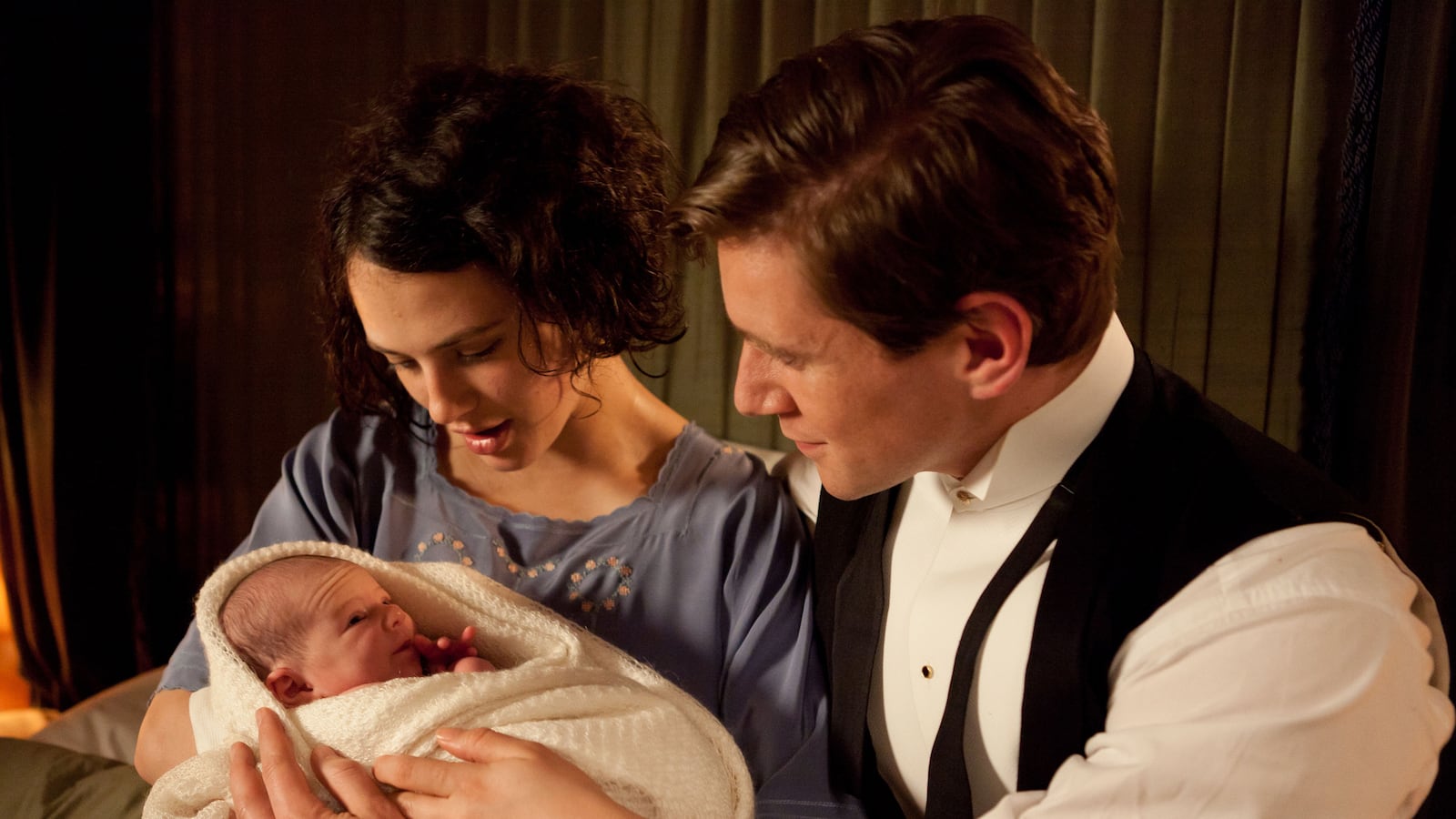
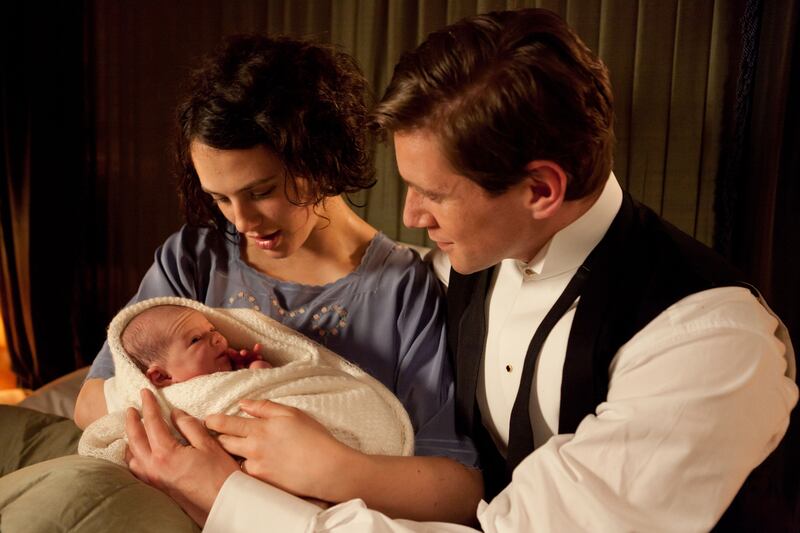
American fans of PBS’s Downton Abbey might be in a state of shock after last night’s episode, in which beloved Lady Sybil Crawley gave birth and then died from “eclampsia.” While some of the hit show’s millions of viewers may dismiss the dramatic plot twist as unrealistic or express relief that women today no longer die so tragically in childbirth, those viewers would be mistaken on both counts.
Eclampsia, first described by Hippocrates 2,400 years ago, is the medical name for seizures during pregnancy. Preeclampsia, a more common related disorder, is characterized by a large rise in blood pressure and failing kidneys. Every year in the U.S., up to 8 percent, or 300,000, of pregnant or postpartum women develop preeclampsia, eclampsia, or a related condition such as HELLP syndrome. Roughly 300 women die, and another 75,000 women experience “near misses”—severe complications and injury such as organ failure, massive blood loss, permanent disability, and premature birth or death of their babies. Usually, the disease resolves with the birth of the baby and placenta. But, it can occur postpartum—indeed, most maternal deaths occur after delivery.
For whatever reason, Downton Abbey portrayed an unrealistic lack of medical response during Lady Sybil’s eclamptic seizures. Both of her doctors stood by, presumably powerless, while her family cried desperately for help. Even in the early 1900s, some treatment for seizures would have been utilized. Magnesium sulfate has been around since 1906 and has since been proven to be a superior medication. It is cheap, cost-effective, and relatively easy to administer.
Research shows that more than half the women who experience preeclampsia do not know anything about these conditions. The Preeclampsia Foundation’s motto is “Know the symptoms; trust yourself,” because that can literally save a life. Warning signs include unrelenting headaches, swelling in the hands or face, changes in vision, upper abdominal pain, and extreme breathlessness.
Lady Sybil and her family doctor both voiced concerns, because she had a headache and her thinking was “muddled.” Foggy thinking is evidence of swelling or poor circulation in the brain. She just did not look or feel quite right. The London specialist dismissed these warning signs, but her family doctor, who had known his patient since childhood, recognized that she was unwell, referring to her as “toxemic,” a term no longer used today.
Today’s women are routinely monitored while they are pregnant to check for signs of preeclampsia. Doctors or midwives measure blood pressure (sudden rises are the most defining characteristic), check weight gain (rapid gains can be a sign of excessive fluid retention), examine the urine (protein in the urine is a sign of kidney problems), and check the growth of the baby (low growth rates may indicate a problem). The tests provide opportunities to educate pregnant women about health concerns and what’s “normal” without causing them to become overly alarmed. Studies have shown that women feel less anxiety when armed with accurate information they can use.
In Downton Abbey, the arrogant London physician dismissed Lady Sybil’s and her family’s concerns and overruled her family doctor’s diagnosis. Sadly, too many providers today still dismiss women’s concerns. Women in late pregnancy who complain about swelling, extreme weight gain, and feeling bad are often labeled as overreacting. Yet, when women are taken seriously and given information about their health, effective health-care responses produce better outcomes. A patient-provider partnership respects the important role and information that all parties bring to the table during prenatal care, labor, and delivery and postpartum.
In fact, the American College of Obstetricians and Gynecologists will soon release revised management guidelines for preeclampsia, including the need for patient education. Groups in California and New York are developing preeclampsia “tool kits” to help clinicians implement best practices and improve care.
Downton Abbey’s dowager countess learns of the death of her granddaughter and attempts to comfort her son, Lord Grantham: “When tragedy strikes, we try to find somebody to blame. And in the absence of a suitable candidate, we usually blame ourselves. You are not to blame. Nobody is to blame. Our darling Sybil has died during childbirth, like too many women before her. And all we can do now is cherish her memory and her child.”
We agree that “blaming’” is not the right response, but neither is a defeatist one (“All we can do ...”). Then, as now, an attitude of complacency around maternal and perinatal mortality gets in the way of action.
We still don’t know what causes preeclampsia, but we do have treatments to prevent seizures and control hypertension. Even so, far too many mothers and their babies fall through the cracks, becoming seriously ill or even dying. Traumatic childbirth experiences leave lasting emotional scars on mothers, family members and the clinicians who have cared for them. Diligence—educating women and improving health-care response to preeclampsia—is not expensive, while the worth of a mother’s or baby’s life is incalculable.