
Were the trucks that Israel targeted at the Lebanese border overnight transporting chemical weapons from Syria to its ally, the Islamic Hezbollah group?
Not necessarily.

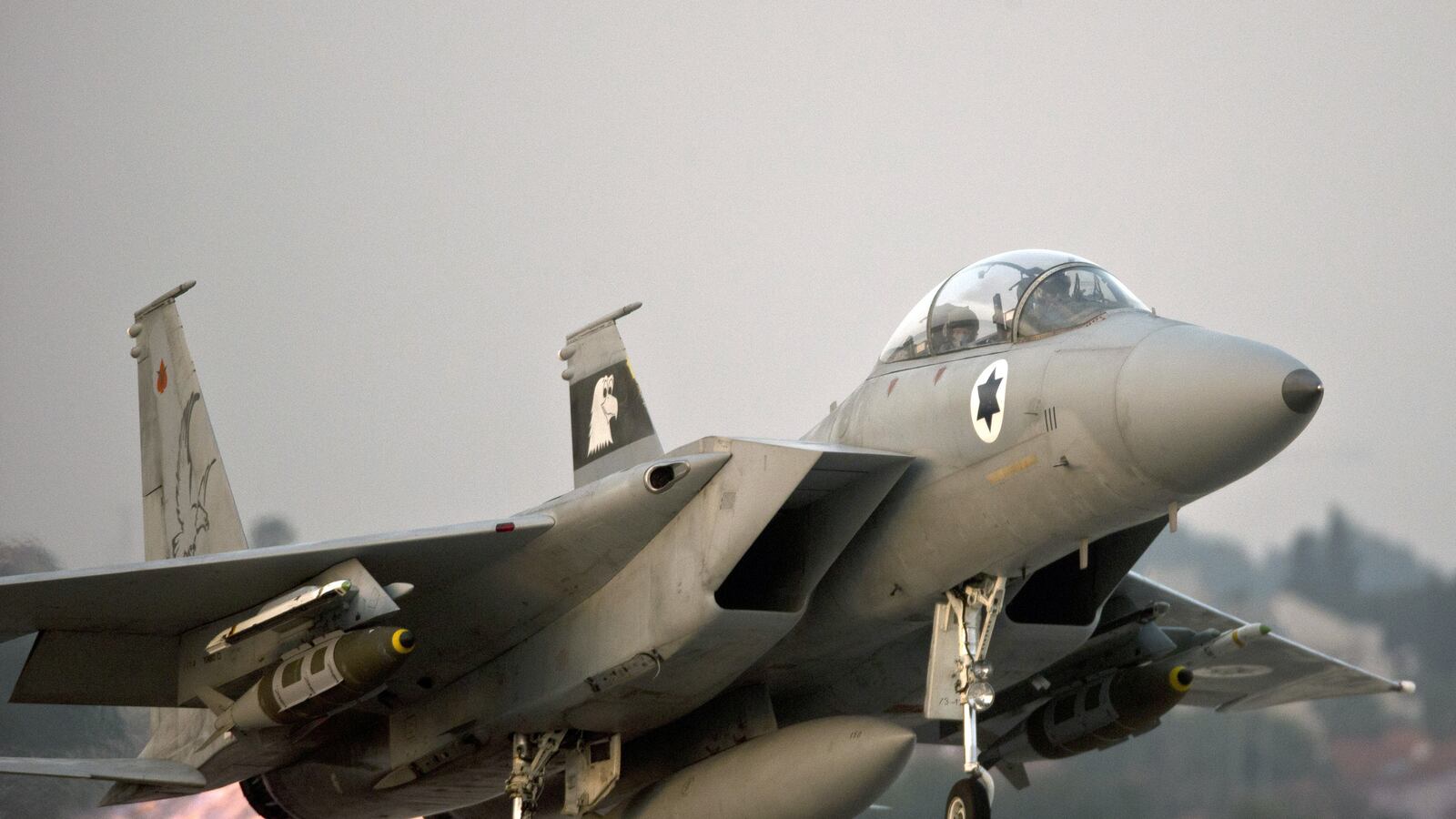
Israeli officials have kept quiet since reports of the strike surfaced earlier today, neither confirming nor denying them. Reuters and other news agencies, citing Western diplomats and regional security sources, described a heavy presence of Israeli jets over Lebanon for much of the night. At least 12 Israeli planes took part in the attack, according to the reports.
Israel is certainly worried about leakage from Syria’s vast arsenal of chemical and biological weapons, as the civil war there rages on and the regime continues to disintegrate. A top Israeli official said earlier in the day that the Air Force would respond at the first sign the nonconventional weapons were being moved. “Any development which is a development in a negative direction would be something that needs stopping and prevention,” Israel’s vice premier, Silvan Shalom, told Israel Radio.
But experts and former officials said Israel was also tracking the movement of medium-range missiles and antiaircraft batteries that Russia supplied to Syria over the years and might spring to action even if chemical weapons were not involved.
“The Syrians never dared to send advanced antiaircraft missiles or very advanced Scud missiles to Hezbollah, because they knew it would be a red line for Israel,” said Giora Eiland, who headed Israel’s National Security Council from 2004 to 2006. “So if one of these kinds of weapons was making its way to Lebanon, that could well have triggered the attack.”
He mentioned specifically SA-17s—small and highly mobile antiaircraft batteries that could threaten Israeli drones and other aircraft.
Eiland, now a senior research fellow at the Institute for National Security Studies in Tel Aviv, said Israel pressed Russia repeatedly to withhold advanced weapons from Syria because of the fear that they would end up in the hands of Hezbollah—Israel’s sworn enemy. Russia always dismissed the concerns, assuring Israel that Syria would never let such sophisticated hardware leave its borders.
Syria has long supplied Hezbollah with other weapons, including missiles and antitank rockets.
Eiland, who emphasized that he had no specific knowledge about the nature of the strike, would not rule out the possibility that the shipment targeted overnight included chemical or biological agents.
Another former official, Itamar Rabinovich, said it wasn’t clear yet if embattled Syrian President Bashar al-Assad intended for his country’s nonconventional arsenal to end up with Hezbollah if his regime collapses. But he said Iran, which has significant influence over Assad, might be pushing in that direction. Like Syria, Iran is also a patron of Hezbollah.
“Iran sees that Hezbollah stands to lose its Syrian sponsor. And since it’s important to Iran that Hezbollah be the dominant party in Lebanon, it’s possible the Iranians are the ones moving these weapons systems to Lebanon,” said Rabinovich, who served in the 1990s as Israel’s chief negotiator with Syria.
Iran is believed to have hundreds of soldiers and military advisers in Syria helping prop up Assad’s regime. The Syrian leader has been fighting a war against a coalition of rebels for almost two years, with a death toll approaching 70,000.
Both Eiland and Rabinovich said Hezbollah, which fought a monthlong war against Israel in 2006, was unlikely to retaliate for last night’s assault. Though the group has thousands of missiles that could reach Israel’s main cities, they said Hezbollah would not want to risk a broad confrontation with the Jewish state.
Rabinovich also said Iran was not interested in seeing an escalation between Israel and Hezbollah at the moment. “An escalation could provide a very convenient environment for Israel to attack Iran as well,” he said, referring to threats by Prime Minister Benjamin Netanyahu to strike at Iran’s nuclear installations.
At his weekly cabinet meeting Monday, Netanyahu said both Syria and Iran posed a threat to Israel. “It is necessary to look at our surroundings, both at what is happening with Iran and its proxies and what is happening in other arenas—lethal weaponry in Syria, which is steadily breaking up,” he said.