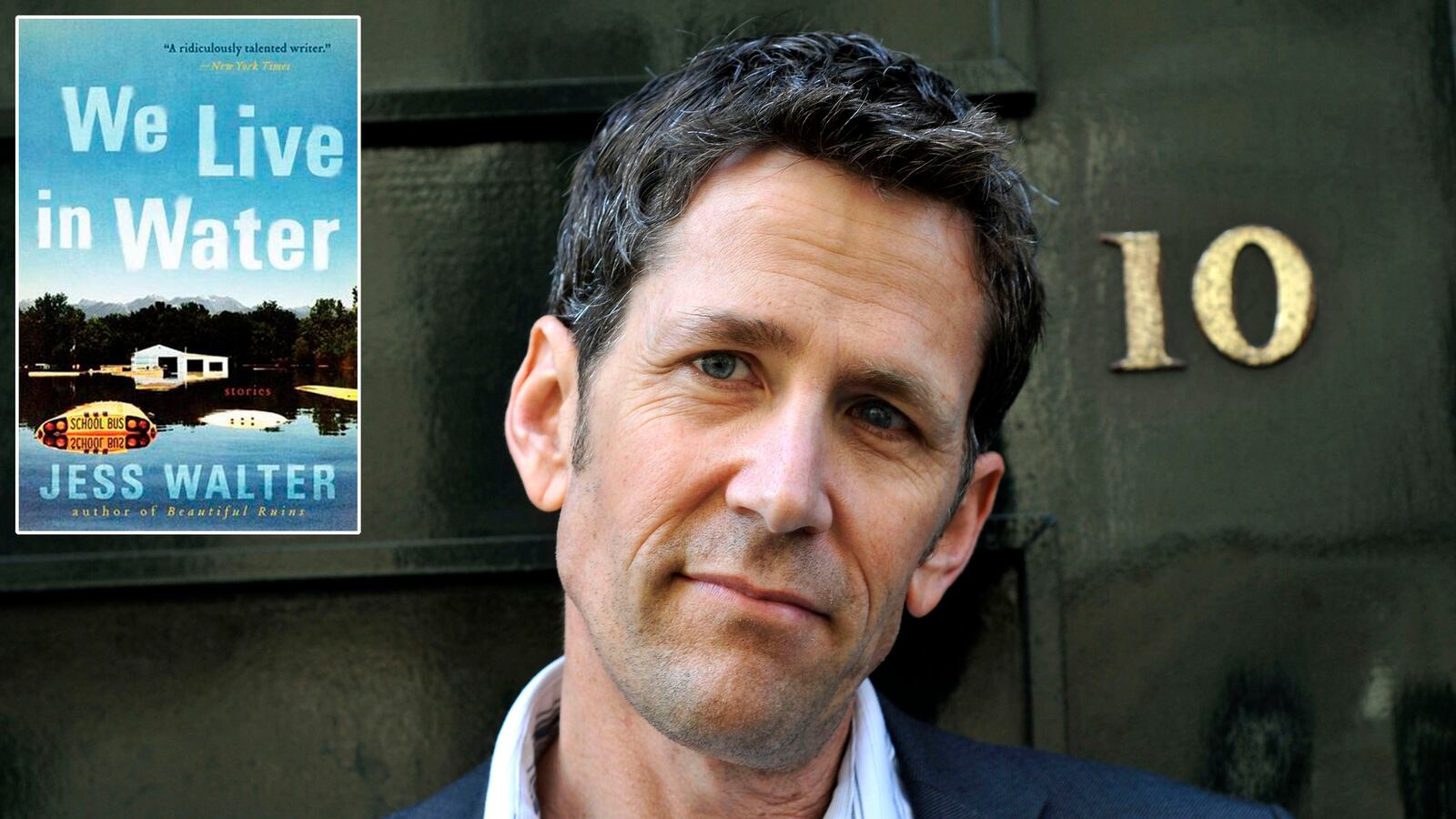
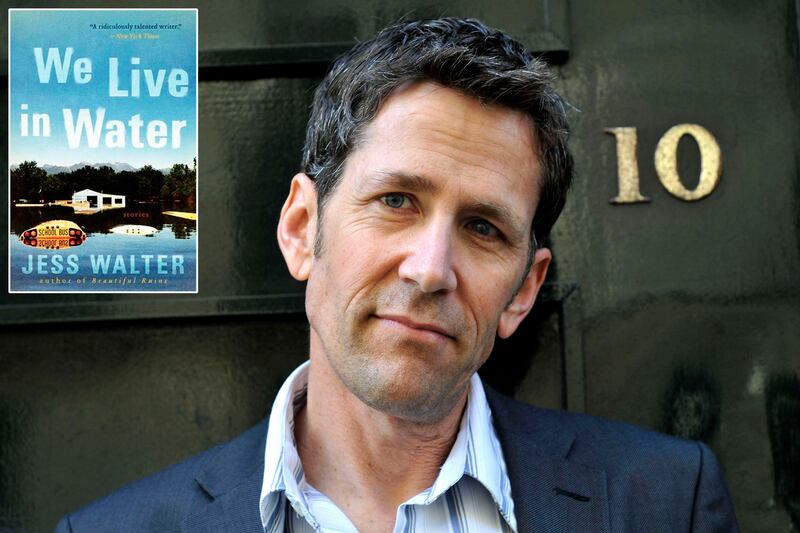
You live in Spokane, Washington. It seems rare and special these days that someone should live in the hometown they grew up in.Hmm. That doesn’t sound entirely like a compliment. (It’s so rare to meet a writer who still lives in his parents’ basement.) The four-second biography: I grew up in a blue collar family, screwed around in school, became a dad at 19, went to work for a newspaper to support my daughter and, by the time I could afford to leave Spokane, had more kids and had realized two things: 1) this might be the most underrated city in America; and 2) it’s where I’m from.
Describe your morning routine.I wake at 5 or 5:30 most mornings, make myself a latte and grab a cookie, write until 10 or 11, go have my favorite meal, “second breakfast,” or grab coffee with friends, or play basketball. Then, around noon, I begin apologizing via email for the manuscripts I can’t get to.
You write fiction, short fiction, journalism, and non-fiction. Does your writing routine differ depending on the genre, and does one come to you more easily than others?I don’t know that any writing comes easily, but I certainly get more immersed in novels. I don’t think the routine is any different, but fiction tends to pull me further away from my life. When I’m deep in a novel, I don’t pay bills and I walk around in one shoe, drinking two-day old coffee, and calling my kids by the wrong names.
For those unfamiliar with your work, which of your books would you recommend a reader begin with, and why?Fairly sure I can’t answer that, but my wife tells people to start with Citizen Vince.
You’ve won many literary awards (Edgar Allan Poe Award, Esquire Best Novel, etc). What does winning these awards do to one’s career?The night I found out I was a National Book Award finalist I had too much to drink, and slept in my car near the Oakland Airport. The next morning I went to City Lights in San Francisco, where I watched Lawrence Ferlinghetti unveil the finalists, including The Zero. I did not smell very good. It was all very cool.
Please recommend three books to your readers.Fool’s Crow, James Welch; Erasure, Percival Everett, The White Album, Joan Didion.
Do you have a writer friend who helps and inspires you?I have so many generous friends I could never list them all. But my friend Dan Butterworth, a poet, fiction writer and English professor, has been like a personal Masters instructor/reader/drinking buddy for 20 years. I hiked the Cinque Terre with Dan, and have gotten dozens of early reads from him. Now I’m in a rowdy Shakespeare Men’s Group with Dan and a handful of other writers and it’s incredible, having such a brilliant scholar and friend to explain the world to you and then call you a cab.
Describe your routine when conceiving of a book and its plot, before the writing begins. Do you like to map out your books ahead of time, or just let it flow?Honestly, it’s never happened the same way twice. I tend to plan as I go, the sentences revealing to me the characters and the events of the story. Then I go back in and try to figure out the pattern, the shape, and make it all fit and make sense; I don’t really separate the writing from the planning, as I’m doing it. Sentences lead to other sentences, characters grow, events happen. My only trick is to switch to some other project when one gets stuck. And they always get stuck. Without sounding overly sentimental about the process, I’d say trying to describe how you tend to conceive of a book is like describing how you tend to fall in love.
What has to happen on page one, and in chapter one, to make for a successful book that urges you to read on?Of course, nothing has to happen. Anything can happen. The sound is what I’m aware of in the beginning—announcing to myself the voice of this book, like the opening riff of a song. I keep tinkering and tinkering until it sounds right. That’s all that has to happen: you just have to love the way it sounds.
Is there anything distinctive or unusual about your work space? Besides the obvious, what do you keep on your desk? What is the view from your favorite work space?My desk is an antique with bookshelves built into the side. I’ve turned the drawer over to hold a keyboard. We live in a 100-year-old house, and I work in an apartment above the carriage house. My view is pretty great—Mt. Spokane and the Spokane River canyon beyond my house, which is like a wildlife freeway—deer and coyotes and turkeys and eagles …
What is something you always carry with you?I have a picture of the Albergo Pasquale, a little hotel my wife and I stayed in the first time we went to the Cinque Terre in Italy.
If you could bring back to life one deceased person, who would it be and why?Al Gore. I’d make him uninvent the Internet. (What? He’s still alive. Oh.)
What is your favorite snack?Movie popcorn.
What is the story behind the publication of your first book?I was a newspaper reporter who covered the standoff at Ruby Ridge, and spent a couple of years researching it. I found an agent, but after eight months of trying, he couldn’t find me a publisher, and he quit the agent business. I kept sending the manuscript out myself, but had no luck. Then I was quoted in a story in The New York Times about survivalists, and a publisher contacted me to see if I wanted to write a book about survivalists. No, I said, but I have a book about this shootout in North Idaho. I didn’t have an agent, so I handled my own contract. The negotiations went something like this: Publisher: “We’ll give you thirty thousand.” Jess: “Seriously? Shyeah!”
Was there a specific moment when you felt you had “made it” as an author?The best time, for me, is still when the finished book arrives by mail. I walk around the house putting it on various shelves (Hmm, how’s it look next One Flew Over the Cuckoo’s Nest …) until finally I sit down on the couch and stare at it, and think how unlikely it is that some jackass from Spokane, Washington has his name on a book. There are other great moments, talking to readers and seeing nice reviews, but holding a book the first time is the one unfailingly perfect moment.
Tell us a funny story related to a book tour or book event.I once went to a bookstore in Southern California for an event, and the owner of the store was apologetic: “We’ve had terrible luck with events. The rain has been killing us. I forgot to put it in the newsletter.” Oh crap, I thought, I’m going to get skunked: my first ever reading with no people. But I looked over and there, in the rows of folding chairs, were two men. Thank God. She introduced me to the two smiling men, and I started talking, “This is my second novel. It’s ostensibly a crime novel, although that structure is almost a Trojan Horse for the coming-of-age story that … you guys don’t speak English, do you?” They just smiled at me. It turned out they did not, but were part of an English-as-a-Second-Language class that came to the bookstore every week. They saw two chairs, sat in them, and listened politely while some man got up and started talking to them. What could I do but finish the reading? I’d love to tell you they bought books, but they didn’t.
What advice would you give to an aspiring author?Be patient. Be bold. Be humble. Be confident. Don’t give in to the speed and surface banality of the culture. Don’t give in to jealousy, commerce, or fear. Do charity work, or coach kids, or be a Big Brother or Sister, or something. Whatever it takes to get out of your own head and avoid authorial narcissism. And whatever you do, don’t ever take advice from authors.
What would you like carved onto your tombstone?“Jess Walter – July 20, 1965 – May 4, 2519”
What is your next project?I’m tinkering away on a couple of novels and some short stories, just throwing paint on canvases right now, waiting to see what emerges.