A lot of articles will be written this week about our experience in the Iraq War from primarily a U.S.-centric point of view. My goal is different: to help convey the stories of ordinary Iraqis and how our voluntary war affected them, and still does, even as Washington and the American public have largely moved on. These vignettes, which will run across consecutive days this week, include: The Teamster (Bassam), The English Teacher (Abbas), The Highway Patrolman (Waleed), and The Last Grand Mufti (Hamza).
Let's hope one day Iraqis will write their own books about the Iraq War. When they do, their stories in their words should be required reading for all.
The Secretary of Defense
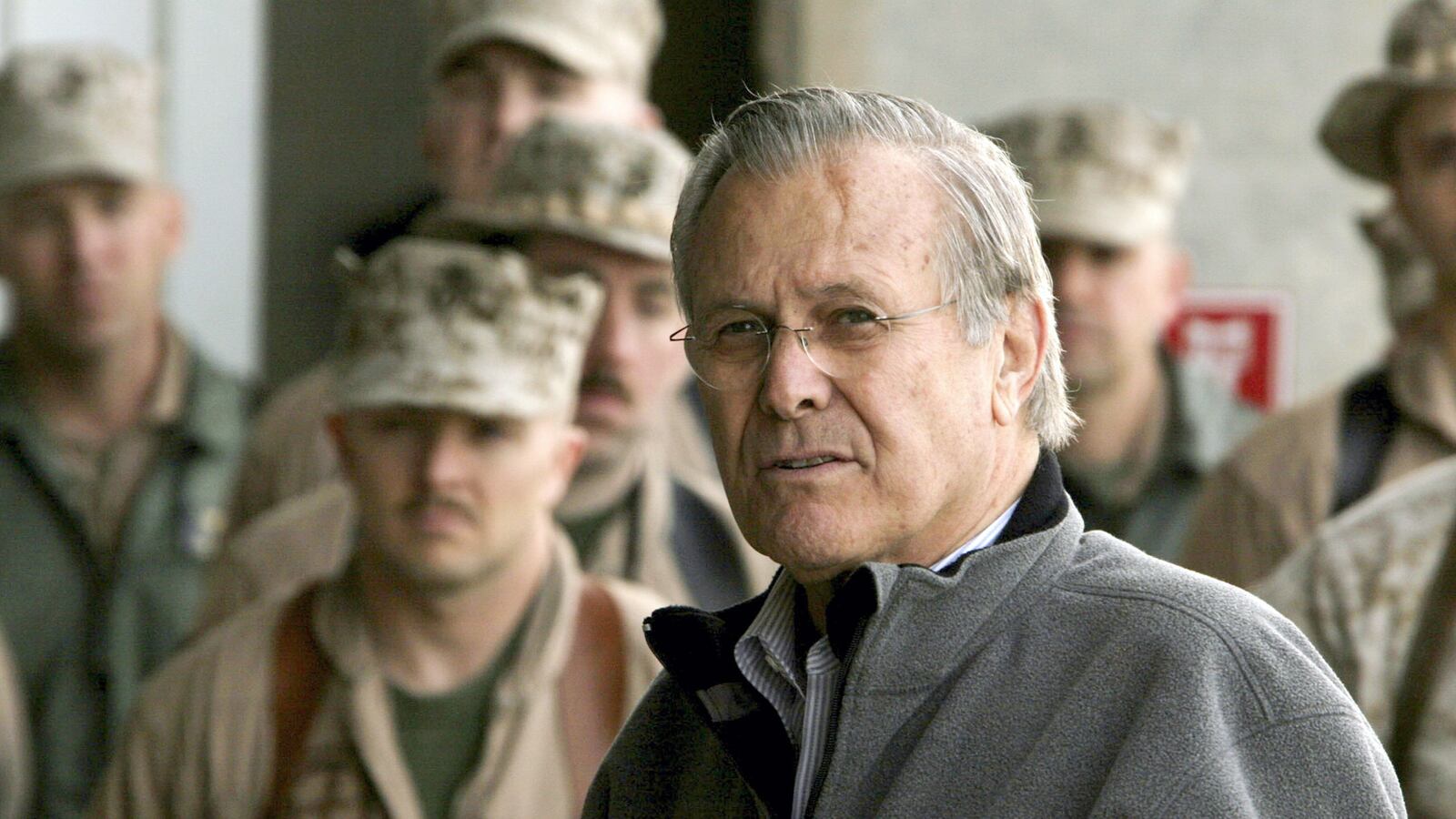
Donald Rumsfeld glared the whole time.
Years later, I still wonder whether I should have said more. The squinty-eyed Illinois native—and former Princeton wrestler renowned for his quick “fireman’s carry” takedowns—stood before me in a muddy corner of Camp Fallujah under wet, leaden skies in December 2004. His frontline visit happened on short notice, an implied though unacknowledged mea culpa of sorts. He brought a lot of reporters with him. Weeks earlier, with the Iraq war still young—like most who would fight and die in it—the media revealed that the defense chief’s killed-in-action (KIA) condolence letters were auto-penned. The final death tally would reach 4,487 Americans and well over 100,000 Iraqis.
After the U.S. military’s biggest battle in Fallujah’s deadly warren of streets, Marines based in Hawaii—part of the First Battalion of the Third Marine Regiment, nicknamed “The Lava Dogs”—gathered to meet Rumsfeld in a crowded, makeshift cafeteria on Christmas Eve. The facility and nearby infantry headquarters were decorated with gaudy plastic poinsettias, Saint Nicks cut out of green and red construction paper, and dangling candy canes. It made for a festive photo op—holiday cheer even in war. Rifles used to kill Sunni insurgents only hours before lined the walls outside.
When Rumsfeld walked in, he made his way to a reserved VIP seat. On either side sat two junior Marines. I wondered what questions they might put to Rumsfeld. An Army soldier had pressed him weeks earlier in Kuwait about “hillbilly” armor and having to “dig through local landfills for pieces of scrap metal.” The exchange triggered a characteristically flip reply. Rumsfeld infamously told the soldier, “You go to war with the army you have—not the army you might want or wish to have at a later time. You can have all the armor in the world on a tank and it can be blown up ...”
How reassuring from the Pentagon’s top boss.
After a short speech laced with altogether too many “-isms”—referencing the Iraq war in the same context as America’s role in beating back Nazism and communism (?!)—Rumsfeld walked outside for pictures with Marines. Once freed up, I approached him. We were stretched thin in Anbar province and the administration wanted us to provide extra security for the upcoming election in January 2005. The politicos back home hoped the world would see Iraqis’ ink-stained purple fingers after casting ballots—brave voters in long lines to change the script—and shift attention away from the nonexistent WMD stockpiles.
The White House’s marketing of the war had entered its latest phase.
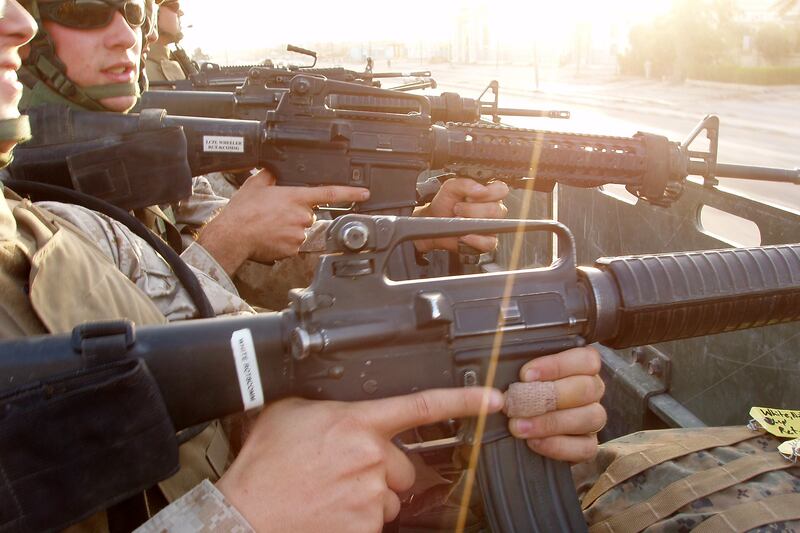
“Who are you?” Rumsfeld grumbled. I told him I was the State Department political adviser working with Marines in Fallujah. I pressed him on our policy to force-feed democracy to angry and well-armed Sunnis, stressing that our already overextended troops would be put at greater risk. He replied that U.S. force levels were at their highest since the invasion. Case closed, at least in his mind. He fell silent having said enough, glaring still, and so I walked away.
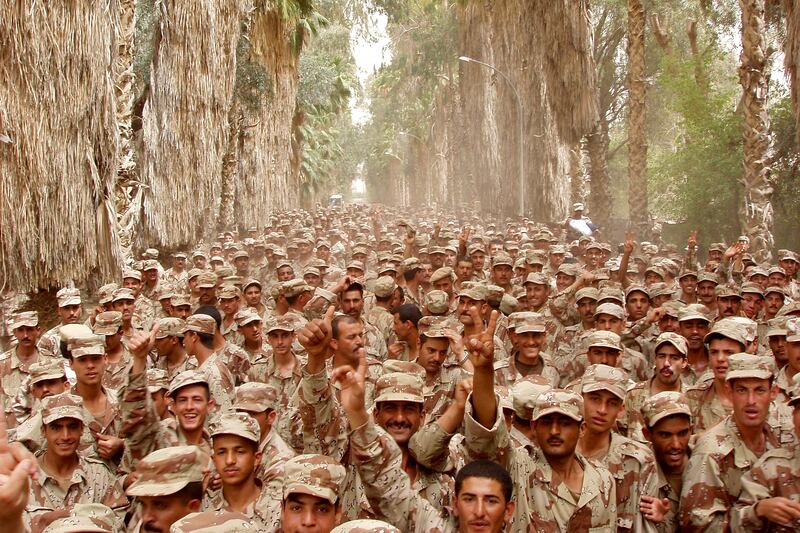
I took a picture of Donald Rumsfeld that gray day. He is surrounded by enlisted Marines, who weeks earlier had cleared the city. Ninety-five would be killed, and more than 500 more wounded. In the foreground, the battalion sergeant major towers over all, including the shrunken-looking Rumsfeld posing for official photographers. What moves me most within the frame, however, is what I noticed only later on, an image inadvertently captured in the lower left side—crutches. A wounded Marine honored, I am sure, to be standing next to the distinguished visitor from Washington.
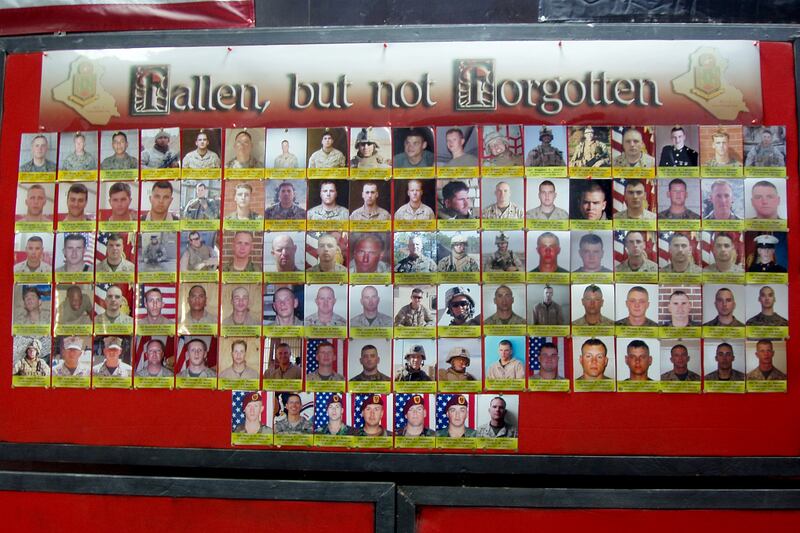
Years later, after many more U.S. troops would fight and die in Fallujah and throughout Iraq, Donald Rumsfeld said he donated the proceeds from his book, titled Known and Unknown: A Memoir, to veterans' causes. Tens of thousands of Iraqi civilians died across that period as well. The publisher advertises an “enhanced” e-book version with links to more than 500 documents. I can only wonder if any of these are condolence letters to the parents and families of the unknown.
***
On the 10th anniversary of the Iraq invasion this week, Rumsfeld tweeted this:
10 yrs ago began the long, difficult work of liberating 25 mil Iraqis. All who played a role in history deserve our respect & appreciation.
His next book is titled Rumsfeld’s Rules: Leadership Lessons in Business, Politics, War and Life. The former Defense secretary promises “a candid take on success, failure, crises, and moving up in business and government.”
Moving up.
Indeed.