How I Got Jon Stewart All Wrong
<p>Taking over for lazily self-confident Craig Kilborn, the <em>Daily Show</em> host declared his humanity and humility from the start—and I hated it. But he was perfect for the era to come.</p>
Comedy Central
Get the Beast Digest newsletter delivered straight to your inbox
By clicking “SIGN UP” you agree to our Terms of Use and Privacy Policy.
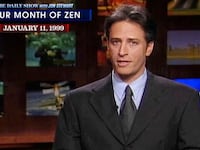
My own contribution to the history of Jon Stewart’s tenure at The Daily Show is small and ignominious: I trashed his first show.
A web publication that no longer exists had assigned me to write about the new guy taking over from the plasticine, frat-boy finger-puller Craig Kilborn. I had enjoyed Kilborn’s version of the show: solid if not deep, primarily an extended satire of shiny local news kabuki. It poked at the conventions of news shows via Kilborn’s own mundane good looks and laconic sarcasm. He was a younger Kent Brockman, not too far removed from the kind of broad in-joking of the SportsCenter anchor he had once been. His lazy self-confidence was part of the setup, underscoring the tuneless Dadaism of television segues—how viewers are led from tragedy to sports to weather by the same content Sherpa, who never breaks character and always knows what to say next.
Stewart didn’t just seem hapless and overwhelmed by contrast, he declared almost crippling self-awareness from the start: “I feel like this is my bar mitzvah,” he told guest Michael J. Fox. Wearing a suit, said Stewart, gave him “a rash like you would not believe.” Fox responded: “The words ‘ill-fitting’ come to mind.”
At the time, I didn’t object to Stewart’s cringe-worthy meta-commentary so much as feel like it ruined the joke: You can’t satirize the forced smoothness of Eye on Omaha (or the CBS Evening News, for that matter) if you keep drawing attention your own rough edges. Kilborn was a news anchor as Ken doll. Stewart was merely human.
What I didn’t anticipate, of course, was how scarce humanity—and humility—in the media would become in the Bush era. Other writers have pointed out that The Daily Show truly came into its own with the Bush administration. In part this is because of the administration’s and Bush’s own tragic absurdity (low-hanging fruit, comedically speaking). But what The Daily Show truly seized on was the misbehavior of the media: its gormless quiescence in the run-up to the Iraq War, political journalists’ complicity in the name of access, and the flapdoodle capriciousness of those entrusted to criticize and explain the financial industry.
After George W. Bush was elected, we didn’t need a faux-folksy charming cutout behind the news desk, we had one in the White House. What we needed from the media were rough edges exposed, bullshit called, gobs smacked.
Indeed, a central irony about Stewart’s tenure at The Daily Show is that his greatest contribution to the national conversation wasn’t in the myriad punny headlines or intricate correspondent exchanges. For all the show’s brilliant writing, Stewart’s most powerful on-camera commentary was the blank, goggle-eyed stare following the latest piece of incredulous newspeak he just highlighted. It was the look that said what we were all thinking: “Can you fucking believe this shit?”
In his first show, Stewart’s discomfort stemmed from a textbook case of imposter syndrome, that sneaking feeling you’ve been put into a position you didn’t prepare for, to do a job you’re not up to.
The show took off not when Stewart became more self-assured—his self-deprecation continues unabated—but after he realized the real imposters were the ones on the alphabet networks who had classier time-slot neighbors than foul-mouthed puppets and Gary Busey exploitation reels.
Other shows, including Kilborn’s version of The Daily Show, have mocked the preposterousness and pomposity of news anchors, and Saturday Night Live ably lines up the targets for whatever weirdness the week’s headlines bring. The Daily Show was different because it wasn’t a sketch, and Stewart wasn’t pretending to be a faultless authority. He was the exasperated straight man to his correspondents, the guy back in the studio asking relatively earnest questions that allowed them to float surrealist punchlines over grimly serious stuff. Stewart took the boxed format of the news anchor and didn’t so much break character as turn his brokenness into his character.
At the end of his first episode, Stewart tried to soothe viewers: “I’m sure many of you are curious. ‘Is my beloved Daily Show going to change?’ Well, it might, subtly,” he lied. More honestly, he assured us, “And I know change can be painful, but from change comes growth.” His closing promise encapsulated the intimacy and lack of smarm that disappointed me so much at first: “I’m a new member of this family, your family,” he said. “And I’ll be here for you every night.”
Damn, I’ll miss him.
See more of our coverage in your search results.

Got a tip? Send it to The Daily Beast here.
Unlock a year of full access to The Daily Beast for $35.
Monthly
$1
First month then $5.99/month
Annual
$35
First year then $59.99/year
Premium
$79
First year then $119.99/year
*Substack access provided by the next business day, using your subscription email. Choosing the Premium plan constitutes your permission to share your subscription email with Substack and your agreement to Substack’s Privacy Policy.
Looks like you already have a subscription!
- Account (completed)
- Payment (completed)
- Confirmation (completed)
You're all set!
Thanks for subscribing.
- 1Account
- 2Payment
- 3Confirmation
Sign in or create an account
Register below to read this article for free or subscribe
to unlock unlimited access to The Daily Beast.
Monthly
$1
First month then $5.99/month
Annual
$35
First year then $59.99/year
Premium
$79
First year then $119.99/year
*Substack access provided by the next business day, using your subscription email. Choosing the Premium plan constitutes your permission to share your subscription email with Substack and your agreement to Substack’s Privacy Policy.
Already have an account? Sign In
Looks like you already have a subscription!
- Account (completed)
- Payment (completed)
- Confirmation (completed)
You're all set!
Thanks for subscribing.
- 1Account
- 2Payment
- 3Confirmation