How the Nazis Took Control of Germany
Hitler was not that popular when he first took office, but the Nazis quickly changed that, for the simple reason that power magnifies the ideas of those who hold it.
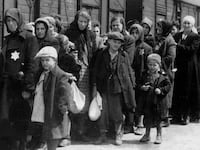
World History Archive / Alamy Stock Photo
The liberation of Auschwitz did not mark the end of the Holocaust—gassings continued until the eve of Hitler’s suicide on April 30, 1945, and thousands more died of the effects of starvation and mistreatment at places like Belsen even weeks after their liberation.
But the date of liberation, Jan. 27, should put us in mind of the beginnings. How did this happen? In particular, how could Germany, by all outward indications a civilized and modern country, become a persecuting society, brutally indifferent to the fates of anyone outside its supposed “people’s community”?
These questions should worry people for all time.
Adolf Hitler was a minority choice to lead his country; when he took office, roughly 55 percent of Germans had never voted for him. Anti-semitism was prevalent in German culture but by no means dominant or respectable. The nation’s elites (the establishment) generally regarded the Nazi führer with disdain and mistrust and doubted his capacity to run a government, given his complete lack of experience at doing so. The consensus about the Nazis’ wild-eyed promises was captured by the oft-repeated German proverb, “Nothing is eaten as hot as it’s cooked.”
Six years later, most Germans were acquiescing, and many of them were trying to benefit from, the complete humiliation and dispossession of German Jews, their demotion to “subjects” of the Reich, and their forced expulsion from the country. Three more years on, most Germans, including those elite corporate leaders and civil servants who scorned Hitler in 1933, were not just turning a blind eye to, but facilitating enslavement and mass murder… and finding a great many helpers in the Axis-occupied and Axis-allied regions of Europe.
Get the best of The Beast delivered right to your inbox
By clicking “SUBSCRIBE” you agree to our Terms of Use and Privacy Policy.
The key to understanding the transformation of Germans’ behavior is straightforward: power magnifies the ideas of those who hold it. Power enabled the Nazi regime to unleash the haters, to intimidate the squeamish, and to change the moral valence of prejudice from something frowned upon to something glorified as patriotic. Once that happened, individual self-interest took care of the rest.
Above all, power enabled the propagandists for Nazism to divide the world relentlessly into Us vs. Them and to shut down more nuanced perspectives. To Germans, the world became a perpetual struggle between poor, virtuous, and victimized Us, and malevolent, conspiratorial, and implacable Them. In such an unforgiving environment, all means of self-defense were justified, including preemptively striking Them—taking their rights away, concentrating them in camps and ghettos, wiping them out—before they supposedly had a chance to do their worst.
Demonization of “Them” is always the first step toward persecution and genocide. And an essential prerequisite for demonization is its proponents’ sense of victimization, of having been or being about to be robbed of a birthright. The adherents of modern anti-semitism, not only in Germany but elsewhere in Europe, were people displaced and diminished by the Industrial Revolution and threatened by the specter of communism. In our own day, the devotees of nativist populism, not only in the U.S. but also in Europe, are people declassed and disoriented by the digital revolution and alarmed by the rise of Islamism. Will they go the way of the Nazis toward ever escalating paranoia and persecution?
Only if governments help them. Populist movements, on their own, can’t make persecuting societies or generate genocides. These phenomena need office-holders to countenance, stimulate, and implement hatred. Only when powerful leaders choose to let discrimination and violence take hold, and then to accelerate these lusts, does systematic degradation, let alone mass murder, result.
That is the challenge the Holocaust poses all these years later: Which way will political leaders go? Toward feeding angry and vengeful segments of public opinion or toward promoting pluralism and progress? Because the prospects look chancy right now, we should all recall the words of another German proverb—“Beware the Beginnings”—and be ready to act on it.
Peter Hayes is professor of history and German and Theodore Zev Weiss Holocaust Educational Foundation professor of Holocaust studies emeritus at Northwestern University. W. W. Norton & Co. published his new book, Why? Explaining the Holocaust, on Jan. 17.
See more of our coverage in your search results.

Got a tip? Send it to The Daily Beast here.
Register below to read this article for free or subscribe
to unlock unlimited access to The Daily Beast.
Monthly
$1
First month then $5.99/month
Annual
$35
First year then $59.99/year
Premium
$79
First year then $119.99/year
*Substack access provided by the next business day, using your subscription email. Choosing the Premium plan constitutes your permission to share your subscription email with Substack and your agreement to Substack’s Privacy Policy.
Already have an account? Sign In
Looks like you already have a subscription!
You're all set!
Thanks for subscribing.